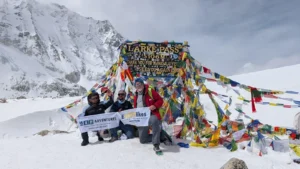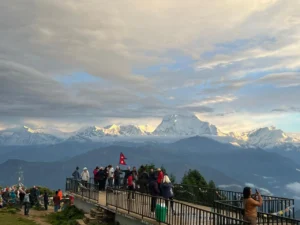

Manaslu is a restricted area, so you cannot just arrive and start walking. You need several permits, and they must be arranged in Kathmandu before you leave for Soti Khola or Machha Khola. This guide explains each permit, what it costs, who pays what, and what happens at the checkposts on the trail.
If you want us to handle the paperwork, see our Manaslu Circuit Trek package. For a day-by-day route, read the Manaslu Circuit Trek itinerary.
Manaslu Circuit Trek Permits at a Glance
Foreign trekkers need these permits and fees:
| Permit / fee | Where it applies | Cost for foreign nationals |
| Manaslu Restricted Area Permit (RAP) | Jagat to Dharapani, the restricted section | USD 100 for the first 7 days (Sept–Nov), then USD 15 per day. USD 75 for the first 7 days (Dec–Aug), then USD 10 per day |
| Manaslu Conservation Area Permit (MCAP) | Manaslu Conservation Area | NPR 3,000 |
| Annapurna Conservation Area Permit (ACAP) | The Annapurna Conservation Area, which you enter after Larke Pass | NPR 3,000 |
| Chumnubri Rural Municipality fee | Local entry fee, collected at Jagat | NPR 1,000 (see note below) |
The RAP is the only permit that changes with the season. The others are fixed.
What Permits Are Required for the Manaslu Circuit Trek?
These are the Manaslu trek permit requirements for a foreign trekker:
- Manaslu Restricted Area Permit (RAP)
- Manaslu Conservation Area Permit (MCAP)
- Annapurna Conservation Area Permit (ACAP)
- The Chumnubri Rural Municipality local fee
Many older guides list only the first three. The local municipality fee was added more recently, so make sure it is included in your budget.
If you add Tsum Valley, you also need a separate Tsum Valley Restricted Area Permit (see below).
Manaslu Restricted Area Permit (RAP)
The Manaslu Restricted Area Permit is the main permit. It covers the restricted section of the trail between Jagat and Dharapani, which includes Deng, Namrung, Lho, Samagaon, Samdo and Dharamsala.
How much does the Manaslu Restricted Area Permit cost?
The fee depends on the month you enter the restricted area:
| Season | Months | First 7 days | Each extra day |
| Peak | September to November | USD 100 | USD 15 |
| Off-peak | December to August | USD 75 | USD 10 |
The RAP fee is the same for foreign and SAARC nationals.
How many days will I pay for?
You pay for the days you spend inside the restricted section, not the full length of your trek. Most itineraries spend roughly 7 to 10 days in this section, depending on acclimatisation days and side trips. Your agency counts the days from your itinerary.
Examples (illustrative):
- 8 days in autumn: USD 100 + (1 × USD 15) = USD 115
- 10 days in autumn: USD 100 + (3 × USD 15) = USD 145
- 8 days in spring: USD 75 + (1 × USD 10) = USD 85
- 10 days in spring: USD 75 + (3 × USD 10) = USD 105
If weather or a delay keeps you in the restricted area longer than planned, extra days are charged at the daily rate, so keep a small buffer in your budget.
Manaslu Conservation Area Permit (MCAP)
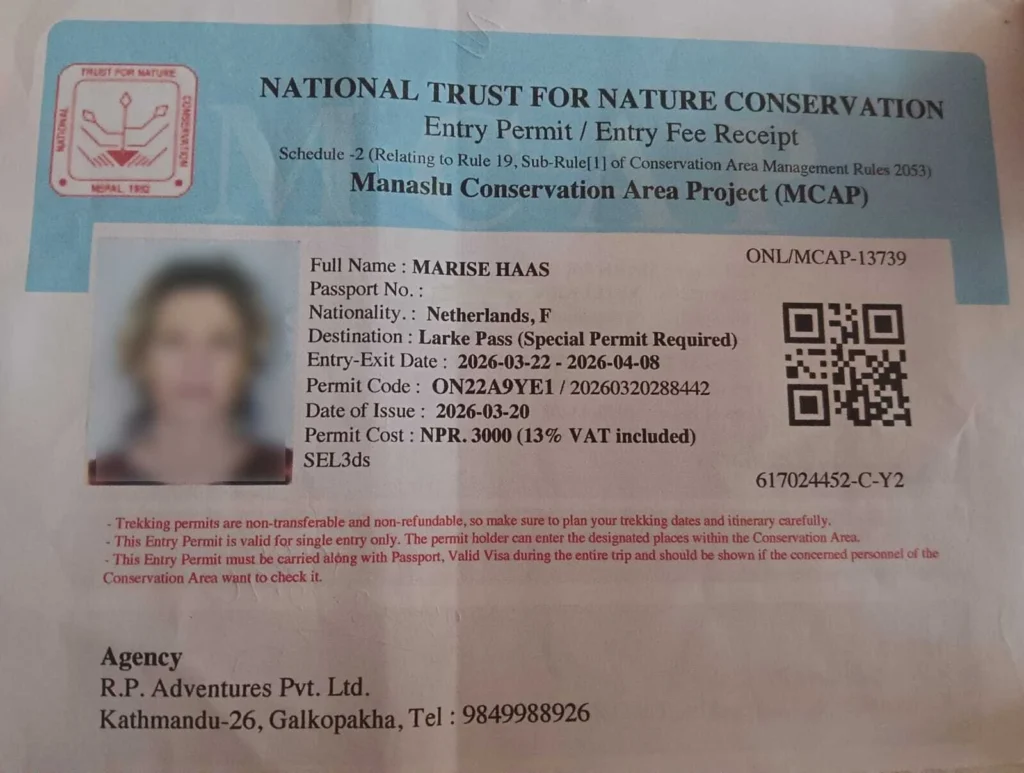
The Manaslu Conservation Area Permit is required for entering the Manaslu Conservation Area. The conservation area is managed by the National Trust for Nature Conservation (NTNC), and the fee supports conservation and community work. The checkpoint at Philim is where you will be asked for it.
- Foreign nationals: NPR 3,000
- SAARC nationals: NPR 1,000
- Nepali citizens: a nominal fee (see the nationality section below)
The MCAP is a fixed fee and does not change by season.
Annapurna Conservation Area Permit (ACAP)

The Manaslu Circuit ends in the Annapurna region. After you cross Larke Pass (5,106 m) and descend, you enter the Annapurna Conservation Area, so you need the Annapurna Conservation Area Permit even though you never walk the Annapurna Circuit as such.
- Foreign nationals: NPR 3,000
- SAARC nationals: NPR 1,000
- Nepali citizens: a nominal fee
Like the MCAP, the ACAP is a fixed fee all year.
Chumnubri Rural Municipality Fee
The route passes through Chumnubri Rural Municipality, which charges a local entry fee. It is paid in cash at the Jagat checkpoint, and your agency usually arranges it. Most current sources give NPR 1,000 for foreign trekkers, though a few quote higher figures, so confirm the amount when you book.
Manaslu Trek Permit Cost: What You Will Pay in Total
For a foreign trekker, the permit total is the RAP plus about NPR 7,000 for MCAP, ACAP and the local fee. At recent exchange rates, NPR 7,000 is roughly USD 50, although the dollar value changes with the exchange rate.
| Example | RAP | MCAP + ACAP + local fee | Approx. total |
| 8 restricted days, autumn | USD 115 | NPR 7,000 | about USD 165 |
| 8 restricted days, spring | USD 85 | NPR 7,000 | about USD 135 |
| 10 restricted days, autumn | USD 145 | NPR 7,000 | about USD 195 |
These totals are estimates. Your final figure depends on your dates and itinerary. For a full trip budget, see our guide to the Manaslu Circuit Trek cost.
Seasonal Price Differences
Only the RAP changes by season. Autumn (September to November) is the peak season and the fee is higher. From December to August, the fee is lower. Spring (March to May) also falls in the lower-fee period.
The season is based on the date you enter the restricted area. Check this carefully if you start at the end of one period.
Do I Need a Guide? What Is the Minimum Group Size?
Licensed guide: yes. Every foreign trekker in the Manaslu restricted area must be accompanied by a licensed guide arranged through a registered trekking agency. Independent trekking is not allowed.
Minimum group size: no longer two people. Until March 2026, the Restricted Area Permit required at least two trekkers. On 22 March 2026, the Department of Immigration removed that rule, and a single foreign trekker can now be issued a RAP. The guide requirement did not change, so a solo trekker still walks with a licensed guide.
Maximum group size: Under the same update, one licensed guide can be listed for up to seven trekkers. A larger group needs more guides.
Older articles, including some on our own site, may still say that two trekkers are required. That information is out of date.
Where and How to Get the Manaslu Permits
You cannot buy these permits on the trail, at Soti Khola, or at Arughat. There are no permit counters in those places. Trekkers also cannot apply for the RAP on their own. The application goes through a registered trekking agency in Kathmandu, which submits it to the Department of Immigration.
What documents are needed?
Send your agency:
- A clear copy of your passport (valid beyond your trek dates)
- Your Nepal visa, or your visa application submission ID if you have not arrived yet
- A passport-size photo
- Your trek dates and itinerary
- Travel insurance details
The visa submission ID option was introduced together with the March 2026 changes, so you can start the process from home.
Can I apply for the Manaslu permit online?
Not by yourself. There is no public online portal for the RAP. You can email your documents to your agency in advance, and the agency submits the application in Kathmandu. The permit is collected in person by the agency.
How early should I apply?
Agencies can often process permits quickly, but the autumn season is busy and Department of Immigration working days and holidays affect timing. Send your documents as early as you can, ideally at least a week before you travel. Do not wait until you reach Kathmandu.
Permit Checks Along the Route
Permits are checked at several checkposts, and officials may also check them at lodges and villages. Expect checks at places such as Jagat (about 1,410 m), where the restricted area begins and the local fee is collected, and at Philim for the conservation area permit. Further checks happen higher up the valley, including around Samagaon and Samdo, and again in the Annapurna region after Larke Pass.
Your guide carries the permit papers and registers your group at each point, but keep your passport with you. Trekking without valid permits can lead to a fine or being turned back.
Permits for Foreign, SAARC and Nepali Trekkers
| Foreign nationals | SAARC nationals (including India) | Nepali citizens | |
| RAP | USD 100 / 75 for first 7 days, then USD 15 / 10 per day | Same as foreign nationals | Not required |
| MCAP | NPR 3,000 | NPR 1,000 | NPR 100 |
| ACAP | NPR 3,000 | NPR 1,000 | NPR 100 |
| Chumnubri fee | NPR 1,000 | NPR 1,000 | NPR 200 |
| Licensed guide | Required | Required | Not applicable in the same way; confirm with your agency |
Two points matter most. First, SAARC nationals get cheaper conservation permits but pay the same RAP as everyone else. Second, Nepali citizens do not need the RAP, but they carry citizenship ID and pay small conservation and local fees.
Manaslu Trek with Tsum Valley: Extra Permit
If you add Tsum Valley, you need a separate Tsum Valley Restricted Area Permit on top of the Manaslu RAP:
- September to November: USD 40 for the first 7 days
- December to August: USD 30 for the first 7 days
- USD 7 per extra day in both seasons
The Tsum Valley section adds about 3 to 5 days to your trek. See our Manaslu trek with Tsum Valley for the route.
Frequently Asked Questions
Can I trek the Manaslu Circuit without a guide?
No. A licensed guide is compulsory in the restricted area.
Can I trek Manaslu alone?
You can apply for the permit alone since March 2026, but you must still walk with a licensed guide through an agency.
Can I get the Manaslu permit in Soti Khola or Arughat?
No. All permits must be arranged in Kathmandu before you leave.
Are permit fees refundable or transferable?
Permits are issued in your name for your dates. Ask your agency about changes before booking.
Is the permit included in the trek price?
It depends on the operator. Always ask whether the RAP, MCAP, ACAP and local fee are included.
Arranging Your Manaslu Permits with Everest Hikes
We prepare the RAP, MCAP, ACAP and local fee paperwork as part of the Manaslu Circuit Trek. Send us your passport copy, visa details, photo and dates, and we will confirm the exact permit cost for your itinerary.