
Overview
The Muldai Viewpoint Trek is a short, 5-day trek in the Annapurna region of Nepal, starting and ending in Pokhara. It takes you through Gurung villages, rhododendron forest, and open ridge trail to Muldai Viewpoint (3,637m), a quiet spot with wide views of the Annapurna and Dhaulagiri ranges. It suits trekkers who want real mountain scenery and village life without committing to a long trek, and who have a reasonable level of fitness for 5–6 hours of walking on some days.
This guide from Everest Hikes covers the day-by-day route, difficulty, best season, permits, and what’s included, based on our standard 5-day itinerary from Ghandruk to Ghorepani via Dobato and Muldai Viewpoint.
Trek Highlights
- Sunrise hike to Muldai Viewpoint (3,637m) for 360-degree views of the Annapurna range, without the crowds you’d find at Poon Hill
- Views of Annapurna South, Machhapuchhre (Fishtail), Dhaulagiri, Hiunchuli, Gangapurna, Nilgiri and Lamjung Himal from the ridge trail
- Two to three days walking through rhododendron and oak forest between Ghandruk, Tadapani and Dobato
- A night and cultural stop in Ghandruk, one of the largest Gurung villages in Nepal
- Teahouse accommodation the whole way, with no camping gear needed
- A route inside the Annapurna Conservation Area, Nepal’s first and largest protected area
- The option to combine the standard route with a stop at Poon Hill or extend toward the Khopra Ridge trail
What Is the Muldai Viewpoint Trek?
The Muldai Viewpoint Trek is a 5-day trekking route in the Annapurna region that climbs from Ghandruk to Muldai Viewpoint at 3,637m, then loops back down through Ghorepani. “Muldai View Point” and “Mulde Viewpoint” refer to the same hilltop, reached by a short side trail from the lodge settlement of Dobato. The trek is run on teahouse accommodation, so you sleep and eat in local lodges rather than camping.
It’s a newer route compared to the well-known Ghorepani Poon Hill Trek, and it follows part of the same trail network used for the longer Khopra Ridge Trek before branching off at Dobato.
How Many Days Is the Trek?
Our standard itinerary is 5 days, starting and finishing in Pokhara. You’ll spend four nights on the trail, at Ghandruk, Tadapani, Dobato and Ghorepani. If you start the walk from a different point, or combine it with routes like Khopra Ridge, the trip length can run closer to 4–6 days — but the 5-day version below is our regular departure.
What Is the Highest Altitude?
The highest point is Muldai Viewpoint at 3,637m (11,930ft), reached on Day 4. You sleep at a slightly lower altitude the night before and after, at Dobato (3,350m) and Ghorepani (2,874m), which helps with acclimatization.
What Is the Difficulty Level?
This is a moderate trek. It doesn’t require mountaineering skills or previous high-altitude experience, but you should be in reasonably good physical shape and comfortable walking for 5–6 hours on some days. Expect stone steps, some steep and rugged sections (particularly the final climb to the viewpoint), and a gradual, steady altitude gain rather than one big push.
Is This Trek Suitable for Beginners?
Yes, with some conditions. Beginners with basic fitness and a decent amount of regular walking or hiking experience can manage this trek. It isn’t a flat, easy walk — the trail includes stone staircases and a few steep stretches — but it doesn’t involve technical terrain, high passes, or glacier travel. If you’ve done day hikes before and are comfortable walking several hours at a stretch, this trek is a reasonable starting point for trekking in Nepal.
Where Does the Trek Start and Finish?
The trek starts and finishes in Pokhara. Day 1 begins with a drive to Kimche, followed by a short trek to Ghandruk. Day 5 ends with a walk down to Hile and a drive back to Pokhara.
What Is the Best Time to Do the Trek?
Spring (March–May) and autumn (September–November) are the best seasons. Autumn brings clear, dry weather after the monsoon and good mountain visibility. Spring brings milder temperatures and rhododendron forests in bloom, plus better conditions for birdwatching. Winter is possible but colder, with a chance of snow at higher points; summer (June–August) is monsoon season, with rain, leeches on lower trails, and more clouds blocking mountain views.
What Mountains Can You See?
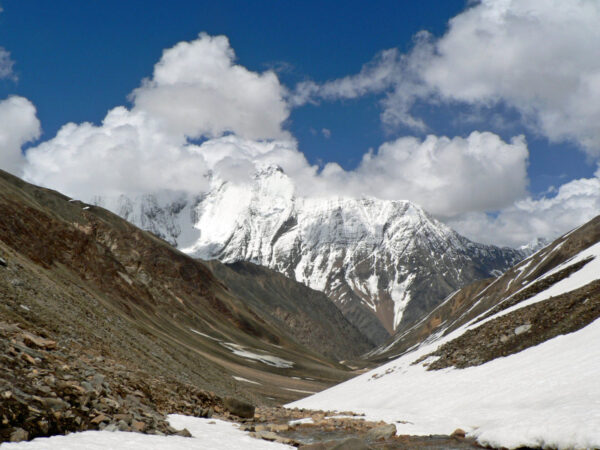
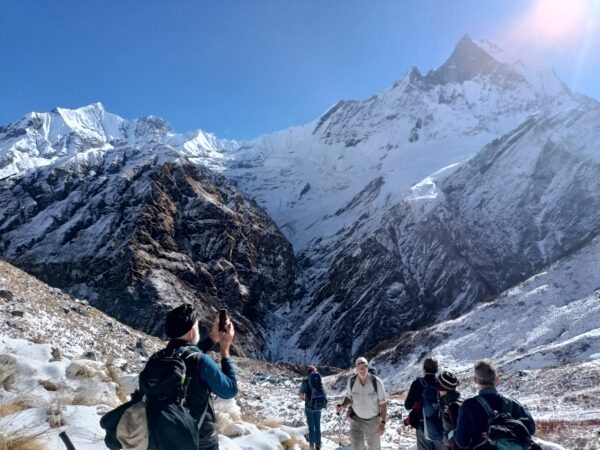
From Muldai Viewpoint and along the ridge trail, you can see Annapurna South, Annapurna I, Machhapuchhre (Fishtail), Dhaulagiri, Hiunchuli, Gangapurna, Nilgiri and Lamjung Himal, depending on the day and weather.
How Is This Trek Different from Poon Hill?
Muldai Viewpoint sits on the same general ridge system as Poon Hill and Mohare Danda, but it’s far less visited. You get a similar 360-degree Himalayan panorama with a fraction of the foot traffic, which also means a quieter sunrise and more relaxed lodges. Some trekkers combine both: our itinerary passes close to Ghorepani, so adding a side trip to Poon Hill is possible if you have an extra morning.
What Kind of Accommodation Is Available?
You’ll stay in teahouses (local lodges) every night — at Ghandruk, Tadapani, Dobato and Ghorepani. Rooms are simple, usually twin-share, with shared bathrooms in most lodges. Hot showers, charging, and boiled or filtered drinking water are available at most stops, generally for a small extra fee.
What Permits Are Required?
You need an Annapurna Conservation Area Project (ACAP) permit and a TIMS (Trekkers’ Information Management System) card. Both are arranged as part of the trek package.
Outline Itinerary
Day 01: Drive to Kimche (1,610m) and Trek to Ghandruk (1,940m)
Day 02: Trek Ghandruk to Tadapani (2,600m)
Day 03: Trek Tadapani to Dobato (3,350m)
Day 04: Hike to Muldai Viewpoint (3,637m) and Trek to Ghorepani (2,874m)
Day 05: Trek Ghorepani to Hile (1,480m) and Drive to Pokhara (850m)
Muldai Viewpoint Trek – 05 Days Itinerary
Drive to Kimche (1,610m) and Trek to Ghandruk (1,940m)
You start with a drive from Pokhara to Kimche through hillside farmland and villages. From Kimche, a short uphill walk brings you to Ghandruk, one of the largest Gurung villages in Nepal. There are good views of Annapurna South, Hiunchuli and Machhapuchhre from the village, along with a first look at Gurung houses, culture and daily life.
Trek Ghandruk to Tadapani (2,600m)
The trail climbs steadily through rhododendron and oak forest, with breaks in the canopy that open up to mountain views. Tadapani is a small settlement on a forested ridge, known for close-up views of Machhapuchhre and Annapurna South, especially in the early morning.
Trek Tadapani to Dobato (3,350m)
This is a quieter trail than the previous two days, running through forest with a good amount of birdlife. As you climb, the vegetation thins out and the terrain turns more alpine. Dobato is a small lodge settlement and the starting point for the walk up to Muldai Viewpoint the next morning.
Hike to Muldai Viewpoint (3,637m) and Trek to Ghorepani (2,874m)
You leave Dobato early, before sunrise, for the short climb to Muldai Viewpoint. From here you get a wide, open view of Dhaulagiri, Annapurna I, Annapurna South, Machhapuchhre, Nilgiri and other peaks. After the sunrise, you return to Dobato for breakfast, then continue trekking down and across through rhododendron forest to Ghorepani, a larger village with more lodge options.
Trek Ghorepani to Hile (1,480m) and Drive to Pokhara (850)
The final trekking day is a long descent through Ulleri and terraced hillsides down to Hile, passing Magar villages and forest along the way. From Hile, a drive takes you back to Pokhara, where the trek ends.
Inclusions
What's included
- Ground transport: taxi from Pokhara to Kimche, shared jeep from Hile back to Pokhara
- All meals during the trek (breakfast, lunch and dinner), one main course per meal, with Nepali, Indian, Chinese and some Western options available
- Teahouse/lodge accommodation for all 4 nights on the trail
- Microspikes, provided for treks between December and February
- An experienced, government-licensed, English-speaking trekking guide
- One porter for every 2–3 trekkers (solo trekkers who want a porter pay an additional cost)
- Annapurna Conservation Area Project (ACAP) permit and TIMS card
- Guide's food, lodging, transport, salary, insurance and equipment
- A sleeping bag rated for cold conditions
- Government and local taxes, and related paperwork
- A trek completion certificate from Everest Hikes
What's not included
- Ground transport: taxi from Pokhara to Kimche, shared jeep from Hile back to Pokhara
- All meals during the trek (breakfast, lunch and dinner), one main course per meal, with Nepali, Indian, Chinese and some Western options available
- Teahouse/lodge accommodation for all 4 nights on the trail
- Microspikes, provided for treks between December and February
- An experienced, government-licensed, English-speaking trekking guide
- One porter for every 2–3 trekkers (solo trekkers who want a porter pay an additional cost)
- Annapurna Conservation Area Project (ACAP) permit and TIMS card
- Guide's food, lodging, transport, salary, insurance and equipment
- A sleeping bag rated for cold conditions
- Government and local taxes, and related paperwork
- A trek completion certificate from Everest Hikes
Practical Tips for the Trail
- Drinking water: Boiled water and filtered water are available at most lodges for a small fee. Bottled mineral water is sold along the route too, but there’s no proper way to dispose of the plastic, so boiled or filtered water is the better option.
- Charging electronics: Most lodges can charge phones, cameras and batteries, usually for a small hourly fee, using mains electricity or solar power. Nepal runs on 220–240V with sockets that take both round and flat pins — bring an adaptor if needed.
- Valuables: Lock your room when you head out for the day, and avoid leaving laundry hanging outside overnight.
- Local etiquette: In Gurung and other local households, the kitchen fire is treated as sacred. Avoid throwing rubbish or anything else into it.
Departures and Private Treks
We run scheduled group departures, and we can also arrange this trek on a private basis on dates that suit you, at the same cost, whether you’re travelling solo, as a couple, with family, or in a group.