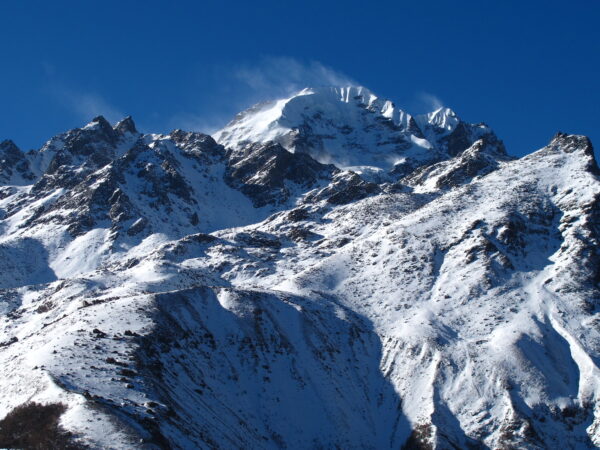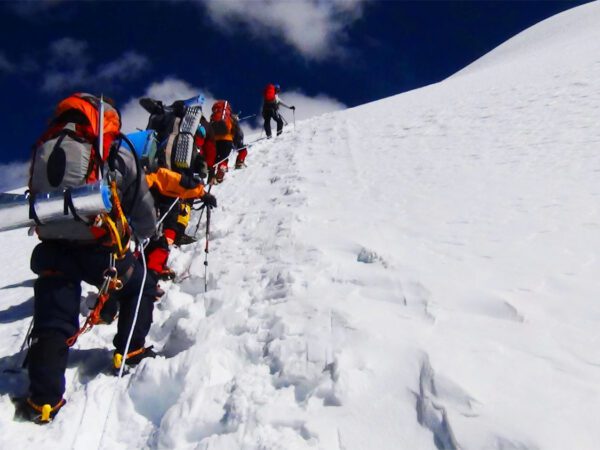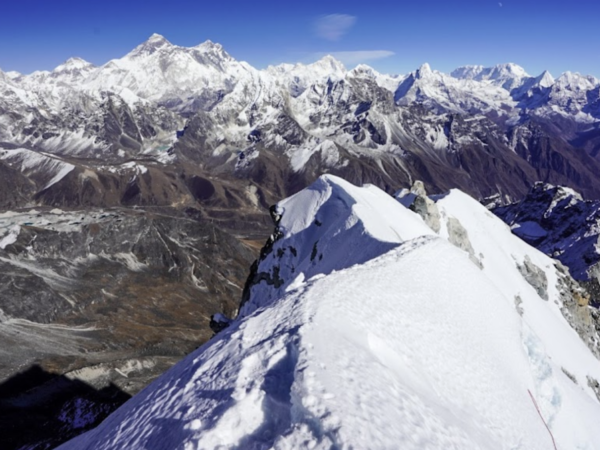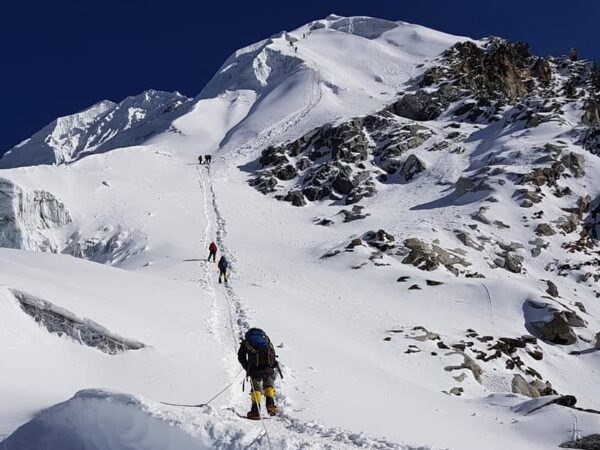
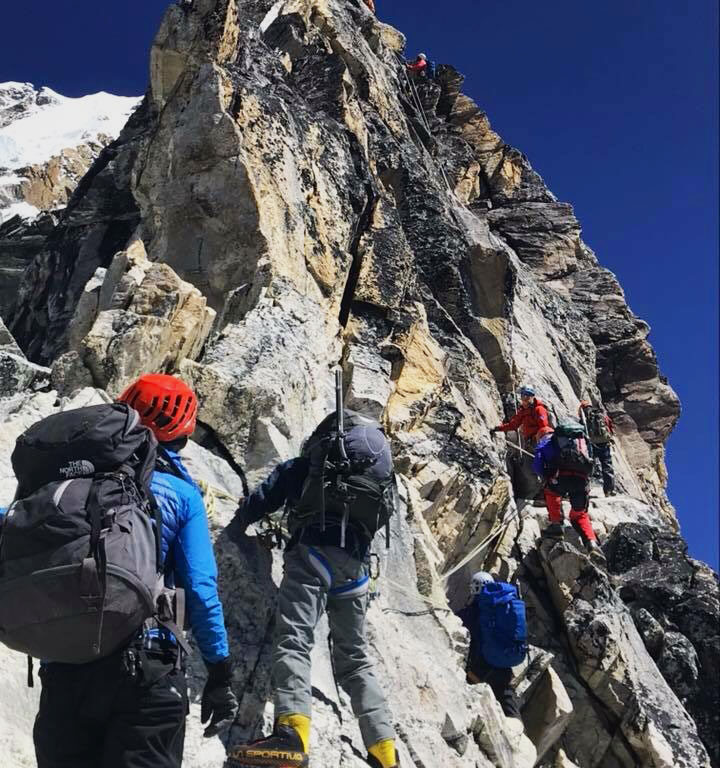
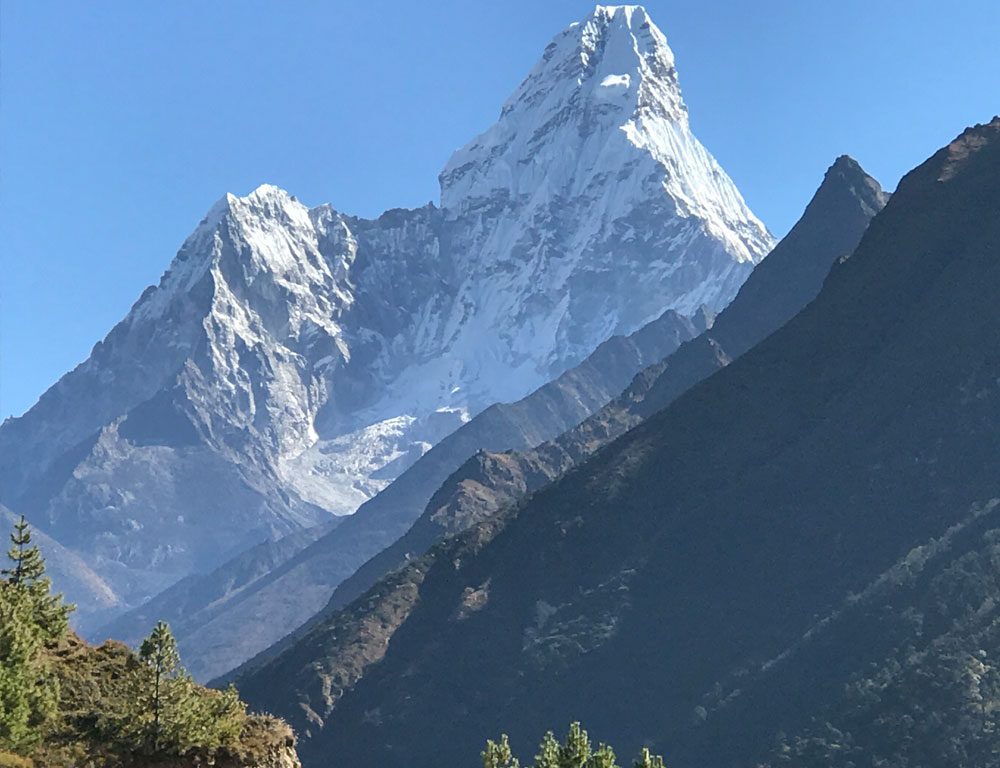
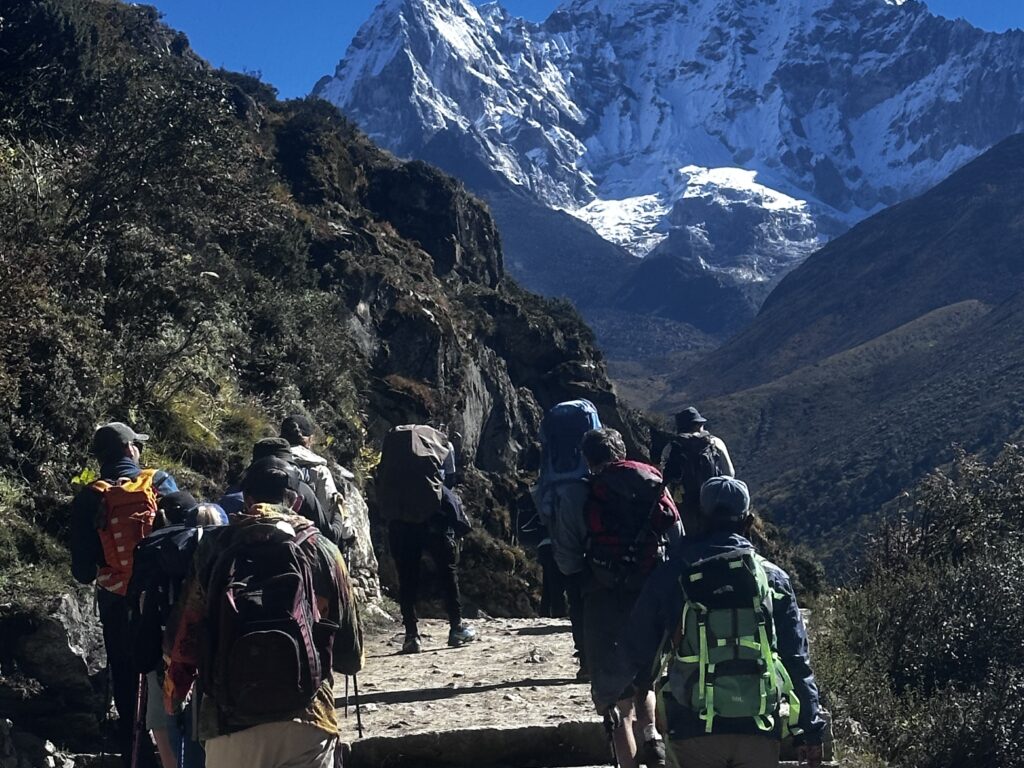
Mt Ama Dablam is a beautiful mountain situated in Everest Region, and its height is 6812 m. Indeed, Ama Dablam means “Mother’s Necklace” since its one side long ridge seems to be a mother protecting her child. The mountain brings smiles to the face of trekkers who become tired while trekking to Everest Base Camp. It is a technical mountain that requires mountaineering and rock climbing skills to reach the top of the summit. Ama Dablam Expedition requires approximately 14 days to climb from its base camp because climbers should adapt to high altitudes.
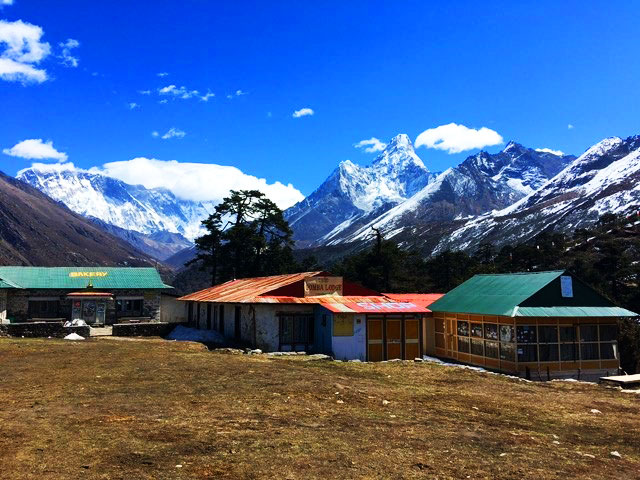
Ama Dablam mountain is probably the most visually stunning mountain in the world. And most European call it the Matterhorn of the Himalayas. It is a steep solid rock and ice climbing which is perfect for the alpinist. Beginners may also climb the mountain but requires some climbing experience just above the 6000-meter peak. So, prior to attempting Ama Dablam Climbing, you need to warm up on the nearby peak either Island Peak or in Lobuche Peak.
Although the Ama Dablam is a technical mountain, it is not extreme. But you need mountaineering skills and some experience at high altitudes.
Highlights
- Dive into Kathmandu’s Cultural Riches: Kickstart your journey in Kathmandu, where ancient temples, palatial estates, and sacred stupas await your exploration. Immerse yourself in the rich history and spirituality that make Nepal’s capital a captivating entry point to the Himalayas.
- Experience the Thrill of a Scenic Flight to Lukla: Take one of the world’s most exhilarating flights to the iconic Tenzing-Hillary Airport in Lukla. This awe-inspiring flight sets the stage for your trek through the majestic Everest region.
- Trek the Legendary Everest Trail: Walk in the footsteps of mountaineers along the historic Everest Base Camp trail. Traverse charming Sherpa villages, lush rhododendron forests, and striking high-altitude landscapes. As you ascend, take in the breathtaking mountain views and acclimatize to the altitude.
- Ascend via the Classic South-Western Ridge: Follow in the footsteps of pioneers Ward, Bishop, and Gill, who first climbed this route in 1961. This classic ascent offers a balanced blend of moderate and technical climbing, with three well-placed high camps to support your acclimatization and steady progress.
- Tackle Technical Challenges Head-On: Face the steep ice and snow slopes, exposed ridges, and the mesmerizing Dablam glacier. From Camp 2 onwards, the climb becomes more technical, demanding precision, endurance, and skill to conquer the summit.
- Celebrate Your Summit Triumph: Reaching the summit of Ama Dablam (6,812m) is a true achievement. Enjoy panoramic 360° views of Everest, Lhotse, Makalu, and beyond, as you savor the sense of accomplishment from one of the Himalayas’ most rewarding climbs.
- Join the Ultimate Ama Dablam Expedition: Ready to embrace this iconic Himalayan challenge? Book your adventure today and set out on the climb of a lifetime!
Trip Outline
TheAma Dablam Expedition journey begins with a Lukla flight from Kathmandu, and the trail follows the ditto path of Everest Base Camp Trek till reaching Pangboche. If you want to visit Everest Base Camp or summit trekking peak like Lobuche or Island Peak which will warm up for your Ama Dablam summit and helps you to endure high altitude.
After reaching at Pangboche, you will head toward Ama Dablam Base Camp having the best scenic trail and steep hike to Kharka. The trail lets you enjoy a closer view of Mt Ama Dablam.
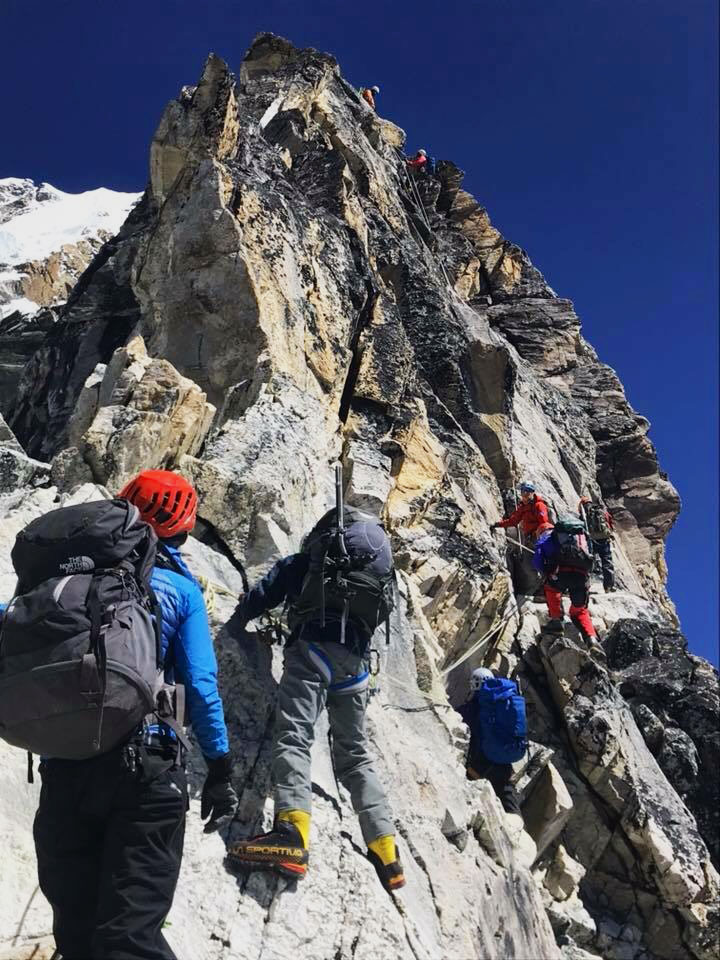
From the very next day, you begin to climb Mt Ama Dablam and continuously spend nights at tented camps of three base camps. At least, you spend 1 night at each of the base camps. Indeed, the daily itinerary will not be fixed in this period. You will trek ups and downs throughout the period.
- Camp 1 is at 5700m
- Camp 2 is at 5900 m
- Camp 3 is at 6300 m
You need to be very careful while staying in camp 2 and 3 as the elevation is higher. So, Acute Mountain Sickness can be a major problem here. As the trail goes higher elevation, you will face the field more snowy, rocky, and slope.
During the climbing period, the crew members will help you to use the climbing tools properly. The climbing period is estimated to be 14 days approx.
Three things that boost you up to reach the top of Ama Dablam:
- Strength and Commitment
- Mountaineering Skills
- Preparation and Hard Work
Ama Dablam Expedition Difficulty
- It is 6812 m high. So, acute mountain sickness is common while climbing this mountain.
- It follows steep snow and ice slopes on the summit day. So, it is a technical mountain that requires mountaineering skills and strength too.
Best Time to Climb Ama Dablam Expedition
Spring (April to May) is the best time to climb Ama Dablam since it is the warm season. You will often get the weather better and the sky crystal clear. So, the threat of snow becomes less these days. Besides that, Autumn (October to November) is also considered to be good for Ama Dablam Expedition.
You might also be interested in knowing the best time to visit Nepal.
Why choose the Ama Dablam Expedition?
Ama Dablam is the climb you choose when you want more than a summit, you want a real alpine experience. The moment you step onto the Southwest Ridge, the mountain pulls you in with its sharp ridgelines, exposed moves, and breathtaking drops on both sides. Every section feels purposeful, every camp feels earned, and the journey becomes as memorable as the top itself.
It’s the perfect blend of technical challenge and beauty: clean rock towers, icy gullies, and a summit view that frames Everest right in front of you. Climbers choose Ama Dablam because it feels alive demanding your focus, and rewarding your skill. This expedition provides you a sense of achievement that stays long after the descent.
Ama Dablam isn’t just climbed; it’s lived.
Outline Itinerary for Ama Dablam Expedition
Day 01: Arrival in Kathmandu and transfer to hotel.
Day 02-03: In Kathmandu, climb briefing and preparation.
Day 04: Fly to Lukla (2,820 m) and trek to Phakding (2,650 m) – 4 hrs.
Day 05: Trek to Namche Bazaar (3,440 m) – 6 hrs.
Day 06: Acclimatization day at Namche Bazaar with short hikes.
Day 07: Trek to Tengboche Monastery (3,867 m) – 5 hrs.
Day 08: Trek to Pangboche (3,900 m) – 4 hrs.
Day 09: Trek to Ama Dablam Base Camp (4,580 m) – 4 hrs.
Day 10: Acclimatization day at Ama Dablam Base Camp and preparation.
Day 11: Trek and climb to High/Advanced Camp (5,430 m) – 4 hrs.
Day 12-21: Ascent of Ama Dablam (10 days).
Day 22: Trek to Tengboche – 4 hrs.
Day 23: Trek to Monjo via Namche Bazaar – 6 hrs.
Day 24: Trek back to Lukla – 4 hrs.
Day 25: Fly to Kathmandu and transfer to hotel.
Day 26-27: Free days at leisure in Kathmandu.
Day 28: International Departure for homeward bound.
Ama Dablam Expedition – 28 Days Itinerary
Arrival in Kathmandu and transfer to hotel.
Welcome to Nepal! Upon arrival at Tribhuvan International Airport in Kathmandu (1,400 m), a representative will meet you and transfer you to your hotel. After check-in, relax and enjoy your first glimpse of the vibrant city. In the evening, there might be a welcome dinner and briefing about the upcoming expedition.
In Kathmandu, climb briefing and preparation.
Spend two days in Kathmandu for official procedures, gear checks, and a detailed expedition briefing at the Department of Tourism. You'll meet your climbing guide and team, finalize climbing permits, and shop for any last-minute items. If time permits, explore Kathmandu’s UNESCO World Heritage Sites like Swayambhunath (Monkey Temple), Boudhanath Stupa, and Pashupatinath Temple.
Fly to Lukla (2,820 m) and trek to Phakding (2,650 m) – 4 hrs.
An early morning scenic flight takes you to Lukla, the gateway to the Everest region. After meeting the porters and organizing loads, begin your trek along the Dudh Koshi River. It’s a gentle walk through pine forests, Sherpa villages, and suspension bridges to reach Phakding.
Trek to Namche Bazaar (3,440 m) – 6 hrs.
Follow the Dudh Koshi valley through dense rhododendron forests, crossing several suspension bridges, including the iconic Hillary Bridge. After entering Sagarmatha National Park, begin a steep ascent to Namche Bazaar – the bustling Sherpa capital with modern amenities and breathtaking mountain views.
Acclimatization day at Namche Bazaar with short hikes.
Take an active rest day to acclimatize to the altitude. Go for a short hike to the Everest View Hotel for stunning panoramas of Everest, Lhotse, Nuptse, and Ama Dablam. Visit the Sherpa Museum and National Park Visitor Center to learn about local culture and mountaineering history.
Trek to Tengboche Monastery (3,867 m) – 5 hrs.
Descend to the Dudh Koshi River and climb through forests to reach Tengboche. This picturesque village is home to the famous Tengboche Monastery, one of the most sacred in the Khumbu region. If timing allows, attend the evening prayer ceremony.
Trek to Pangboche (3,900 m) – 4 hrs.
The trail ascends gradually with Ama Dablam now looming directly ahead. The village of Pangboche is one of the oldest Sherpa settlements, and you’ll have time to visit the Pangboche Monastery, known for its ancient relics and spiritual energy.
Trek to Ama Dablam Base Camp (4,580 m) – 4 hrs.
Leave the main Everest trail and cross the Imja River before climbing steeply to reach Ama Dablam Base Camp. Situated in a scenic, grassy meadow with awe-inspiring views of the surrounding Himalayan giants, this will be your home base for the climb.
Acclimatization day at Ama Dablam Base Camp and preparation.
Rest and acclimatize at base camp. You’ll review climbing gear, receive instruction on rope handling and fixed-line techniques, and meet the expedition Sherpa team. Take a short acclimatization hike above base camp to aid the transition to higher altitudes.
Trek and climb to High/Advanced Camp (5,430 m) – 4 hrs.
Climb to Advanced Camp, also known as Camp 1. The route includes rock scrambling and technical climbing over a rugged ridge with fixed ropes. This is the last point before the technical section of the summit push. Set up camp and prepare for the summit phase.
Ascent of Ama Dablam (10 days)
Spend up to 10 days climbing Ama Dablam, depending on weather and team condition. The climb is technically demanding with rock, snow, and ice, especially between Camp 2 and Camp 3. You'll cross steep snowfields, narrow ridges, and the famed Dablam (ice hanging). After summiting, descend to base camp. The summit offers unforgettable views of Everest, Lhotse, Makalu, and the entire Khumbu range.
Trek to Tengboche – 4 hrs.
After a successful climb, retrace your steps back down to Tengboche. Enjoy a more relaxed pace and reflect on your achievements. Revisit the monastery and celebrate with your team.
Trek to Monjo via Namche Bazaar – 6 hrs.
Descend to Namche for a short break, then continue to Monjo. You’ll re-enter the lush lower Khumbu with more oxygen in the air and vibrant greenery all around.
Trek back to Lukla – 4 hrs.
The final day of trekking. Hike back to Lukla, where you can celebrate the end of your expedition with your team and porters. Enjoy your last night in the Everest region.
Fly to Kathmandu and transfer to hotel.
Fly back to Kathmandu in the morning. The rest of the day is free for rest, hot showers, and perhaps a celebratory meal in Thamel – Kathmandu’s popular tourist district.
Free days at leisure in Kathmandu.
Enjoy two buffer days in Kathmandu. You can relax at the hotel, go souvenir shopping, explore more of the city, or book a short cultural tour. These days also allow flexibility in case of delays during the Lukla flight or summit phase.
International Departure for homeward bound.
Your expedition ends today. A representative will transfer you to the airport for your onward journey, filled with memories of the Himalayas and the summit of one of the most beautiful mountains in the world.
Inclusions
What's included
- Arrival & Departure: Airport Transfer-Airport/Hotel/Airport
- Accommodation: 4 nights at a prestige Hotel in Kathmandu on bed & breakfast Basis
- Domestic Transportation: Kathmandu/Lukla/ Kathmandu
- Permits: Ama Dablam expedition permit, National park & Entry permit
- Food & Lodging: 3 meals a day while Trekking & at Basecamp for members & Staffs
- Base Camp Staff: Base camp Cook & Kitchen Assistants
- Porters: Porters per member up to Base camp & back from Basecamp
- Heater: Heater for base camp at each Dining and other necessary camps
- Light: 1 Solar panel for charging battery and lighting at base camp
- Dinner: 1 Farewell Dinner at a tourist-standard restaurant in Kathmandu with Nepalese staffs
- High Altitude Climbing Sherpa: 1 high altitude expert Climbing Sherpa per member
- High camp service: Essential cooking gas, cooking utensils, high altitude Sherpa, high altitude tent, high food, and fixing gear
- Hot drinking water: Facility of hot drinking water as per requirement
What's not included
- International airfare to and from Kathmandu.
- Nepalese Visa charges
- Extra night in Kathmandu: Extra night accommodation in Kathmandu. In case of early arrival or late departure, early return from the expedition (due to any reason) than the scheduled itinerary.
- Insurance: Travel and High Altitude Insurance / Accident / Medical / emergency evacuation
- Sherpa summit Bonus: Mandatory – Minimum USD 600+
- Tips: Please calculate some tips for Basecamp staffs and porters
- The full set of Member's personal climbing equipment & clothing
- Rescue Evacuation: Emergency rescue evacuation cost, if needed, and all other expenses of personal nature
Book The Dates
Upcoming Fixed Departures for 2026 & 2027
Join our group trips on the dates below, or reach out to arrange a private or family journey designed around your schedule.
Food and Accommodation
The food and accommodation during the expedition varies from place to place. During your pre and post expedition you can enjoy luxurious stay and various yummy cuisine of various cultures and countries too.
During the trek you will be staying at basic tea houses and food options will be less than of Kathmandu, but you will be able to enjoy the traditional and local food. From base camp and above you will accommodate in tents and foods are very simple but familiar food that helps with acclimatization and morale; we adapt menus to dietary needs when notified in advance.
- Kathmandu (pre- and post-expedition): comfortable hotel, with variety of food options.
- Trek lodges: Tea-house style stays on the Lukla → Namche → Pheriche (standard Everest-region lodges).
- Base Camp & higher camps: mountain tents with insulated sleeping mats; hot communal tent for meals at Base Camp. We serve high-energy, altitude-appropriate menus (porridge, soups, dal-bhat, pasta, meat/fish when available).
- On-route service: professional cook at Base Camp and portable stove systems at forward camps; bottled/filtered water supplied and boiled for safety.
Permits for the Ama Dablam Expedition
You can explore the main landmarks of the popular trekking destination during your Ama Dablam Expedition. Similar to your trip through the Himalayas, you will be crossing a national park and a restricted area; permission is required to enter these areas. In a similar way, a climbing permit is required for the Ama Dablam. The following permits are required for this amazing Himalayan adventure:
- Khumbu Rural Municipality Permit: US$ 30 (NPR 3,000)
- Sagarmatha National Park Permit (UNESCO World Heritage Site): US$ 30 (NPR 3,000)
- Ama Dablam Climbing Permit:
– Spring & Autumn seasons: US$ 1000
– Winter & Monsoon seasons: ~US$ 500
Ama Dablam Expedition Cost
The cost of the Ama Dablam Expedition varies from agency to agency which also means you need to go through a climbing agency in order to summit the mountain. Basically, Ama Dablam Expedition costs around $6900 USD per person which includes all your food, accommodations, climbing guide, Lukla domestic flight, permits, etc.
Preparing physically and mentally for the expedition
Ama Dablam is technical at altitude. Prepare to travel light but strong.
Physical training (12–16 weeks recommended):
- Cardio base: long runs, cycling, or stair-climbing — target 3–5 hrs/week of aerobic work.
- Strength & core: weighted step-ups, split squats, deadlifts; focus on legs, hips and core stability.
- Alpine technique: rock/ice skills, crampon use and ropework practice. Take a 2–3 day crevasse and fixed-rope course if you lack experience.
- Altitude prep: multi-day hikes with overnight loads and, if available, a prior trekking trip above 4,000 m.
Mental Preparation:
Mentality plays the biggest role in achieving anything. If you are mentally strong you can achieve anything. The major preparation you can do is:
- Meditation: It helps yourself to be mentally strong and give strength in all ways.
- Visualization: Visualizing yourself at the top of the summit is the best thing we can do.
Travel insurance & medical safety
High-altitude climbing demands more than strength, it demands smart protection. For Ama Dablam, having the right travel insurance isn’t optional; it’s your lifeline. In mountain environment where weather shifts fast and rescue decisions must be immediate, it keeps you on a safe side. You must carry e travel & mountain rescue insurance that covers:
- High-altitude evacuation (helicopter) up to 7,000+ m,
- Rescue/cancellation for weather/route closures,
- Medical treatment and repatriation.
On the mountain, safety is constant: daily health checks, hydration monitoring, acclimatization rotations, and guides trained in altitude illness response. From Base Camp to high camps, your team tracks your oxygen levels, energy, and overall condition so small symptoms never turn into big problems.
Ama Dablam is technical and exposed, but with solid insurance and a strong medical protocol, you climb with confidence knowing that your safety is backed every step of the way.
Alternate routes of Ama Dablam
Most climbers follow the famous Southwest Ridge, but we’ve discovered a few quieter paths that make Ama Dablam feel almost personal routes. Here you can feel the mountain’s presence in every step.
Some experienced teams, including us, choose the South Face variations. Here, the climb feels raw and honest. The terrain is steeper, the holds sharper, and every move asks me to trust my own skills. On these sections, I feel completely present with no distractions, just my breath, the rope in my hands, and the mountain’s rhythm.
Sometimes we explore the West Ridge, a lonelier approach that wraps around Ama Dablam from a direction most people never see. It’s peaceful, dramatic, and gives me that rare feeling of being truly “out there” in the Himalaya.
These alternate routes aren’t for everyone, but when we take them, I feel a deeper, more intimate connection with Ama Dablam. A climb where every decision matters and every moment feels alive. It’s the mountain in its purest form, and we love sharing that experience with those ready to embrace it.
Booking & next steps
Ready to climb? Everest Hikes is always here to make your experience the most memorable. When you book with us, we will:
- Pre-screen your climbing resume and fitness background.
- Reserve/secure permits and liaison with the Tourism Department through our licensed operator channel.
- Send a personalized kit list, training plan and a full expedition itinerary that you can publish on your site (we’ll provide web-ready copy and images sized for your CMS).
With expert guides, full support, and a journey designed for climbers like you, all that’s left is to take the first step. Book your expedition now and start your Himalayan adventure!
Contact us today to plan your climb and get started.
Packing list for Ama Dablam Expedition – 28 Days
Gears and equipment are the ones that decide wether your expedition will be successful or not. Similarly, these gears play a huge role in supporting our climb keeping us safe. The major gear list are:
Technical Climbing Gear: Harness, helmet, crampons (step-in), ice axes, jumars, locking carabiners, belay device, and slings. These are essential for moving safely on rock, ice, and mixed terrain.
Ropes & Hardware: We provide fixed ropes and mainline setups, but you’ll need your personal ascenders, prusiks, and personal climbing hardware for the summit push.
Clothing & Layers: Layering is key: base layers, insulating mid-layers, and waterproof shells. A down jacket or full down suit is essential for higher camps. Gloves, liners, and insulated booties keep your hands and feet safe at altitude.
Footwear: Double-mountaineering boots compatible with crampons, plus lighter trekking boots for the approach trek.
Sleeping & Shelter: High-altitude sleeping bag rated for extreme cold; we provide insulated mats and high-quality tents at Base Camp and forward camps.
Safety & Communication: Sunglasses or goggles, sunscreen, headlamps, and a personal first-aid kit. We also recommend carrying a satellite phone or locator beacon for peace of mind, though we provide VHF communication between Base Camp and climbing teams.
Extras: Hydration systems, water purification, trekking poles, and blister care items are crucial for comfort and endurance.
We send a detailed, printable kit checklist after booking and can arrange rental for heavier items in Kathmandu.