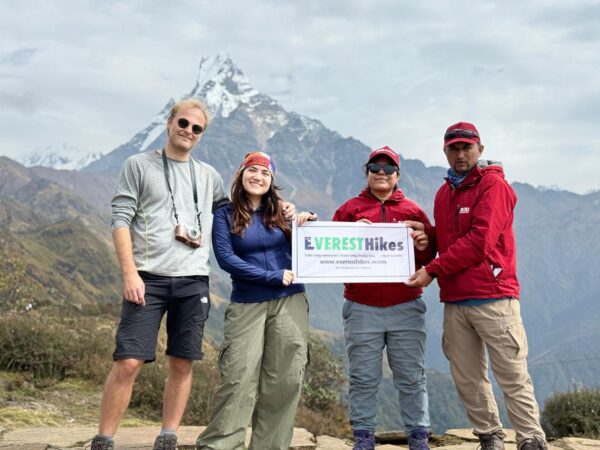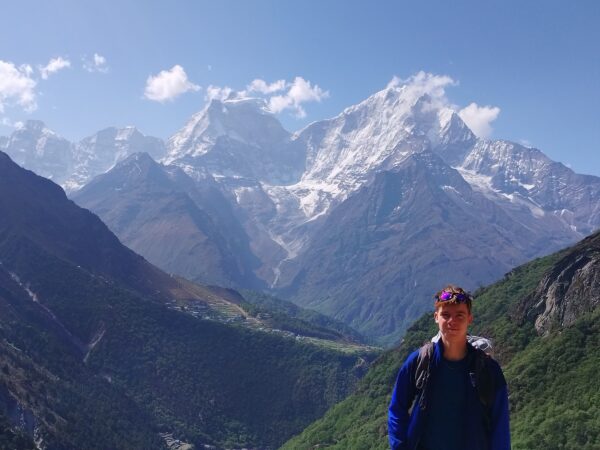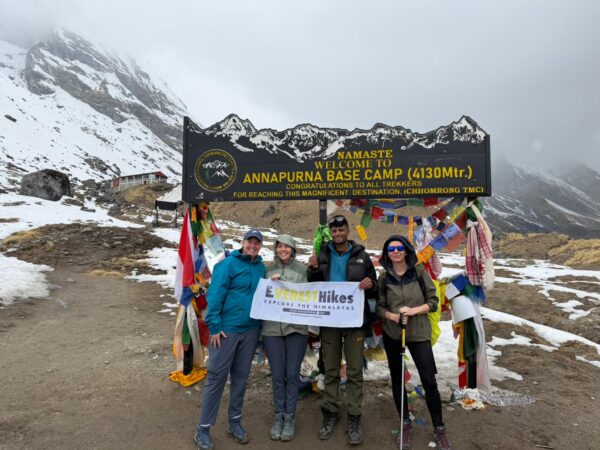
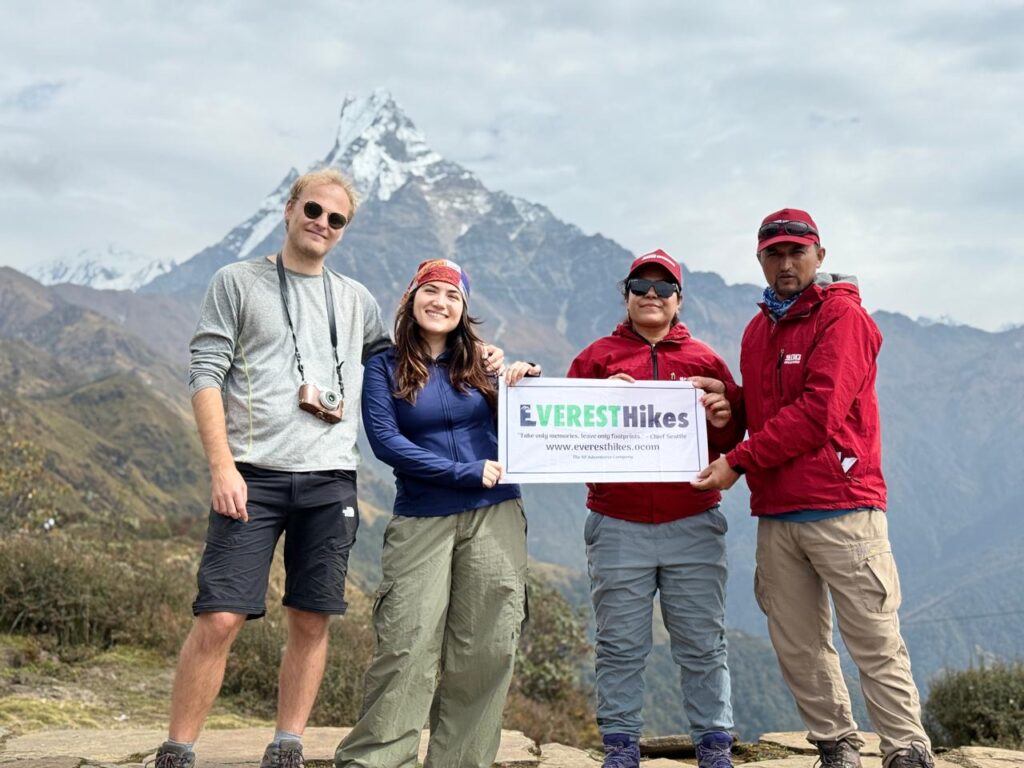
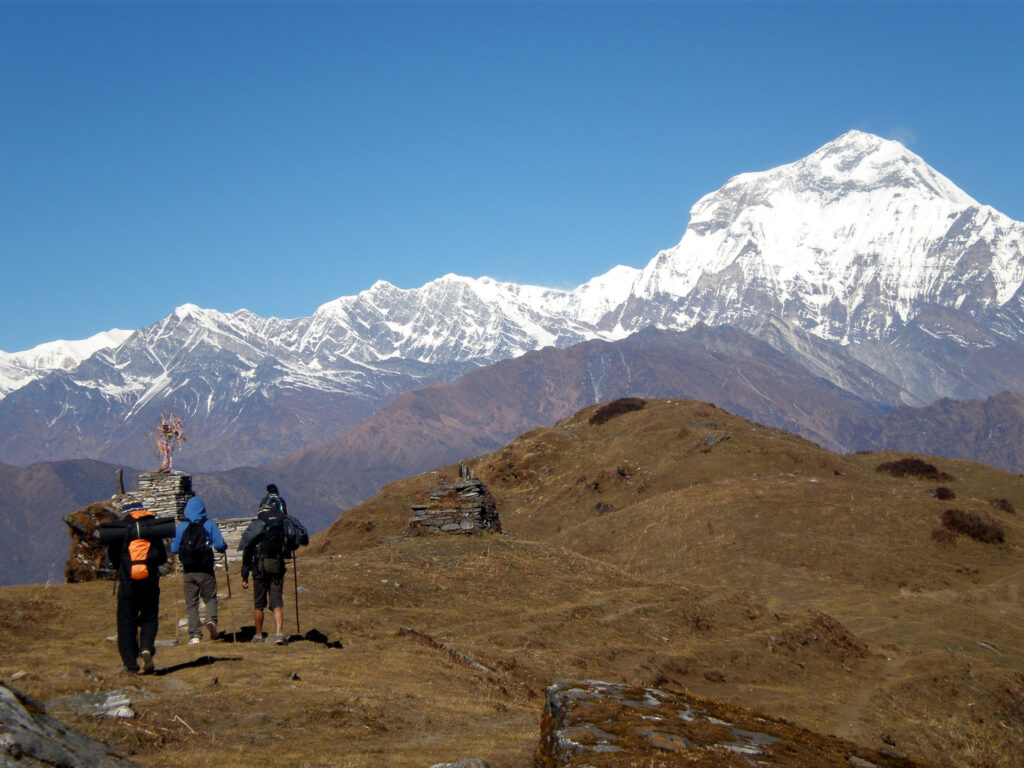
Mardi Himal & Khopra Ridge Trek is a stunning off-beat Himalayan trek in the Annapurna region combining two of the most scenic ridge-line treks in Nepal. It offers close-up views of Machhapuchhre (Fishtail), Annapurna South, Hiunchuli, and Mardi Himal. You can witness peaceful forest trails, ethnic Gurung and Magar villages along the trail. The routes are relatively less crowded in Annapurna region, so the trek provides a blend of solitude, adventure, and authentic local culture.
Highlights
- Being so close to Machhapuchhre that it seems as though the mountain is silently welcoming you.
- Walking along serene ridgelines where everything seems to be quiet and your mind is at last at ease.
- Seeing sunrises that cause you to lose all sense of reality as the Himalayas gradually turn gold.
- Having tea with locals who treat you more like family than a tourist.
- The cozy atmosphere of community lodges, where a straightforward meal is more satisfying after a strenuous day of hiking.
- From Khopra Danda, you can see clouds floating beneath your feet, giving you the impression that you are above the sky.
- Arriving at Khayar Lake, a location so serene and revered that it seems as though the mountains are keeping watch over you.
Best Season
Among all seasons the best season for this trek is Autum and Spring,
Spring
The rhodondren start to bloom in this season. It feels like you are walking into a forest in fairytales. The views are crystal clear and the weather is stable too. The temperatures ranges as:
- Day: 10°C to 20°C
- Night: -2°C to 5°C
Autumn
It is the most suitable time to trek as after the rainfall the mountain and sky reveals its best views. Similarly, the nature feels fresh and crisp. The temperature ranges as follow:
- Day: 12°C to 18°C
- Night: -3°C to 5°C
Monsoon and winter
During these seasons, the views doesn’t open up nicely. Likewise, there are high risks such as flood, landslides during monsoon and heavy snowfall and extreme cold during winter. So, we don’t recommend you trekking during these seasons.
When the Mountains Make Time Slow Down
The Mardi Himal & Khopra Ridge Trek is one of those journeys that feels like a quiet conversation with the mountains. It doesn’t rush ourselves neither overwhelms. Instead, it slowly unfolds one ridge, one forest, one village at a time until suddenly you find ourself standing face-to-face with the giants of the Annapurna range.
It sometimes may make us wonder how something so huge can make you feel so calm. The moment you stand infront of these mountains everything slows down, it feels like you are in a different world!
Outline Itinerary
Day 1 – Drive from Kathmandu to Pokhara | 1,400 m | 6–7 hrs
Day 2 – Drive to Kande, Trek to Forest Camp | 1,450 m → 1,700 m | 1.5–2 hrs drive + 3–4 hrs trek
Day 3 – Forest Camp to High Camp | 1,700 m → 2,600 m | 5–6 hrs
Day 4 – High Camp to Mardi Base Camp to Low Camp | 2,600 m → 2,900 m → 2,400 m | 6–7 hrs
Day 5 – Low Camp to Ghandruk | 2,400 m → 1,940 m | 4–5 hrs
Day 6 – Ghandruk to Dobato | 1,940 m → 2,750 m | 5–6 hrs
Day 7 – Dobato to Khopra Ridge/Danda | 2,750 m → 3,660 m | 5–6 hrs
Day 8 – Khopra Ridge to Khayar Lake and back to Khopra Danda | 3,660 m → 4,000 m → 3,660 m | 6–7 hrs
Day 9 – Khopra Danda to Swanta Village | 3,660 m → 2,350 m | 5–6 hrs
Day 10 – Swanta Village to Ghorepani | 2,350 m → 2,850 m | 5–6 hrs
Day 11 – Ghorepani to Poon Hill, to Nayapul, drive to Pokhara | 2,850 m → 3,210 m → 1,070 m | 5–6 hrs trek + 1.5–2 hrs drive
Day 12 – Drive to Kathmandu | 1,400 m | 6–7 hrs
Inclusions
What's included
- Airport transfers - pickup and drop off
- Standard hotel accommodation in Pokhara
- An Experience English speaking guide
- All Meals (breakfast, lunch and dinner) and Teahouse accommodation during the trek
- Kathmandu - Pokhara - Kathmandu Deluxe Tourist Bus
- All required trekking permits (Annapurna Conservation Area Entry Fee and TIMS Card)
- Guide insurance with food and accommodation
- Basic Medical kits
- Farewell dinner
- Emergency Helicopter Evacuation Service Arrangement Only (should cover by your travel insurance)
- All required paper works and government taxes
- EverestHikes T-shirt
What's not included
- International Flight
- Nepal Travel Visa Fee
- Personal Medical and Travel insurance (Should cover helicopter evacuation)
- A porter to carry your luggage (1 porter for every 2 trekkers, can carry upto 20kgs) - costs USD $150
- Guide, Porter and Driver tips
- Personal Gears (equipment)
- Personal bill
- Lunch and Dinner in Kathmandu and Pokhara
- All other personal expense of beverages (hard and soft drinks)
- All other things not mentioned in the inclusion.
Accommodation
Accommodation varies from cozy teahouses to community lodges in Mardi Himal and Khopra Ridge Trek. Rooms are simple but clean, often with wooden walls. In Khopra, the community lodge stands right on the ridge, offering sunrise views straight from your window. The feeling of waking up to mountain views from your window is just unexplainable in words. It’s not about luxury here, it’s about warm hospitality. Ending your day sipping tea by a fire, sharing stories with strangers who feel like friends, while the mountains watch over you in silence.
Food
The food here at Mardi Himal and Khopra Ridge Trek are simple yet very tasty because it is made with love. You will be able to taste the Nepali cusine such as dal bhat, sukuti, tibetian bread, and many other. In some lodges you can also find various noodles, and other food options too. One good thing about dal bhat is you can refill it until you are full which I find it very wonderful!
Flora
As you walk along the Mardi Himal and Khopra Danda trails, the forests feel alive around you. The lower paths are wrapped in rhododendron, oak, pine, and maple trees, and in spring these forests burst into bright red and pink colors that almost light up the entire hillside. As you climb higher, the greenery slowly changes into bamboo tunnels, soft mossy woods, and quiet alpine shrubs, before finally opening into open meadows where the wind moves gently through juniper bushes and mountain grass.
Fauna
The wildlife along this trek adds a quiet magic to the journey. You might hear a barking deer calling from the woods or spot Himalayan thars climbing along rocky slopes. Langur monkeys often hop between branches, and if you’re lucky, you may even catch a glimpse of the shy red panda deep in the forest. The sky above is full of life too, with Danphe (Himalayan Monal), pheasants, eagles, and vultures soaring overhead. Higher up, peaceful yaks and mountain cattlegraze calmly, adding to the serene mountain atmosphere.
Culture
The trek goes through the most culturally dynamic villages, where we find anywhere in the Annapurna region. Gurung and Magar communities greet trekkers with their traditional stone houses, terraced farms, and warm Himalayan hospitality. Here, life is in sequence with nature the people rise with the mountains, check their fields, feed their animals, and gather with each other in the evenings and woodstoves. The trail goes across both Hindu and Buddhist traditions, and you’ll find prayers flags, chortens, monasteries, and modest altars that provide a calming spiritual space. Higher up, the Sherpa influence emerges with prayer stones and mountain rituals. Khopra Danda is the only area with community managed lodges where profits are invested back into local schools and development of the village. This thing just made me feel wow! There is also sacred place such as Khayer Lake, the site of a Hindu pilgrimage, where worshippers honor lord Shiva who opens the lake to blessings and good fortune. You will be
Permits Required
The major Permits Required for Mardi Himal & Khopra Danda Trek are:
- Annapurna Conservation Area Permit (ACAP)
- Required to enter the Annapurna Conservation Area.
- It helps to fund environmental protection and trail maintenance.
2. TIMS Card (Trekkers Information Management System)
- For trekker safety and tracking.
- Helps in rescue coordination and emergency support.
- It is not mandatory but carrying it will keep you in safe side.
3. Where to get them:
- Both permits are available in Pokhara (Tourism Office) or Kathmandu (Nepal Tourism Board).
4. Must carry:
- Keep ACAP with you as there are several checkpoints throughout the trek.
Altitude sickness
Altitude sickness occurs when you travel to a high altitude too quickly. It is because of the decrease in oxygen level as you go higher. Some major symptoms are:
- Headache, dizziness
- Nausea / vomiting
- Loss of appetite
- Tiredness, unable to sleep
If you have symptoms of altitude sickness then don’t go higher, decending is only the treatment. Here are some ways you can do to prevent yourself from getting altitude sickness.
- Walk very slowly, take some rest from time to time
- Eat enough calories (3000cal-4000cal)
- Make sure you are drinking enough water
- Do not smoke or drink alcohol
Guide and Porter
Guide and porter are the ones who will support you throughout your journey making it fun, easy and knowledgeable. They are not mandatory but hiring them keeps you on a safe side. Guide will help you navigate the way, provides information about mountains, terrains and culture there. You will have a company and one who saves you from various Himalayan risks. Similarly, porter will carry your luggage so you can walk and enjoy the nature freely. It will be easier if you are a first-time trekker. Specially, for 2 people 1 porter is assigned. Overall, Mardi Himal and Khopra Ridge Trek is one the the trek that make you feel alive. The best part I like about this trek is the views of the same Macchapucchre in different forms from various angles. Its’ just mesmerizing and we can’t take our eyes down from those mountain views. If you want to experience the wild and off-beaten experience, you can book it with Everest hikes. This company insures you to provide you safe secure and most memorable experience of your life.