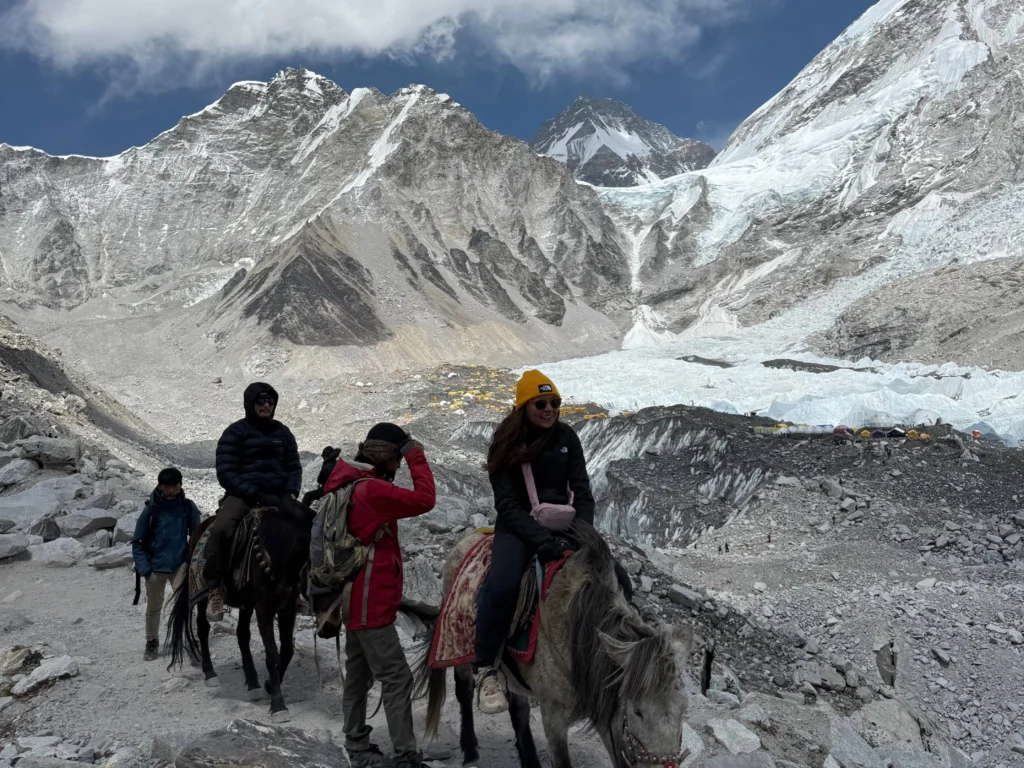
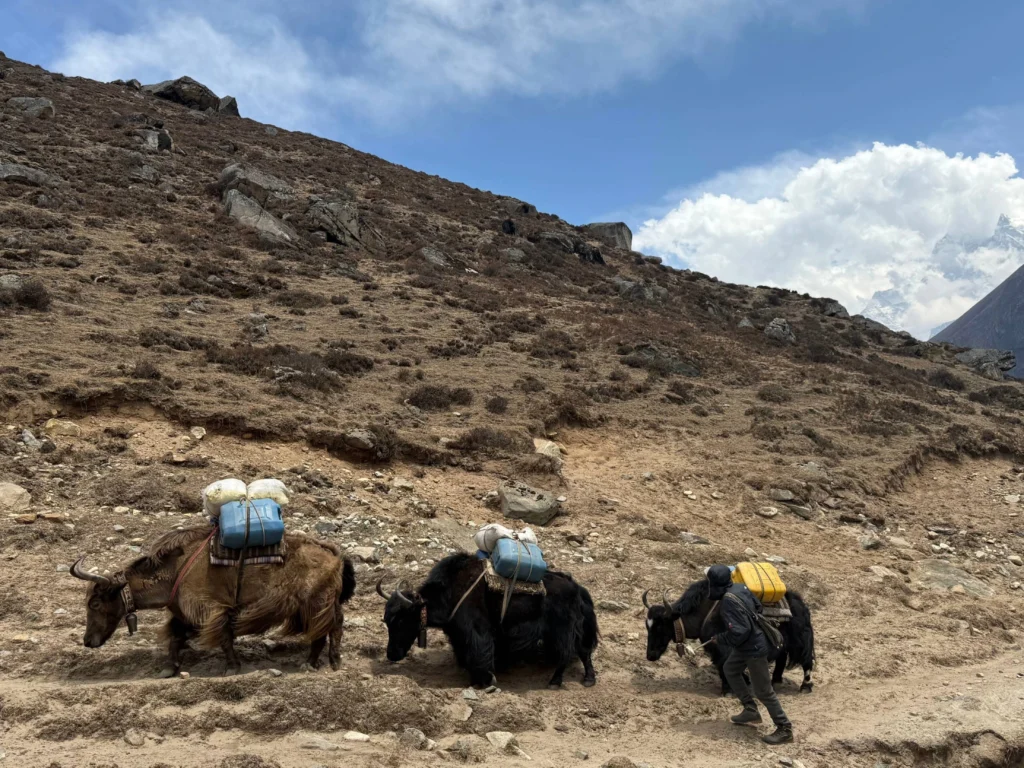
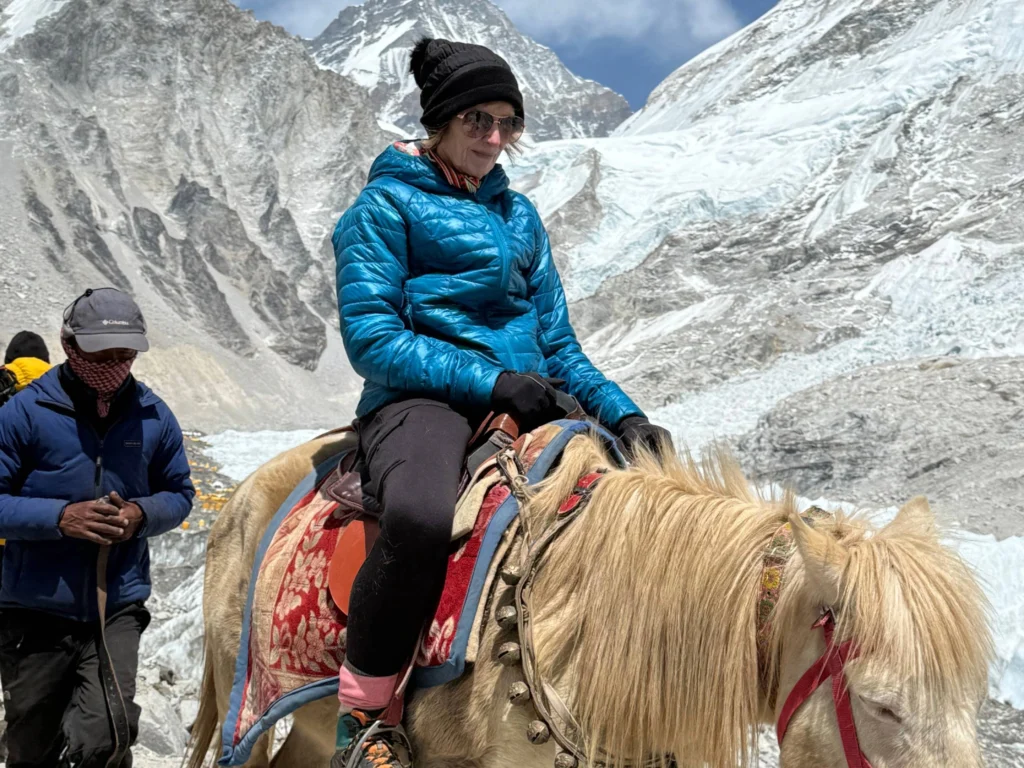
The Horse Riding Everest Base Camp Trek offers a distinctive way to reach the base of the world’s highest mountain. From our experience guiding guests through the Khumbu region, we’ve seen how this journey opens up the Everest experience to travelers who may find continuous trekking challenging, yet still want to witness the majesty of these peaks.
This isn’t simply about riding a horse to 5,364 meters. It’s about moving through Sherpa villages at a different pace, experiencing the rhythm of high-altitude travel with the support of these remarkably surefooted animals, and understanding the landscape in a way that feels both adventurous and accessible.
At Everest Hikes Pvt Ltd, we’ve been operating treks in the Everest region for years. Our team includes licensed guides who grew up in these mountains, horse handlers who understand the terrain intimately, and support staff trained in altitude sickness recognition and emergency response. This trek combines our local knowledge with a commitment to both guest safety and animal welfare.
What Is the Horse Riding Everest Base Camp Trek?
The Everest Base Camp on horseback journey follows the classic EBC route from Lukla to Gorak Shep, with the option to ride specially trained horses on suitable sections of the trail. This 15-day itinerary includes the flight to Lukla, acclimatization days in Namche Bazaar and Dingboche, the ride and trek to Everest Base Camp at 5,364 meters, and a sunrise hike to Kala Patthar viewpoint at 5,550 meters.
From our experience, guests typically ride their horses for 3 to 7 hours daily, depending on the day’s route and trail conditions. The horses are managed by experienced handlers who walk alongside you, ensuring both your comfort and the animal’s wellbeing throughout the journey.
This isn’t a luxury trek in the conventional sense—accommodation remains in mountain lodges, conditions are rustic above 4,000 meters, and the altitude still demands respect. What changes is the physical demand. Instead of walking 6-8 hours daily with a daypack, you ride for much of the journey, which can make this route feasible for travelers with knee issues, limited trekking experience, or those who simply prefer a different mountain experience.
How Horse Riding Works on the Everest Base Camp Trail
Understanding the reality of Everest horse trekking in Nepal helps set proper expectations. These aren’t riding school horses, and this isn’t a smooth trail ride. The animals used are sturdy, mountain-bred horses and hybrids accustomed to altitude, narrow trails, and steep terrain.
On this route, we usually:
- Use horses on wider trail sections between villages
- Walk (leading your horse) through congested areas like Namche Bazaar
- Dismount for very steep ascents or descents where riding would stress the animal
- Walk across suspension bridges, as horses cannot safely cross them while mounted
- Pause frequently for the horses to rest, especially above 4,000 meters
Your horse handler stays with you throughout. These are skilled locals—often from Sherpa or Tamang communities—who know each section of trail, understand horse behavior at altitude, and can communicate effectively with lodge owners and other trail users.
We provide basic riding instruction in Lukla for those unfamiliar with horses. No advanced riding skills are needed, but comfort sitting in a saddle for several hours and the ability to mount/dismount independently (or with minimal assistance) is important.
From our experience guiding guests, the pace is slower than standard trekking, which actually benefits acclimatization. You cover similar distances with less cardiovascular exertion, though the altitude still affects everyone.
Best Season for Horse Riding to Everest Base Camp
From our experience operating treks year-round, two seasons offer the most reliable conditions for the alternative Everest Base Camp trek:
Spring (March, April, May)
- Clear mountain views, especially in April and May
- Rhododendrons bloom at lower elevations
- Warmer temperatures, though still cold at night above 4,500m
- Increasingly busy on the trail as season progresses
- Afternoon clouds can obscure views by midday
Autumn (September, October, November)
- Crisp, clear skies—often the best visibility of the year
- Stable weather with minimal precipitation
- Comfortable daytime temperatures up to 4,000m
- Peak season means crowded lodges and trails
- Mornings can be very cold above Dingboche
Winter (December-February) is possible but challenging—extreme cold, some lodges closed, risk of snowfall blocking trails. We operate winter treks only for experienced travelers with proper gear.
Monsoon (June-August) brings rain, leeches at lower elevations, and obscured mountain views. The trail becomes muddy and slippery. We generally don’t recommend horse riding during monsoon for safety reasons.
On this route, we usually advise first-time visitors to choose autumn for the clearest weather and most predictable conditions.
Outline Itinerary
| Day | Activity | Altitude / Duration |
|---|---|---|
| 01–02 | Arrival in Kathmandu & sightseeing | 1,400 m |
| 03 | Flight to Lukla and trek to Phakding | — |
| 04 | Trek to Namche Bazaar | — |
| 05 | Acclimatization in Namche Bazaar | — |
| 06–07 | Trek from Namche → Tengboche → Dingboche | — |
| 08 | Second acclimatization day in Dingboche | — |
| 09–10 | Trek Dingboche → Lobuche → Gorak Shep → Everest Base Camp | — |
| 11 | Sunrise hike to Kala Patthar, descend to Pheriche | — |
| 12–13 | Return trek to Namche Bazaar and Lukla | — |
| 14–15 | Fly back to Kathmandu & final departure | — |
Horse Riding Everest Base Camp Trek Itinerary
Kathmandu Arrival and Sightseeing
We meet you at Tribhuvan International Airport and transfer you to your hotel in Thamel. The following day includes a guided tour of UNESCO World Heritage Sites—Swayambhunath (Monkey Temple), Pashupatinath Temple, and Boudhanath Stupa. This cultural orientation also helps with initial acclimatization before flying to altitude.
Lukla to Phakding (First Riding Day)
After the scenic mountain flight to Lukla (2,840m), you meet your guide, support team, horse handler, and horse. The first riding section to Phakding (2,610m) takes 3-4 hours on relatively gentle trails. This initial day allows both you and your horse to find a comfortable rhythm.
Phakding to Namche Bazaar
This is your first significant altitude gain, rising from 2,610m to 3,440m. The trail follows the Dudh Koshi River, enters Sagarmatha National Park at Monjo, then climbs steeply through rhododendron forest. On this section, guests usually walk the final steep ascent into Namche, as the gradient is demanding for horses. The 5-6 hour journey ends in the bustling Sherpa capital, where you'll spend two nights.
Acclimatization in Namche Bazaar
We take acclimatization seriously. This rest day includes a ride or hike to Hotel Everest View (3,880m), offering your first close views of Everest, Lhotse, and Ama Dablam. The principle "climb high, sleep low" helps your body adjust. You return to Namche for the night.
Namche to Tengboche to Dingboche
The trail continues through alpine villages—Phunki Tenga, Tengboche (home to the famous monastery at 3,860m), then onward to Dingboche (4,410m). From our experience, these days feel manageable on horseback, though you'll notice the air thinning. We cross suspension bridges on foot, ride through forests, and pass mani walls and chortens that reveal the deep Buddhist culture of this region.
Second Acclimatization Day in Dingboche
Another crucial rest day. We offer an optional ride to Chhukung, a small settlement with spectacular views of Island Peak, Lhotse, and Makalu. This side trip aids acclimatization while giving you a quieter mountain experience away from the main trail.
Dingboche to Lobuche to Gorak Shep and Everest Base Camp
These are the big altitude days. Lobuche sits at 4,910m, and Gorak Shep at 5,140m—the highest you'll sleep. The landscape becomes stark and beautiful—moraines, glacial streams, prayer flags snapping in thin air. The afternoon ride from Gorak Shep to Everest Base Camp (5,364m) takes 3-4 hours return. At the base camp, you're as close to Everest as non-climbers can get without technical gear. The Khumbu Icefall dominates the view.
Sunrise at Kala Patthar, Descend to Pheriche
The pre-dawn hike to Kala Patthar (5,550m) is done on foot—it's steep, and we leave horses behind. The sunrise view over Everest, Nuptse, and Pumori is worth the effort. Afterward, we ride back down to Pheriche (4,240m). Descending helps recovery.
Return to Namche Bazaar and Lukla
The descent follows the same route but feels different—easier breathing, warmer temperatures, more energy. We cover longer distances each day, returning through Tengboche, past Dudh Koshi River villages, and finally back to Lukla. On our last riding day, there's often a sense of gratitude—for the journey, the mountains, and the horses that carried you.
Fly to Kathmandu and Departure
Weather permitting, the mountain flight returns you to Kathmandu. You have a final night to rest, shop, or explore before your international departure.
Important Note: During peak seasons (March 25 - May 31 and September 25 - November 30, 2026), Lukla flights operate from Manthali Airport in Ramechhap, requiring a 4-5 hour drive from Kathmandu. We arrange all transfers and adjust the itinerary accordingly.
Inclusions
What's included
- Airport transfers - pickup and drop off
- Boutique hotel accommodation in Kathmandu - 3 nights with breakfast included
- An Experience English speaking guide
- Horse with a Horseman
- All Meals - breakfast, lunch, and dinner and Teahouse accommodation during the trek
- Kathmandu to Lukla Flight Ticket (Round Trip)
- All required trekking permits (National Park Entry Fee and Pasang Lhamu Rural Municipality Entry Fee)
- Guide insurance with food and accommodation
- Basic Medical kits
- Sleeping and duffel bag, down jacket, trekking poles (should be returned after the trek)
- Farewell dinner at the end of the trek
- Emergency Helicopter Evacuation Service Arrangement Only (should cover by your travel insurance)
- All required paper works and government taxes
- Farewell dinner
What's not included
- International Flight
- Nepal Travel Visa Fee
- Porter (a porter can be shared for 2 trekkers, carry upto 20 kgs) - total USD $275
- Personal Medical and Travel insurance (Should cover helicopter evacuation)
- Guide, Porter and Driver tips
- Personal Gears (equipment)
- Personal bill
- Lunch and Dinner in Kathmandu
- All other personal expense of beverages (hard and soft drinks)
- All other things not mentioned in the inclusion
Safety, Altitude, and Acclimatization: What We Do Differently
Altitude sickness doesn’t discriminate—riding a horse doesn’t prevent it. From our experience, the key difference is that riding reduces physical exertion, which can actually help with acclimatization by lowering your heart rate and oxygen demand at altitude. However, you’re still sleeping at the same elevations, and the air is still thin.
Our safety approach includes:
- Two dedicated acclimatization days built into the itinerary (Namche and Dingboche)
- Guides trained in altitude sickness recognition who monitor guests daily
- Pulse oximeters to check oxygen saturation and heart rate
- Flexible itinerary allowing extra rest days if needed
- Evacuation protocols including helicopter rescue insurance requirements
- Communication equipment for emergencies
We walk through altitude sickness symptoms before departure: headache, nausea, dizziness, fatigue. Mild symptoms are normal. Severe symptoms—confusion, difficulty breathing at rest, inability to walk—require immediate descent.
The horses themselves are limited by altitude. Above 5,000 meters, their performance drops noticeably. This is why the hike to Kala Patthar is always on foot, and some guests choose to walk sections near Gorak Shep to ease the load on their animals.
Care and Welfare of Horses: Our Commitment
We work only with local horse owners who treat their animals with respect and care. These horses are not overworked—they carry one rider, no cargo, and rest every 5-7 days during trekking season.
Our welfare standards include:
- Maximum riding hours per day (6-7 hours)
- Regular rest stops with water and grazing time
- Properly fitted saddles and equipment checked daily
- No riding on trails too steep or narrow for safe passage
- Immediate veterinary attention if any horse shows signs of distress
- Off-season rest for all animals
The horses are typically stabled in villages along the route where their owners have connections. They’re fed supplemental grain in addition to grazing, and they’re checked each evening by their handlers.
If the weather turns severe or a horse shows fatigue, we adjust the plan. Your safety and the animal’s wellbeing both matter to us.
Who This Trek Is Suitable For (and Who It Isn’t)
This journey works well for:
- Travelers with limited trekking experience who want to see Everest
- Those with knee, back, or joint issues that make prolonged walking difficult
- Older adults (50+) who are fit but prefer less strenuous travel
- Anyone seeking a unique perspective on the classic EBC route
- People who are comfortable around large animals and basic riding
This trek may not suit:
- Those expecting luxury accommodation (lodges are simple, especially above 4,000m)
- Anyone with severe fear of heights (some trail sections have exposure)
- Travelers seeking solitude (the EBC route is busy during peak season)
- Those uncomfortable with basic toilet facilities and cold conditions
- Anyone unable to walk at all (some sections require dismounting and walking)