If you’ve ever felt called to undertake a spiritual journey that challenges both body and soul, Mount Kailash Kora might be exactly what you’re looking for. This sacred pilgrimage trek has drawn seekers and pilgrims for centuries, and it remains one of the most transformative experiences you can have in the Himalayas.
We’ve guided hundreds of trekkers around this holy mountain, and every single one leaves changed. In this guide, we’ll walk you through everything you need to know about the Mount Kailash Kora pilgrimage from the spiritual significance that draws people here, to the practical details that will help you prepare.
What Is Mount Kailash Kora? Understanding the Sacred Trek
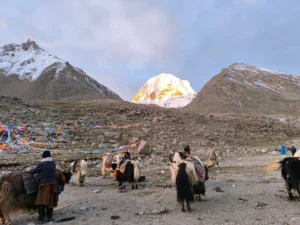
Mount Kailash Kora also known as Kailash Parikrama is a circumambulation trek around Mount Kailash in Tibet. At 6,638 meters (21,778 feet), this isn’t the highest mountain in the world, but it might be the most spiritually significant.
The word “Kora” means pilgrimage circuit in Tibetan, and this particular route encircles the entire mountain in what is traditionally believed to be a sacred journey. The trek is approximately 52 kilometers and typically takes three days to complete, though the experience lasts far longer in your heart.
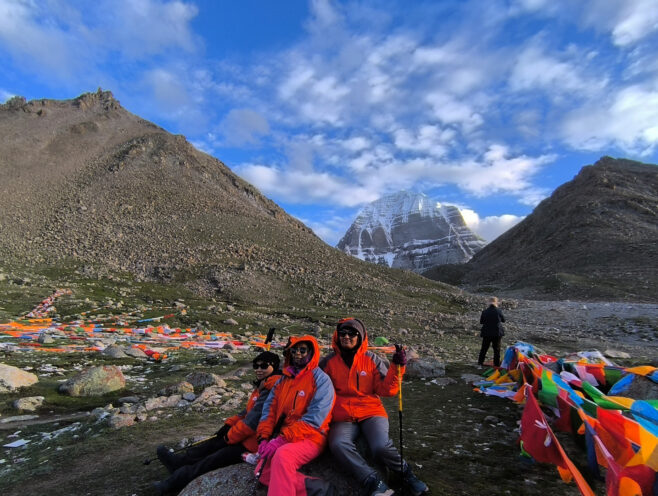
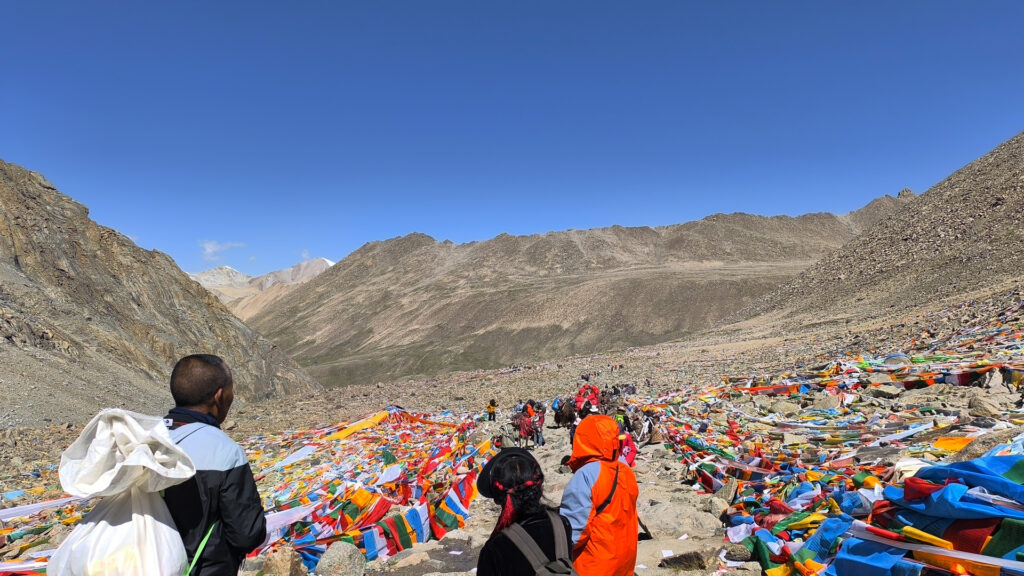
What makes Mount Kailash Kora different from other treks isn’t just the stunning mountain scenery—though that’s remarkable. It’s the spiritual atmosphere that permeates every step. Pilgrims from four major religions come here to walk in reverence, and you’ll find yourself surrounded by prayer flags, chanting, and a sense of devotion that’s unlike anywhere else on Earth.
Why Mount Kailash Holds Such Sacred Power Across Religions
One of the most beautiful aspects of Mount Kailash is how it unites believers across different faiths. Each religion finds profound spiritual meaning in this mountain.
For Hindus, Mount Kailash is the sacred home of Lord Shiva, the god of transformation and meditation. Hindu mythology tells of Shiva dwelling at the mountain’s peak in eternal meditation, and pilgrims come to seek his blessings for spiritual rebirth and renewal.
Buddhists believe Mount Kailash is the residence of Buddha Demchok, who embodies the ultimate joy and enlightenment. Completing the Kailash Parikrama is seen as a path toward liberation from the cycle of suffering.
In Jainism, Mount Kailash is revered as the place where Rishabha, the first Tirthankara (spiritual teacher), achieved enlightenment and final liberation.
Bon followers, whose ancient tradition predates Buddhism in Tibet, consider Mount Kailash a sacred cosmic center and perform their circumambulation in the counterclockwise direction, opposite to other pilgrims.
The mountain is often called the “Axis Mundi” the center of the world in spiritual traditions. Pilgrims believe that completing the Kora washes away sins and brings spiritual merit. Whether you come with deep religious conviction or simply to experience the profound spiritual energy, Mount Kailash Kora offers something transformative to everyone who walks its path.
The Mount Kailash Kora Route: What to Expect Along the Way
YOUR TRUSTED KAILASH TOUR EXPERT
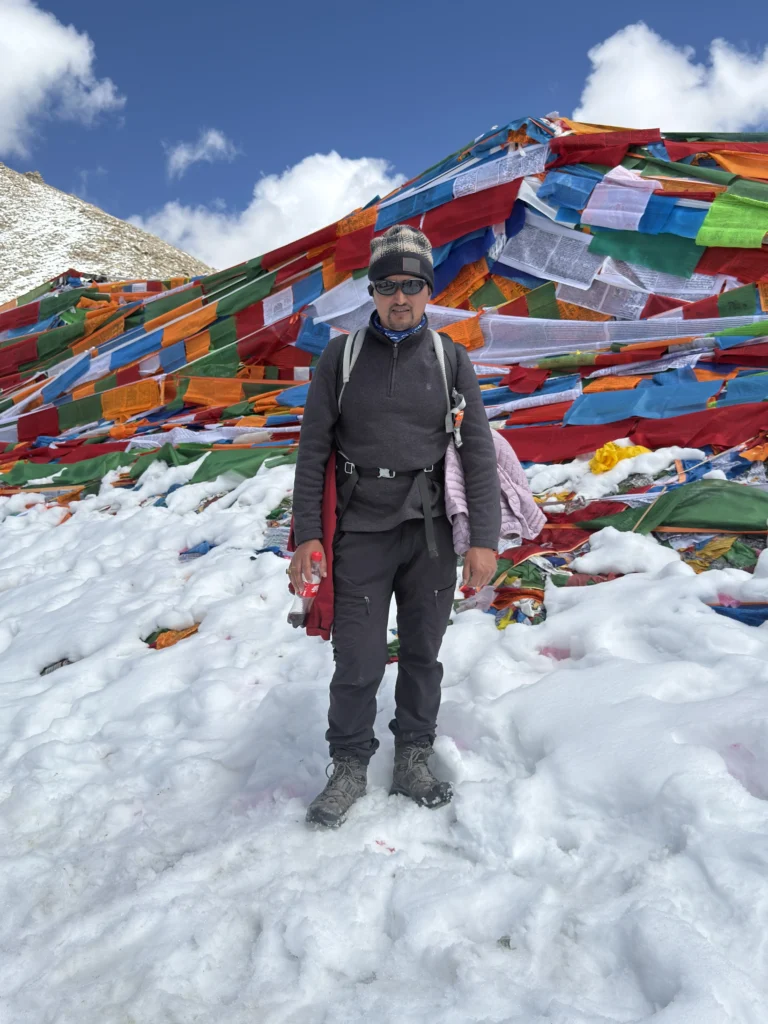
Meet Mr. Rajan
The trek around Mount Kailash isn’t a technical climbing expedition; it’s a pilgrimage walk. But don’t let that fool you into thinking it’s easy. The route is wild, remote, and demanding in its own right.
Day One: Tarboche to Diraphuk Monastery
Your Mount Kailash Kora begins at Tarboche, marked by the iconic Tarboche flag-pole covered in thousands of prayer flags. This is where pilgrims have been launching their sacred journeys for generations.
From Tarboche, you trek upward toward Diraphuk Monastery, perched at 5,080 meters (16,600 feet). This first day is considered the “easiest” of the three, which doesn’t mean it’s easy. It means your legs will thank you compared to what’s coming. The path winds through rocky terrain with increasingly spectacular views of Mount Kailash itself. You’ll see prayer flags strung across the landscape, and you’ll likely encounter other pilgrims chanting mantras as they walk.
The accommodation at Diraphuk is basic – guesthouses and simple monasteries with dormitory-style rooms. Don’t expect hot water or electricity. What you will find is a genuine spiritual atmosphere and locals who have welcomed pilgrims for decades.
Day Two: Crossing the Dolma La Pass (The Heart of the Trek)
This is the day that separates the pilgrims from the tourists. The trek to Dolma La Pass is the most physically and mentally challenging part of the Mount Kailash Kora.
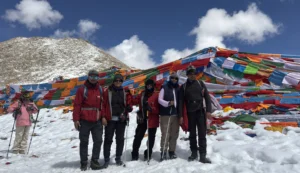
The Dolma La Pass sits at 5,530-5,600 meters (18,195-18,373 feet), and the path to reach it is steep, rocky, and narrow in places. You’ll climb for 6-7 hours, gaining over 500 meters in elevation, and every breath will feel like work. The altitude here is significant – Mount Kailash altitude at the pass means your lungs will be working harder than they ever have.
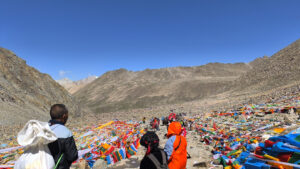
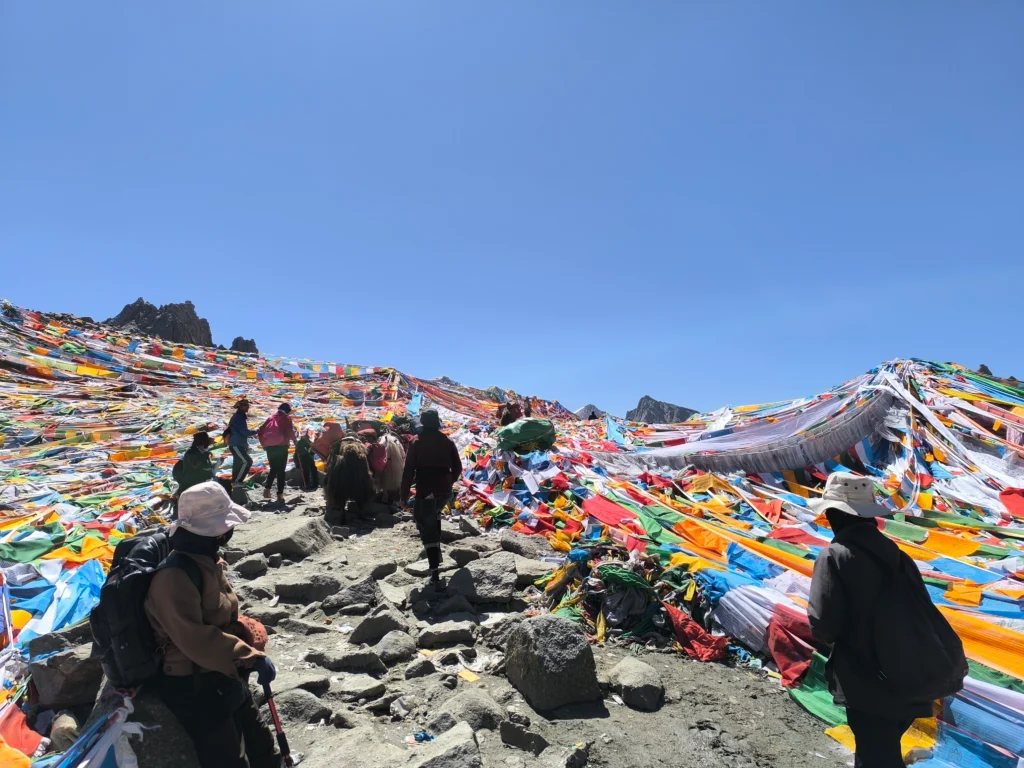
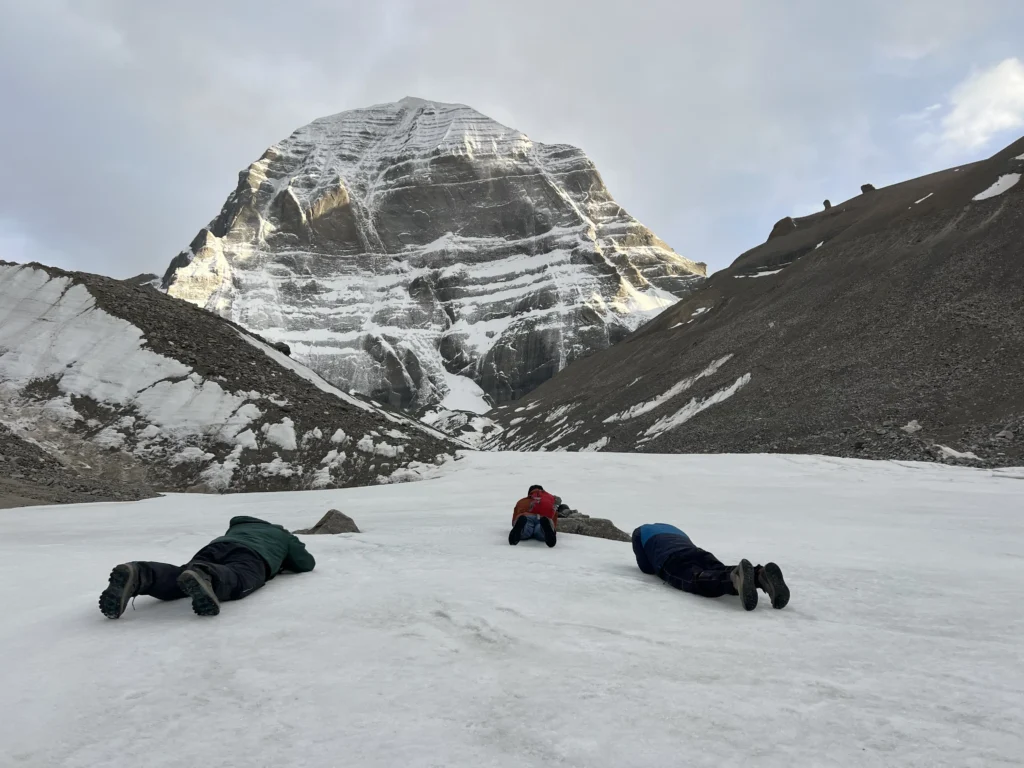
But here’s what makes this day sacred rather than just difficult: the spiritual energy at Dolma La is palpable. Pilgrims leave offerings, tie prayer flags, and perform prostrations. There’s a massive rock formation that locals call Tara (the goddess of compassion), and pilgrims touch it and leave gifts. The panoramic views from the pass of the surrounding peaks and valleys are breathtaking and we mean that both literally and figuratively.
After crossing Dolma La, you descend to Zuthrulpuk Monastery, famous throughout Tibet for its meditation caves. Many pilgrims stay overnight here to rest and recover.
Day Three: The Return to Darchen
Your final day completes the sacred circuit by retracing your steps back to Darchen, the village where you began. This day is notably easier than Day Two – mostly downhill, which brings its own challenges for your knees and ankles. But there’s something spiritually significant about returning to where you started, transformed by the journey.
Understanding Mount Kailash Altitude and Its Impact on Your Body
Let’s be direct: Mount Kailash altitude presents real challenges, and understanding them will help you prepare properly.
Darchen, where the trek begins, sits at 4,600 meters (15,100 feet). The Dolma La Pass reaches 5,600 meters (18,373 feet). For context, that’s higher than Kilimanjaro’s summit. At these elevations, your body is working with roughly 50% of the oxygen available at sea level.
Most trekkers experience some altitude effects. You might have a headache, feel slightly nauseous, or notice your sleep is disrupted. These are normal responses. The key is recognizing when altitude sickness becomes serious.
Signs to watch for:
- Persistent headache
- Shortness of breath that doesn’t improve with rest
- Dizziness or confusion
- Loss of appetite beyond what’s normal for trekking
If you experience these symptoms, the best medicine is descent. We always emphasize this with our clients because your safety matters more than completing the trek on schedule.
How to prepare for high altitude:
- Spend at least one or two days in Darchen acclimatizing before starting the Kora
- Walk slowly and deliberately – there’s no prize for speed
- Drink water constantly (more than you think you need)
- Avoid alcohol and sleeping pills
- Consider altitude sickness medication like Diamox (discuss with your doctor beforehand)
- Do cardiovascular training for at least 3-6 months before the trek
The Best Time to Visit Mount Kailash Kora
Timing your Mount Kailash Kora pilgrimage correctly makes a massive difference in your experience.
Late April to May is ideal. Snow has melted from lower elevations, making trails passable. The weather is generally stable, and you’ll see wildflowers blooming across the landscape. Perhaps most importantly, it’s less crowded than summer months.
June continues to be good, though temperatures start rising noticeably.
July and August are monsoon months. Rain makes trails slippery and dangerous. Visibility of Mount Kailash itself is often obscured by clouds. That said, the landscape comes alive with vibrant greens and flowers—it’s beautiful in a different way. If you do trek during monsoon, expect potential delays and be prepared for wet conditions.
September to mid-October is our favorite window. The weather is stable and clear. You get brilliant blue skies and unobstructed views of Mount Kailash and the surrounding peaks. Days are pleasantly warm (10-15°C), though nights drop below freezing. This combination of clear weather, manageable temperatures, and fewer crowds makes it the sweet spot for most pilgrims.
November onward starts getting cold and inhospitable. Snow increases, making the trek more dangerous.
Tip: For complete information on the best time to visit Mount Kailash, you can read this guide.
What to Expect: Weather, Temperature, and Conditions
Mount Kailash Kora is a high-altitude trek in a remote region. Weather here is unpredictable and can change rapidly.
Late April-May: Daytime temperatures range from 5-15°C. Nights drop below freezing. You might encounter unexpected snow even in May, so pack accordingly.
June-July: Warmer days (15-20°C+), but this is monsoon season. Rain is frequent, and trails become muddy and slippery. At higher elevations, rain can turn to snow without warning.
September-October: Clear, stable weather. Daytime temperatures 10-15°C. Nights can drop to -5°C or lower, especially at higher elevations. This is genuinely the most comfortable time trekking-wise, though “comfortable” is relative at 5,600 meters.
The takeaway: Layered clothing is non-negotiable. You need the ability to adjust quickly as conditions change. A waterproof outer shell and insulating mid-layer are essential, not optional.
Physical Fitness: How to Prepare Your Body
Mount Kailash Kora isn’t a technical climb requiring rock climbing skills, but it is physically demanding. The 52-kilometer circuit involves significant elevation gain and loss over three days at high altitude.
Start training 3-6 months before your trek. This isn’t something you prepare for in four weeks.
Build cardiovascular fitness: Walking, jogging, cycling, or swimming 4-5 times per week will strengthen your aerobic capacity. As you get closer to your trek date, transition to hiking with a backpack if possible.
Strengthen your legs and core: Your quadriceps, hamstrings, glutes, and core muscles will thank you. Lunges, squats, step-ups, and planks are all valuable.
Practice hiking with weight: Load a backpack with 8-12 kg and hike progressively longer distances. This trains your body for the actual conditions you’ll face and identifies any issues with your gear or fitness before you’re on the mountain.
Add breathing and flexibility work: Yoga and breathing exercises improve lung capacity and flexibility, both valuable at altitude.
Get medical clearance: If you have any pre-existing health conditions – cardiovascular, pulmonary, or otherwise – consult your doctor before committing to this trek. Altitude affects everyone differently, and your doctor should be part of your preparation.
Essential Gear and Packing: Don’t Forget the Details
Packing right makes the difference between suffering and thriving on Mount Kailash Kora.
Clothing (layer, layer, layer):
- Moisture-wicking base layers (merino wool or synthetic)
- Insulating mid-layers (fleece or down)
- Waterproof and windproof outer shell jacket and pants
- A quality down jacket for nights and higher elevations
- Warm hat, neck gaiter, and gloves (even in September-October)
- Wool socks (multiple pairs)
- Sturdy, well-broken-in hiking boots with good ankle support
Footwear note: Your boots should be broken in before you arrive. Blisters at 5,000+ meters are no joke.
Critical gear:
- Backpack (50-60L, comfortable fit)
- Sleeping bag rated for sub-zero temperatures
- Trekking poles (honestly, they save your knees on descents)
- Wide-brimmed hat and sunglasses (sun exposure at altitude is intense)
- High-SPF sunscreen and lip balm with SPF
Hydration and nutrition:
- Water bottle or hydration bladder (and a method to purify water)
- Energy bars, nuts, dried fruit, and other calorie-dense snacks
- Electrolyte powder (helps with hydration and altitude adjustment)
- Tsampa (roasted barley flour, a Tibetan staple that’s lightweight and nutritious)
Health and safety:
- First aid kit including blister treatment, pain relief, and anti-diarrheal medication
- Altitude sickness medication (if prescribed by your doctor)
- Any personal medications in their original containers
- Sunscreen and lip balm (you’ll burn faster at altitude)
- Toilet paper and a lightweight trowel (for leave-no-trace practices)
- Flashlight or headlamp with extra batteries
Documentation:
- Passport
- Tibet travel permits (arranged by your tour operator)
- Travel insurance documents and emergency contacts
- Copies of important documents stored separately
Planning a trip to Mount Kailash? Read this guide for a complete packing list of all essential items.
Lodging Along the Mount Kailash Kora Route
Accommodation along the trek ranges from basic to very basic. This isn’t a luxury hiking experience. Expect simple, rustic conditions, and you’ll be pleasantly surprised by any creature comforts you find.
Guesthouses and Teahouses
Diraphuk and Zuthulpuk each have small guesthouses that serve pilgrims. You’ll get a bed (often a simple wooden frame with a mattress), shared bathroom facilities, and basic meals. Electricity is rare or non-existent. Hot water might be available or might not be – don’t count on it. The meals are simple Tibetan and Nepali dishes, often heavy on noodles and rice, which is actually what your body needs after a long day of trekking.
These places are clean enough and have been hosting pilgrims for years. The owners understand what trekkers need, even if the amenities are minimal.
Monastery Stays
Some pilgrims choose to stay at Diraphuk Monastery or Zuthulpuk Monastery. This is a genuinely spiritual experience. You’ll sleep in simple dormitory rooms or small cells, often with monastery monks. You might participate in morning prayers and evening chanting. It’s humble, peaceful, and deeply moving for many pilgrims.
Monastery stays are not about comfort. They’re about immersion in the spiritual atmosphere.
Camping
If you’re bringing your own camping gear, camping along the route is possible. Some tour operators arrange temporary camps near Diraphuk and Zuthulpuk. Camping offers solitude and a direct connection with the mountain environment, though it requires bringing all your own equipment.
Darchen Accommodations
Darchen, where the trek begins and ends, has better facilities than anywhere on the mountain. Mid-range hotels and guesthouses offer private rooms, electricity, hot showers, and actual restaurants. It’s worth spending a night or two here before and after your Kora to rest, shower properly, and enjoy slightly better food.
The Mount Kailash Kora Itinerary: A Day-by-Day Overview
To give you the full picture, here’s what a complete Mount Kailash Kora journey looks like when departing from Nepal:
Days 1-2: Arrival and Acclimatization in Kathmandu
You arrive in Kathmandu, Nepal’s capital. We meet you at Tribhuvan International Airport and transfer you to your hotel. Day two includes a cultural tour of Kathmandu’s UNESCO World Heritage sites: Swayambhunath (Monkey Temple) with its stunning valley views, Pashupatinath Temple on the Bagmati River, and the massive Boudhanath Stupa, one of the largest in Nepal.
This acclimatization time in Kathmandu (at 1,350 meters) helps your body adjust to altitude before the real challenge begins.
Day 3: Local Hiking
You’ll do a day hike around Kathmandu, either at Champadevi or Shivapuri, to further prepare your body and enjoy Nepal’s natural beauty.
Day 4: Journey to Syabrubesi
A 6-7 hour drive northwest takes you toward the border region. You’ll pass through spectacular Himalayan scenery, terraced fields, and traditional Nepali villages.
Day 5: Crossing into Tibet
The drive to the Nepal-China border at Rasuwagadhi takes about 2 hours. From there, you’ll climb higher into Tibet, reaching elevations around 2,700 meters. This is your first real introduction to the Tibetan Plateau.
Days 6-7: Driving Through Tibet to Manasarovar
These are long driving days through the Tibetan Plateau. You’ll pass through Saga and witness dramatic landscapes: mountains, valleys, and wide-open spaces that feel like the roof of the world. The terrain is raw and stunning. Manasarovar Lake appears suddenly—a massive freshwater lake of incredible spiritual and physical beauty. Many pilgrims bathe in its waters, believing it washes away sins and brings blessings.
Day 8: Manasarovar to Darchen
A final 2-hour drive brings you to Darchen, your starting point for the Mount Kailash Kora. You’ll spend the night here, hopefully well-rested and ready.
Days 9-11: The Mount Kailash Kora (3-Day Trek)
Day 9: Drive to Tarboche, then trek to Diraphuk Monastery (5-6 hours, ~2,000m elevation gain)
Day 10: Trek to Dolma La Pass and down to Zuthulpuk Monastery (6-7 hours, gaining ~500m, losing ~800m)
Day 11: Trek back to Darchen (3 hours, mostly downhill)
Days 12-13: Return Journey to Nepal
The drive back follows the same route in reverse. It’s long, but you’ll have time to reflect on what you’ve accomplished and seen.
Day 14: Departure
You fly home from Kathmandu, carrying memories and spiritual insights that will stay with you.
Permits and Logistics: What You Need to Know
One practical reality of Mount Kailash Kora is that it’s located in Tibet, which requires Chinese permits and careful planning.
You’ll need:
- A valid passport
- A Chinese visa (tourist visa is standard)
- A Tibet Entry Permit
- An Alien Travel Permit
These permits can’t be obtained independently. They must be arranged through registered tour operators. This is why choosing an experienced trekking company matters. We handle all the permit logistics so you don’t have to navigate complex bureaucracy.
The good news: If you book with an established operator like Everest Hikes, permit arrangements are handled professionally and reliably. It’s one less thing to worry about.
Understanding the Difficulty Level Honestly
Let’s be frank about what you’re signing up for.
Mount Kailash Kora is physically demanding. It’s not the hardest trek in the world—climbers and mountaineers would laugh at calling it extreme. But for trekkers coming from lowland areas, it’s genuinely challenging.
The main difficulty factors are:
- High altitude: Dolma La Pass sits above 5,600 meters. If you live near sea level, your body will feel the difference.
- Steep terrain: Day 2 involves significant climbing and descending over rough, rocky ground.
- Remote location: You’re far from medical facilities. This requires mental and physical resilience.
- Basic amenities: The lack of comfort or convenience is part of the challenge.
However, it’s not a mountaineering expedition. You don’t need technical climbing skills, ropes, or ice axes. Many pilgrims in their 60s and 70s complete the Kora. The key isn’t being superhero-fit—it’s being reasonably fit and mentally prepared for discomfort.
If you can hike 5-6 hours daily for three consecutive days while carrying a backpack, and if you’re committed to proper altitude preparation, you can complete Mount Kailash Kora.
Why Spiritual Preparation Matters
Most trekking guides focus exclusively on physical preparation. We think that’s incomplete.
Mount Kailash Kora is fundamentally a spiritual journey, regardless of your religious background. Pilgrims report that difficult moments during the trek become opportunities for introspection and growth. Pain becomes meditation. Exhaustion becomes surrender to something larger than yourself.
We recommend:
- Reflect on your intention before arriving. Why are you doing this? What do you hope to find or understand?
- Respect the religious significance. Observe pilgrims performing prostrations and chanting. These aren’t quaint customs—they’re deep expressions of faith.
- Be open to experiences. Some of our clients report profound spiritual moments they never expected. Others simply feel a profound peace. Both are valid.
- Practice gratitude. This trek is a privilege. Approach it with reverence, not entitlement.
The physical challenge of Mount Kailash Kora is actually what makes it spiritually powerful. Comfort doesn’t produce transformation.
What Sets the Mount Kailash Kora Apart
If you’re considering different Himalayan treks, you might wonder why Mount Kailash Kora deserves your time and resources compared to other options.
The honest answer: it’s different because of the spiritual dimension. Everest Base Camp Trek offers incredible Himalayan scenery and the prestige of reaching a famous location. Annapurna Circuit provides diverse landscapes and cultural encounters. Mount Kailash Kora offers something that touches the soul.
The majority of trekkers who complete this pilgrimage describe it as life-changing. Not in a superficial way, but genuinely transformative. They return home with a different perspective on what matters, what they’re capable of enduring, and their place in something larger than themselves.
That’s the real value.
Safety Considerations for Mount Kailash Kora
Safety is never something we take lightly. The remote location and high altitude require respect and preparation.
Altitude acclimatization is non-negotiable. Spend at least one full day in Darchen before starting the trek. Better yet, spend two days. This isn’t wasted time—it’s essential preparation.
Know the signs of serious altitude sickness: Persistent severe headache, confusion, shortness of breath at rest, and fluid in the lungs. If these develop, descent is the treatment. We always prioritize bringing clients down safely over completing schedules.
Weather can change rapidly. Even in September, snowfall happens. Pack for worst-case scenarios, not best-case hopes.
Stay hydrated constantly. Dehydration accelerates altitude sickness. Drink more water than feels necessary.
Travel insurance is essential. Ensure it covers high-altitude trekking, medical evacuation, and international rescue. Given the remote location, evacuation is expensive. Insurance isn’t optional.
Respect local customs and rules. Don’t remove items from religious sites, don’t interfere with animals, and follow the clockwise direction of the circumambulation (unless you’re Bon practitioner). These aren’t arbitrary – they reflect centuries of spiritual tradition.
Why Choose Everest Hikes for Your Mount Kailash Kora
You might be asking yourself: why book with Everest Hikes instead of other operators?
After years of guiding trekkers through the Himalayas, we know what makes expeditions genuinely safe and fulfilling.
Experience: Our guides have completed Mount Kailash Kora multiple times. They understand the route, the altitude challenges, the cultural significance, and how to help trekkers succeed when things get difficult.
Safety focus: We maintain small group sizes because your safety isn’t a number on a spreadsheet—it’s personal to us. We monitor altitude sickness symptoms vigilently. We have protocols for emergencies and are genuinely invested in every client’s wellbeing.
Permits handled professionally: We manage all the complex bureaucratic logistics. You focus on preparation and excitement, not paperwork.
Customization: Whether you want a faster pace, more time at Manasarovar, or different accommodation options, we work with you to customize the experience to your needs and preferences.
Real guidance, not just logistics: Our team includes experienced high-altitude trekkers who can help you prepare physically and mentally. We’re not just arranging transport—we’re helping you succeed.
Cultural sensitivity: We approach this pilgrimage with respect for its spiritual significance. We’re not “doing” Mount Kailash Kora like checking off a bucket list. We’re helping you participate in something sacred.
That approach shapes everything we do.
Frequently Asked Questions About Mount Kailash Kora
Can I complete Mount Kailash Kora if I’ve never trekked at altitude before?
Yes, if you prepare properly. Spend 3-6 months building cardiovascular fitness and do some altitude training hikes if possible. Spend extra acclimatization time in Darchen. Be honest about your fitness level and choose a realistic pace.
What’s the success rate? Do most people finish?
We see completion rates around 90-95% with proper preparation. Most who don’t finish do so for legitimate reasons: unexpected health issues, severe altitude sickness, or family emergencies. With realistic preparation, you should expect to succeed.
Is Mount Kailash Kora as difficult as Mount Kilimanjaro?
Different challenges. Kilimanjaro gains altitude faster, which some find harder. Mount Kailash Kora has steeper, rougher terrain and is more remote. We’d say they’re comparable in difficulty, just in different ways.
Can I do Mount Kailash Kora solo?
Technically yes, but it’s not recommended. You need permits arranged through a tour operator anyway. Going with a group provides safety, support, and companionship during difficult moments. Most pilgrims find the community aspect deeply meaningful.
What if I don’t have a religious belief? Can I still do this trek?
Absolutely. You don’t need to be Hindu, Buddhist, Jain, or Bon to find meaning in Mount Kailash Kora. Many secular trekkers describe it as a profoundly spiritual experience. You’re walking a path that hundreds of thousands have walked before you. That history and intention matter regardless of your personal theology.
What’s the actual cost?
This varies based on group size, accommodation choices, and services included, but plan for 2,500-4,500 USD typically. This covers transportation, permits, guides, and accommodation. We’re transparent about costs—there are no hidden charges. Different budget levels are possible depending on your preferences.
Do I need climbing experience?
No. Mount Kailash Kora is trekking, not climbing. You don’t need rope skills, belays, or technical rock climbing experience. Hiking experience helps, but isn’t absolutely required with proper training.
What’s the youngest and oldest age for this trek?
There’s no official age limit. We’ve guided teenagers and people in their 70s. The key is honest assessment of fitness and health status. Older trekkers should get medical clearance, but age itself isn’t a barrier.
Preparing Your Mind as Much as Your Body
In our years of guiding trekkers, we’ve noticed something: the trekkers who struggle most aren’t usually the least fit. They’re the ones unprepared mentally for discomfort.
Mount Kailash Kora is uncomfortable. Your feet will hurt. You’ll be tired. You’ll question your decisions at least once. That’s part of the experience.
What separates successful trekkers from those who suffer is mental resilience and acceptance. Here’s what we suggest:
Build mental toughness gradually. Don’t wait until you’re on the mountain to practice enduring discomfort. Train in challenging conditions. Run in the rain. Hike when you’re tired. Get comfortable being uncomfortable.
Develop patience with yourself. You don’t know how your body will respond to altitude. You might do better than expected. You might struggle more. Either way, accept it without judgment.
Practice mindfulness or meditation if possible. Even 10 minutes daily helps. At altitude, a calm mind is invaluable.
Remember your why. When Day 2 gets brutal, remember why you signed up. Whether it’s spiritual growth, personal challenge, or simply witnessing something extraordinary, keep that intention close.
Embrace the struggle. The difficulty is the point. Easy accomplishments don’t change us. Difficult ones do.
Final Thoughts: Why Mount Kailash Kora Matters
You can hike in many places. You can see beautiful mountains in dozens of locations. But Mount Kailash Kora is something different.
It’s a place where four major religions converge in reverence. It’s a mountain that has drawn pilgrims for thousands of years. It’s terrain so remote and high that it forces you to confront your own limits. It’s an experience that doesn’t just show you a place – it shows you something about yourself.
People don’t regret Mount Kailash Kora. That’s what we’ve noticed after years of guiding it. Some trekkers have mentioned it was harder than expected. Some wished they’d trained more. But we’ve never heard anyone say they wish they hadn’t done it. The regrets only come from not going.
This trek isn’t convenient or comfortable. That’s exactly why it matters.
Ready to Experience Mount Kailash Kora?
If this guide has sparked something in you – a desire to walk in the footsteps of pilgrims, to test your limits at high altitude, to experience something spiritually significant – we’d love to help you make it real.
At Everest Hikes, we’ve guided hundreds of trekkers to Mount Kailash Kora successfully. We understand the preparation required, the challenges you’ll face, and the profound value of completing this pilgrimage. We handle the logistics so you can focus on the experience. We guide you safely through altitude and terrain. And we respect the spiritual significance of what you’re about to do.
If you’re serious about Mount Kailash Kora, let’s talk.
Contact us to discuss your fitness level, your experience, your goals, and your timeline. We’ll give you honest feedback about whether you’re ready and what preparation you need. We’ll answer your specific questions and help you understand exactly what to expect.