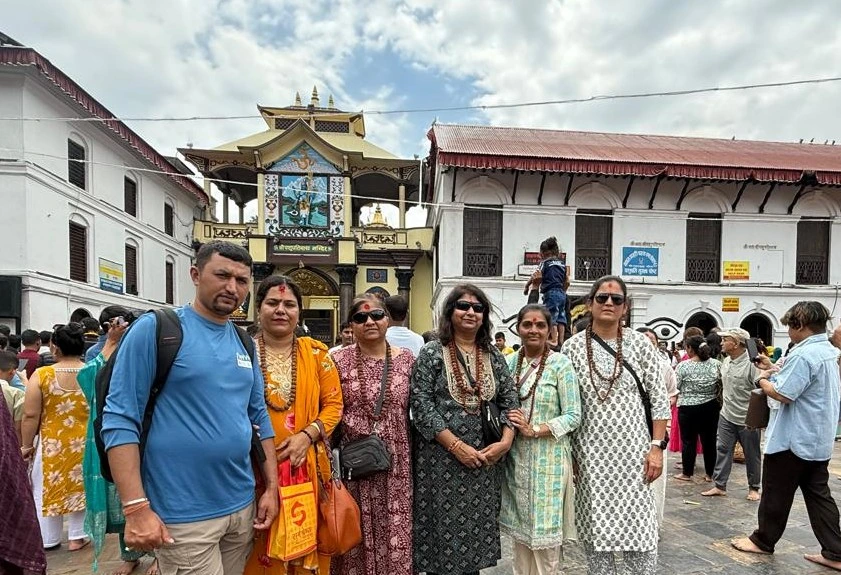
There’s a moment, just as the sun dips behind the Kathmandu valley, when the banks of the Bagmati river start to glow with oil lamps and fill with the sound of bells and chanting. This is the Evening Aarati at Pashupatinath Temple, and for many travelers, it ends up being the most memorable part of their trip to Nepal.
You don’t need to be Hindu or particularly religious to feel something here. The combination of fire, music, and hundreds of people sitting quietly together on stone steps has a way of pulling you in. If you’re putting together a list of things to do in Kathmandu, this ceremony deserves a spot near the top.
About Pashupatinath Temple
Pashupatinath Temple sits on the banks of the Bagmati river in eastern Kathmandu and is one of the holiest Hindu sites in the world. It’s dedicated to Lord Shiva in his form as Pashupati, “Lord of all beings,” and the temple complex has been a center of worship for well over a thousand years, with some structures and traditions tracing back many centuries earlier.
As a UNESCO World Heritage Site in Nepal, the temple is protected not just for its religious importance but for what it represents culturally – a living example of Hindu architecture, ritual, and daily devotion that hasn’t stopped for generations. The main pagoda-style temple is reserved for Hindu worshippers, but the surrounding complex, ghats, and riverbanks are open to everyone, which is exactly where the evening ceremony takes place.
Why the Evening Aarati is Special
Plenty of temples in Nepal hold daily rituals, but the Pashupatinath Temple Aarati stands out because of its scale and setting. It happens right on the riverbank, in full view of anyone who shows up, rather than tucked away inside a closed sanctum.
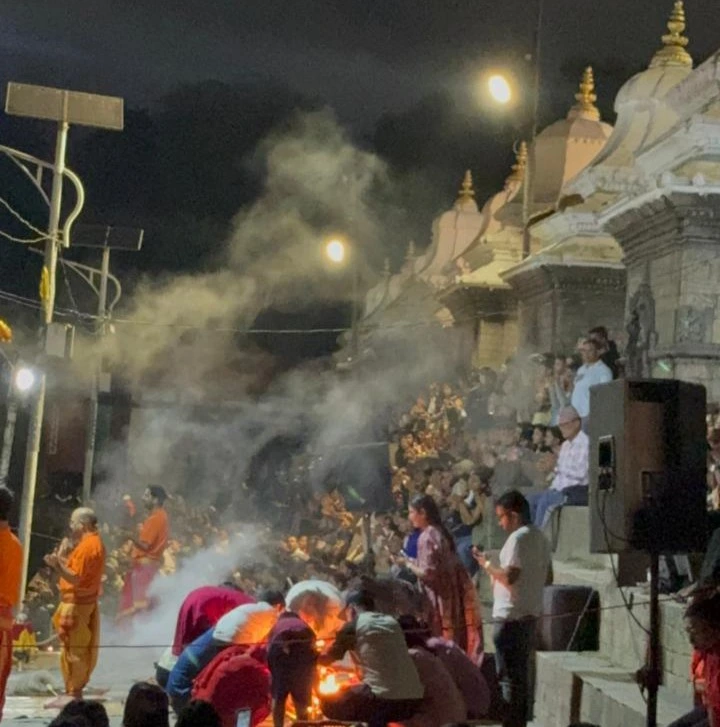
What makes it special isn’t really a single dramatic moment – it’s the buildup. The crowd gathering, the lamps being prepared, the first notes of music drifting across the water. By the time the priests begin, the whole place feels charged in a way that’s hard to put into words until you’ve actually sat there and watched it happen.
What Happens During the Aarati Ceremony
The ceremony usually begins around 6 PM, though timing shifts slightly with the seasons. Priests take their positions on a raised platform facing the temple and the river, each holding a multi-tiered brass lamp filled with burning ghee wicks.
They move through a sequence of practiced gestures, circling the flames in patterns meant to honor Shiva. It’s precise without feeling stiff – more like a slow, deliberate dance than a routine. The whole ritual runs for roughly half an hour, and the rhythm builds gradually rather than rushing toward a climax.
Atmosphere Along the Bagmati River
Both banks of the river fill up well before the ceremony starts. Locals come after work, families bring their kids, and tourists find a spot on the steps and wait. There’s a quiet kind of patience in the crowd that you don’t see at most tourist attractions.
Once the lamps are lit, the reflections scatter across the water, and the smoke from incense drifts low over the river. Cremation ghats are also part of this same stretch of the Bagmati, which is worth knowing beforehand death and worship exist side by side here, and that’s part of what gives the place its weight.
Music, Chants, and Traditional Rituals
Alongside the priests, a group of musicians plays drums, cymbals, and sometimes flutes, while singers lead devotional bhajans in praise of Shiva. The music isn’t background noise — it sets the pace for the entire ceremony and pulls the crowd into a shared rhythm.
Some visitors just watch. Others quietly clap or sway along. It’s common to see devotees close their eyes and get lost in the moment, especially during the louder, more rhythmic sections when the bells and cymbals pick up speed.
Visitor Experience
For most travelers, this is the kind of spiritual experience in Nepal that’s hard to plan for in advance — you really have to be there to understand it. It’s not staged for tourists, even though plenty of tourists attend. The ritual happens because it’s part of daily life at the temple, not because visitors are watching.
That said, it’s a comfortable event to attend as an outsider. You can sit on the opposite bank, take photos respectfully, and observe without needing to participate in any way. Many people describe it as calming rather than overwhelming, even with the size of the crowd.
Important Tips for Attending the Aarati
A few practical notes that make the visit smoother:
- Arrive early. Getting there 30-45 minutes before the ceremony starts gives you time to find a good seat on the steps.
- Dress modestly. This is a working religious site, so cover your shoulders and knees out of respect.
- Keep noise down. It’s fine to talk quietly, but loud conversations or phone calls stand out and feel out of place.
- Bring a light jacket. Evenings near the river cool off quickly, even in warmer months.
- Photography is generally allowed from the public side of the river, but avoid pointing cameras at cremation ceremonies happening nearby.
- Carry small cash for the entry fee and for any donations you’d like to make.
Best Time to Visit
The Aarati happens every single day of the year, rain or shine, so there’s no wrong season to catch it. That said, autumn (September to November) and spring (March to May) bring clearer skies and more comfortable evening temperatures, which makes sitting outside for the ceremony more pleasant.
If you’re hoping for a slightly smaller crowd, visiting on a weekday rather than a weekend or major festival date – such as Maha Shivaratri tends to be a bit calmer. Major festivals are incredible to witness too, just be ready for significantly larger numbers of people.
How to Reach Pashupatinath Temple
Pashupatinath Temple is located in eastern Kathmandu, about 5 kilometers from Thamel and roughly 15-20 minutes by taxi or ride-share depending on traffic. It’s also close to Tribhuvan International Airport, so some travelers stop by on their way into or out of the city.
Local buses run near the area as well, though taxis are far more convenient if you’re short on time or arriving close to the ceremony start time. There’s a small entry fee for foreign visitors, collected at the gate, which goes toward maintaining the temple complex.
Cultural and Religious Significance
For Hindus, Pashupatinath isn’t just a tourist site – it’s one of the most sacred Shiva temples in the world, drawing pilgrims from across Nepal and India. The Lord Shiva temple in Nepal status it holds means that life events here, from daily prayers to funeral rites along the ghats, are treated with deep seriousness.
The Evening Aarati fits into this larger picture as a public, daily act of devotion. It’s a reminder that for the people gathered there, this isn’t a performance – it’s part of an ongoing relationship with their faith that happens every evening, whether or not anyone is watching.
Know Before You Go
- The evening Aarati usually starts around 6:00-6:30 PM (timing varies slightly by season).
- Dress modestly – shoulders and knees should be covered, as this is a sacred Hindu site.
- Non-Hindus cannot enter the main temple, but the Aarati is fully visible from the Bagmati River banks.
- Photography is generally allowed; please be respectful during the actual rituals.
- Weekends and festival days draw bigger crowds – arriving early gets you a better spot.
- Expect incense smoke and chanting throughout – it’s part of the experience, not a distraction from it.
- The monument entry fee (NPR 1,000 per person) is not included in the tour price and is paid on-site.
Inclusions
What's included
- Hotel pickup and drop-off in a private vehicle
- Professional English-speaking tour guide
- Private air-conditioned transportation
- All applicable taxes
What's not included
- Monument entry fee (NPR 1,000 per person, paid on-site)
- Personal expenses
- Meals and drinks
- Gratuities for guide and driver