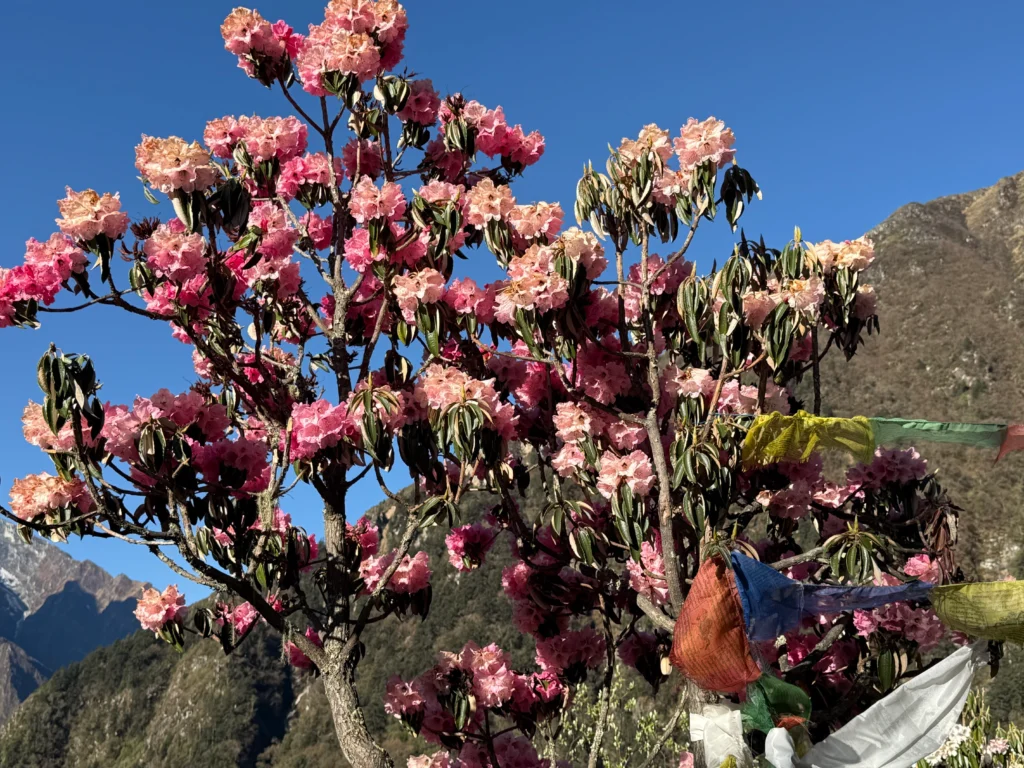
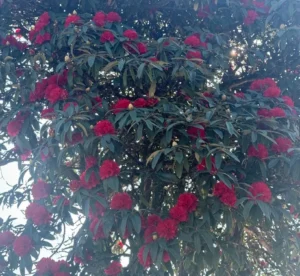
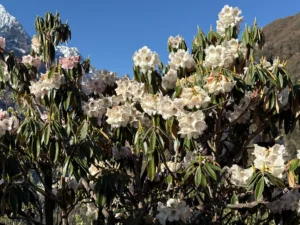
There is a specific moment, somewhere above 2,500 metres in Nepal, when the trail curves around a boulder and the forest ahead erupts into colour. Deep crimson, pale blush, snow white: rhododendron flower climbing the hillsides in every direction, framing the ice-capped giants behind them. It is one of those scenes that makes even seasoned trekkers stop mid-stride and just stand there, quiet.
At Everest Hikes Pvt Ltd, we have been guiding travellers through these forests for years. We know exactly which trails peak when, which viewpoints the guidebooks miss, and which homestay cook makes the best dal-bhat in the Annapurna foothills. This guide brings all of that on-the-ground knowledge together so you can plan your Nepal trek with the confidence of someone who has already been there.
Nepal’s Rhododendrons: What Makes Them So Special
Nepal is one of the richest rhododendron countries on earth, home to more than 30 distinct species ranging from low, waist-high shrubs on the mid-hills to ancient moss-draped trees over 15 metres tall in the cloud forests of the east. The national flower of Nepal, the red rhododendron locally called Lali Gurans, has deep cultural roots here. It is celebrated in folk songs and worn as garlands during festivals.
What sets Nepal apart from other rhododendron destinations is the sheer vertical range of the blooms. As spring works its way up the mountains, you can chase the flowers through successive altitude bands: catching the low hills in late March, the mid-elevation forests through April, and the high-alpine zones all the way into early May. A well-planned trek in Nepal can put you in peak bloom for two or three weeks straight.
The flowers also coincide with some of the finest trekking weather of the year: clear skies, manageable temperatures, and trails softened by the last of winter’s moisture. It is no coincidence that spring is the most beloved season among Nepal’s trekking community.
Rhododendron is not only admired for its vibrant beauty in the Himalayas, but it also plays a unique role in producing one of the world’s rarest natural substances: Mad Honey. During the blooming season, bees collect nectar from certain species of wild rhododendron flowers that naturally contain grayanotoxins. These compounds give Mad Honey its distinctive properties, including its mildly hallucinogenic effects. This rare harvest, found in remote mountainous regions, reflects the remarkable connection between rhododendron forests, traditional beekeeping, and the rich natural heritage of the Himalayas.
Month-by-Month Bloom Guide
Late March is the time to be in the low hills between 1,500 and 2,500 metres, where the first rhododendrons are at their peak. Early April brings the mid-elevation forests between 2,500 and 3,500 metres into full colour, while the lower zones begin fading. By mid to late April, the high-alpine zones between 3,500 and 4,500 metres reach their peak, and some species continue blooming into early May. Planning your trekking in Nepal around this progression means you can follow the bloom uphill and stay in colour for the length of your trip.
Top Places to See Rhododendrons in Nepal
1. Langtang National Park
- Altitude: 2,000 to 4,000 metres
- Best time: Late March to April
- Trek duration: 7 to 10 days
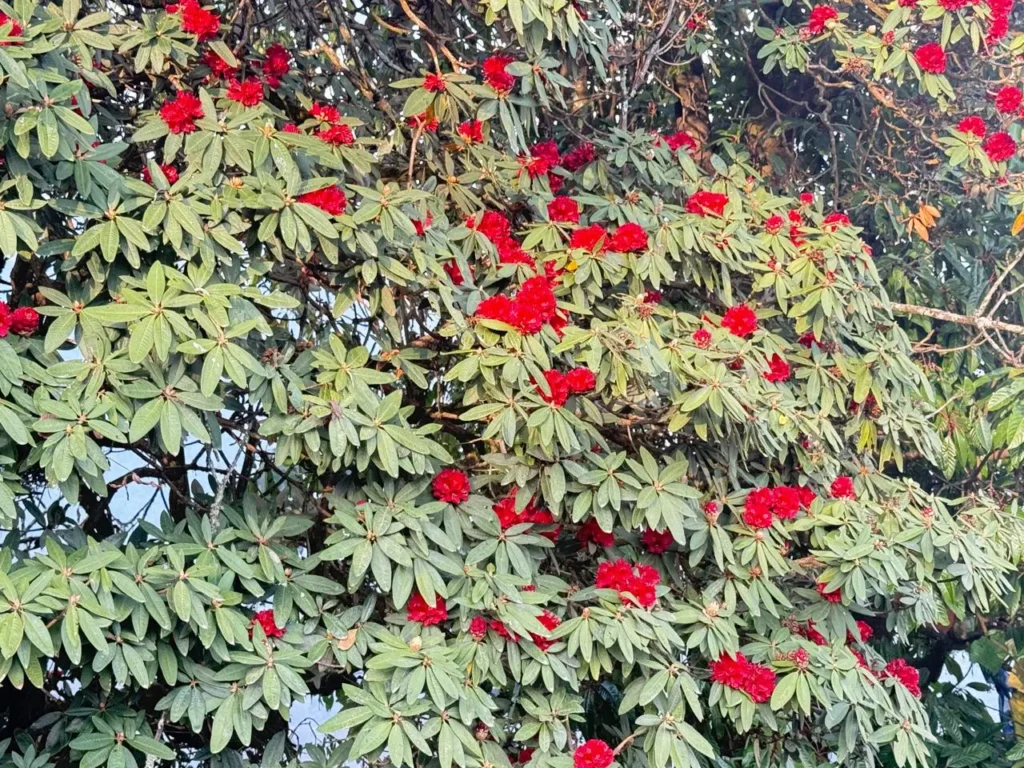
For anyone based in Kathmandu who wants maximum impact with minimum travel time, Langtang is the answer. You are in the national park within two hours of the city, and within a day’s trekking you are already surrounded by dense rhododendron forest that few first-time visitors expect to find so close to the capital.
The trail between Lama Hotel and Langtang Village is where the magic really happens. At around 3,000 metres, the path winds through corridors of ancient rhododendron trees with gnarled branches draped in lichen and canopies that are a riot of red and pink in early April. Meanwhile, the north faces of Langtang Lirung and Ganesh Himal float above the treeline, gleaming white against the blue sky. It is a composition that photographers dream about.
Beyond the flowers, Langtang rewards curious travellers. Red pandas inhabit these forests, the Tamang villages along the route are warm and welcoming, and the side trip to Kyanjin Gompa adds a rich cultural dimension to any guided trek in Nepal.
Everest Hikes Tip: Walk through the rhododendron sections in the early morning before the mist fully lifts. The diffused light turns the forest into something almost otherworldly, and the birds are most active at this hour too.
2. Annapurna Region: Ghorepani, Poon Hill and Ghandruk
- Altitude: 1,800 to 3,200 metres
- Best time: Late March to April
- Trek duration: 4 to 7 days
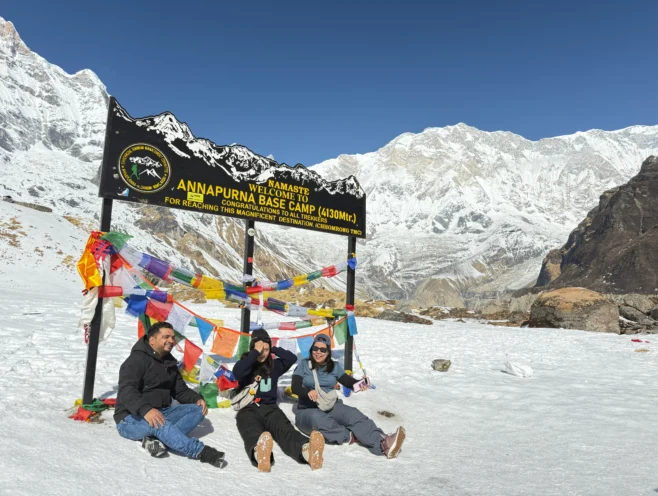
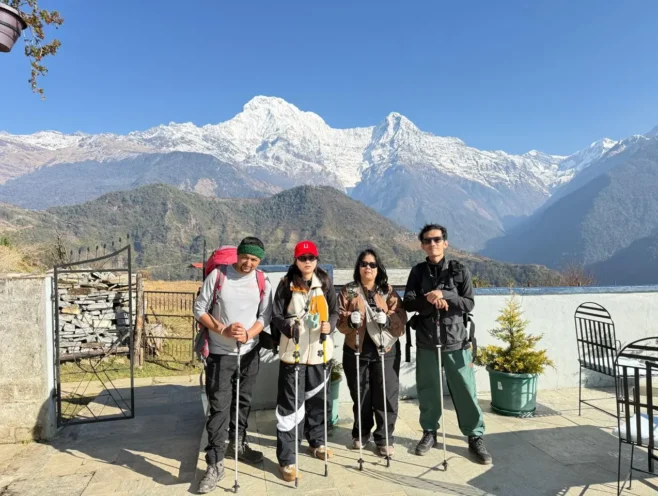
If there is one trek that has cemented Nepal’s reputation as a rhododendron paradise, it is the Ghorepani Poon Hill route in the Annapurna region. This is the Annapurna Trek that most of our clients remember most vividly, not because of the altitude or the challenge, but because of the sheer, sustained beauty of the trail.
From Tikhedhunga upward, the path climbs through one of the densest rhododendron forests in the entire Himalayan range. By the time you reach Ghorepani at 2,860 metres in early April, the surrounding hillsides are almost entirely crimson. The famous pre-dawn hike to Poon Hill at sunrise is spectacular year-round, but in the rhododendron season the foreground of the Annapurna and Dhaulagiri panorama is framed by flowers. That image, snow peaks behind and rhododendrons below with alpenglow between, is one of the great photographs of Himalayan trekking.
The route via Ghandruk also brings you into the heartland of the Gurung community, one of Nepal’s most storied hill cultures. Our guides here are deeply connected to the villages and can introduce you to people and places you simply would not access on your own.
Everest Hikes Tip: Do not rush through Ghandruk. Spend an extra night here, explore the upper village alleys, and ask our guide to introduce you to a local family. Spring in a Gurung home, with the smell of rhododendron smoke and freshly brewed tongba, is an experience you will not find in any brochure.
Trekking packages in the Annapurna region
3. Kanchenjunga Conservation Area
- Altitude: 2,000 to 5,400 metres
- Best time: April to May
- Trek duration: 20 to 28 days
For experienced trekkers who want to go somewhere genuinely wild, the trails around Kanchenjunga, the world’s third-highest peak, offer the most pristine rhododendron experience in Nepal. Relatively few trekkers make it to this corner of the country, which means the forests here feel entirely untouched. At higher elevations, you will encounter rare alpine rhododendron species you simply will not find anywhere else.
This is a serious Himalayan adventure that requires good fitness, solid acclimatisation, and experienced guidance. Our team at Everest Hikes has led expeditions in this region for years and knows the route intimately, from the remote teahouses of Ghunsa to the high passes connecting the north and south base camps. The effort is substantial, but those who complete it consistently tell us it was the most meaningful journey of their lives.
Everest Hikes Tip: Kanchenjunga is the type of trek where the quality of your guide makes an enormous difference. This is remote terrain where navigation, wildlife identification, and cultural introduction all matter. We will personally match you with one of our most experienced guides for this route.
4. Shivapuri Nagarjun National Park
- Altitude: 1,500 to 2,700 metres
- Best time: March to April
- Trek duration: 1 to 2 days
Most international visitors do not realise they are sitting on the doorstep of a beautiful rhododendron forest the moment they land in Kathmandu. Shivapuri National Park, tucked into the northern rim of the Kathmandu Valley, is accessible in under an hour from Thamel and offers a genuinely rewarding day or overnight trek through blooming rhododendron and oak forest.
The trails to Shivapuri Peak and around Nagi Gumpa monastery are especially lovely in March and April. For travellers who want a gentle introduction to trekking in Nepal before tackling bigger routes, or those who simply have a day to spare in Kathmandu, this is a perfect option. Our guides love the Sundarijal entry point particularly, where the trail climbs steeply through the best of the forest before opening onto ridge views.
Everest Hikes Tip: Pair a Shivapuri half-day trek with a visit to Budhanilkantha Temple at the park’s lower entrance. It makes for a culturally rich full day that most visitors to Kathmandu never experience.
5. Ilam: Eastern Hills and Tea Garden Trails
- Altitude: 1,000 to 2,000 metres
- Best time: Late March to April
- Trek duration: 2 to 4 days
Ilam is Nepal’s best-kept secret for spring travellers. This green, rolling district in the eastern hills is the heart of Nepal’s tea industry, and in spring its hillsides combine the sweet smell of new tea leaves with the vivid pink and red of rhododendrons in full bloom. It is a gentler, quieter kind of beauty than the high mountain routes, but genuinely stunning in its own right.
The trails here are unhurried and uncrowded. You will walk through forested ridges, past cardamom fields, and into tea gardens where workers are just beginning the first harvest of the season. Ilam works beautifully as a standalone destination or as part of a broader eastern Nepal itinerary combined with a visit to Kanchenjunga.
Everest Hikes Tip: Time your walk to arrive at Mai Pokhari lake in the late afternoon. The rhododendrons around this sacred wetland, reflected in still water with the hills behind, is a scene that photographs like a painting.
6. Rara National Park
- Altitude: 1,500 to 3,000 metres
- Best time: March to April
- Trek duration: 5 to 7 days
Rara is Nepal’s largest and most remote mountain lake, sitting at 2,990 metres in the far northwest. Getting here is an adventure in itself: a short flight to Jumla or Talcha followed by a multi-day trek through one of Nepal’s least-visited landscapes. But those who make the journey arrive somewhere extraordinary: a shimmering turquoise lake ringed by conifer and rhododendron forest, with the Himalayan foothills stretching away in every direction.
Spring is arguably the finest time to visit Rara. The rhododendron forests around the lake are in full bloom, wildlife is active, and the clear April skies reflect off the lake’s mirror surface. The only sounds you will hear are wind, water, and birds. For travellers who feel the most popular trekking routes in Nepal have become too crowded, Rara offers a genuinely rare escape.
Everest Hikes Tip: This is a route where your guide’s local connections really matter. Our guides in this region have relationships with families in remote Karnali villages who rarely see outsiders. A meal at a local home near Rara is an experience you simply cannot book anywhere else.
7. Gosaikunda Lake Trek
- Altitude: 3,000 to 4,380 metres
- Best time: March to May
- Trek duration: 7 to 10 days
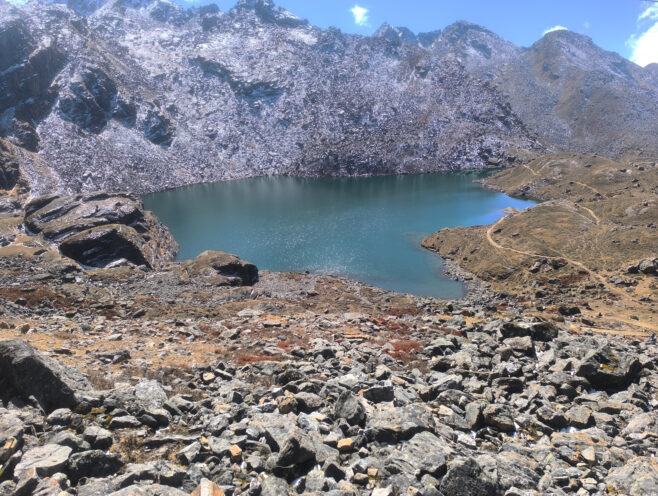
Gosaikunda holds a dual appeal that few treks can match: extraordinary natural beauty and deep spiritual significance. The sacred lake at 4,380 metres is one of Hinduism and Buddhism’s most revered sites in Nepal, and the trail leading up to it passes through some of the finest rhododendron forest in the Langtang region before breaking out into spectacular high-altitude scenery.
The lower sections of the trek, particularly around Sing Gompa and Cholangpati, are ablaze with colour in April. Higher up, the vegetation gives way to alpine meadows dusted with primula and dwarf rhododendron. It is a satisfying progression from lush forest to stark, sacred high country, and one that offers tremendous photographic variety across a single route.
Everest Hikes Tip: Dress in proper layers. The temperature swing between the rhododendron belt at 3,200 metres and the lake at 4,380 metres can be dramatic, especially in early spring. Our packing checklist for this route accounts for all conditions.
8. Makalu-Barun National Park
- Altitude: 2,000 to 5,800 metres
- Best time: April to May
- Trek duration: 15 to 20 days
Nepal’s most biodiverse national park is also one of its most spectacular and least visited. The Barun Valley, leading toward the base of Makalu, the world’s fifth-highest peak, passes through a vertical range of habitats that encompasses subtropical jungle, temperate rhododendron forest, and permanent ice. In spring, the mid-elevation bands around 3,000 to 4,000 metres turn into a botanical showcase of rare rhododendron species found nowhere else on earth.
Red pandas, snow leopards, Himalayan tahr, and hundreds of bird species inhabit these forests. This is a Himalayan adventure for travellers with serious wilderness credentials and a hunger for something genuinely remote. Everest Hikes has the local knowledge and logistical depth to run this route properly and safely.
Everest Hikes Tip: The approach through Num and Seduwa in the lower Arun Valley is spectacular in its own right. Budget extra time here, because the cultural encounters with Rai and Sherpa communities in this valley are among the most authentic you will find anywhere in Nepal.
9. Everest Region: Lower Trails from Lukla to Namche
- Altitude: Below 3,500 metres
- Best time: March to April
- Full EBC trek: 14 to 16 days
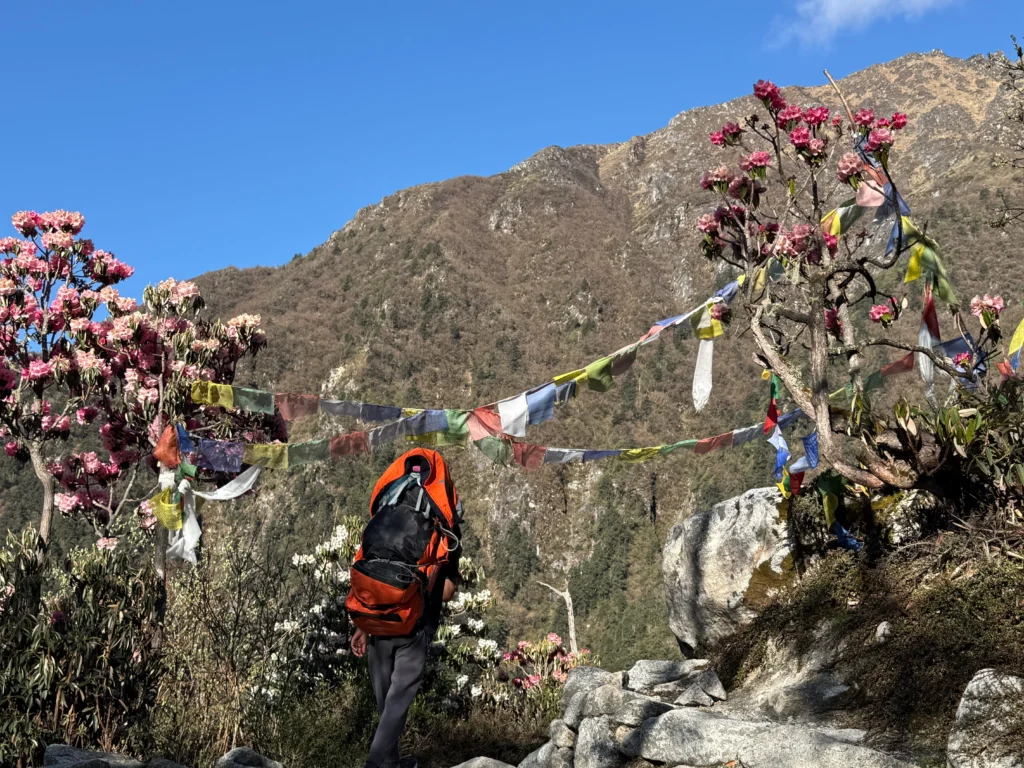
The Everest Base Camp Trek needs no introduction. It is one of the most iconic walks on the planet. What many travellers do not realise is that the lower sections of this route, from Phakding up to Namche Bazaar, are extraordinarily beautiful in spring, when the rhododendrons and magnolias lining the river gorge are in full bloom.
Trekking to Everest Base Camp in March or April means you get the best of both worlds: the famous high-altitude drama of Khumbu with the ice falls, prayer flags, and jaw-dropping Himalayan panoramas combined with the softer, colourful beauty of the lower forests. Our acclimatisation days around Namche and Khumjung are especially pleasant in spring, and the Sherpa communities here celebrate Tibetan New Year during this season, adding a festive energy to the villages.
Everest Hikes Tip: The side trail from Phunki Tenga up through the forest to Tengboche Monastery is one of the most beautiful short walks in Nepal in spring. The rhododendrons here sit at around 3,400 metres, right at their April peak, and the monastery at the top with Ama Dablam behind it is an image you will carry home forever.
10. Dhankuta and Hile: Eastern Hill Walks
- Altitude: 1,200 to 2,500 metres
- Best time: Late March to April
- Trek duration: 2 to 4 days
Dhankuta and the ridge town of Hile sit on a long, high ridge in eastern Nepal that offers sweeping views from the Himalayan snow line to the Terai plains. In spring, the forested hillsides around these towns are wonderfully colourful, and because this area sits off the main trekking circuits, you will walk in almost complete solitude.
This is an ideal destination for travellers who want to combine rhododendron walks with authentic hill-town culture, without the infrastructure of the more developed trekking regions. The local Rai communities here are genuinely hospitable, and the bazaar culture of Dhankuta gives a fascinating window into daily life in the mid-hills of eastern Nepal.
Everest Hikes Tip: Combine a Dhankuta walk with the beginning of a Kanchenjunga approach. The two areas connect naturally, and this pairing gives you a two-week eastern Nepal itinerary that covers terrain most visitors never see.
Flora and Wildlife Along the Trails
Spring trekking in Nepal is not just about rhododendrons. These forests are alive with activity during the blooming season. Keep an eye out for red pandas in the dense mid-elevation forests, particularly in Langtang and Makalu-Barun. The Himalayan Monal, Nepal’s national bird, is a frequent and brilliant sight along ridgeline trails. Langur monkeys move through the canopy in the lower zones, and Himalayan tahr graze on the rocky slopes above the tree line. For botanists, the understorey of a rhododendron forest in full spring is a study in abundance: primulas, wild orchids, ferns, and in rare high-altitude patches, the celebrated Himalayan blue poppy.
Culture, Community and the Spring Season
One of the things our guides love most about spring trekking in Nepal is how the season aligns with the rhythms of life in the hills. Communities that have been relatively quiet through the cold months start to open up. Fields are being planted, festivals are being celebrated, and the mountain routes are full of local people heading to market, visiting monasteries, and gathering flowers.
In Sherpa villages, you may encounter Dumje celebrations or prayer flag renewal ceremonies. In Gurung communities, the red rhododendron is woven into offerings and decorations for spring rituals. In Rai and Limbu villages further east, the flower marks the arrival of Sakela Ubhauli, a major harvest festival. Our guides know these calendars and will time your visits to villages accordingly. Encountering a community in festival is one of the most memorable things you can do in Nepal.
Spring meals are also special. Dal-bhat takes on new ingredients: wild greens, young fern shoots, and fresh highland cheese made from the first spring milk. Our teahouse partners know we appreciate good food and will often go out of their way to prepare something memorable.
Practical Tips for Rhododendron Trekking
The best time to arrive in Nepal for mid-altitude rhododendron blooms is between March 25 and April 10. For higher routes like Gosaikunda or Kanchenjunga, targeting mid to late April gives you the best chance at the high-alpine display. Book at least 8 to 10 weeks in advance: spring is Nepal’s busiest trekking season and permits, teahouse accommodation, and the best guides fill up quickly.
Clothing should be layered, as temperatures can vary dramatically between the rhododendron belt and higher passes on the same day. Bring a waterproof shell, trekking boots that have been broken in, trekking poles for the descents, and solid sun protection. A compact first-aid kit, water purification tablets, and any personal medications round out the essentials.
For photography, early morning light is ideal in the rhododendron forests. The mist that lingers in the canopy before 8am creates a depth and atmosphere that midday sun simply cannot replicate. A macro lens brings out the extraordinary detail in individual flowers, while a wider angle lets you capture the scale of the forest against the peaks behind.
All permits, including TIMS cards, national park entry fees, and restricted area permits where required, are arranged by our team at Everest Hikes before your trek begins. You will not need to navigate permit offices or queues on your own.
Why Trek with Everest Hikes Pvt Ltd
Our guides grew up in the mountains they lead you through. They know the trails, the weather patterns, the people, and the places no map marks. That local knowledge is something no amount of online research can replicate, and it is what makes every trip we organise feel different from a standard package tour.
Safety is built into everything we do. Every guide is wilderness first-aid certified, we carry quality medical kits on all routes, and we monitor weather and trail conditions daily. On higher routes, our acclimatisation schedules are designed conservatively, because getting you to the destination and back home safely is always the priority.
We design every itinerary from scratch around your fitness level, interests, and the time you have available. Whether you are looking for a 4-day introduction to trekking in Nepal or a 28-day deep wilderness expedition in Kanchenjunga, we will build an itinerary that fits you, not the other way around.
We work exclusively with locally owned teahouses and homestays, pay fair wages to all staff, and support conservation efforts in the parks and forests we travel through. When you trek with Everest Hikes, the people and landscapes you encounter benefit from your visit.
Frequently Asked Questions
1. When is the rhododendron season in Nepal?
The peak season runs from late March through mid-April for most routes. High-altitude trails peak in mid to late April, and some alpine species bloom into early May.
2. Are rhododendron treks suitable for beginners?
Yes. Routes like Ghorepani Poon Hill, Shivapuri, and Ilam are well within reach of first-time trekkers with basic fitness. Our guides pace every journey to suit the group.
3. Do I need prior high-altitude experience for the Everest Base Camp Trek?
No prior high-altitude experience is necessary. We build proper acclimatisation days into every EBC itinerary and our guides are trained to monitor altitude-related symptoms carefully. The majority of our Everest Base Camp Trek guests complete the route without any previous high-altitude background.
4. Are rhododendrons protected in Nepal?
Yes. Rhododendrons within national parks and conservation areas are fully protected by law. Picking or harvesting them is prohibited. Our guides reinforce responsible trekking practices on every journey.
5. How do I get started with Everest Hikes?
Simply reach out to our team with your travel dates, fitness level, and interests. We will respond with a personalised itinerary recommendation and take care of everything from there.