Your complete guide to the gateway of Langtang Valley, Tamang culture, and high-altitude wilderness
A Small Village That Opens Enormous Doors
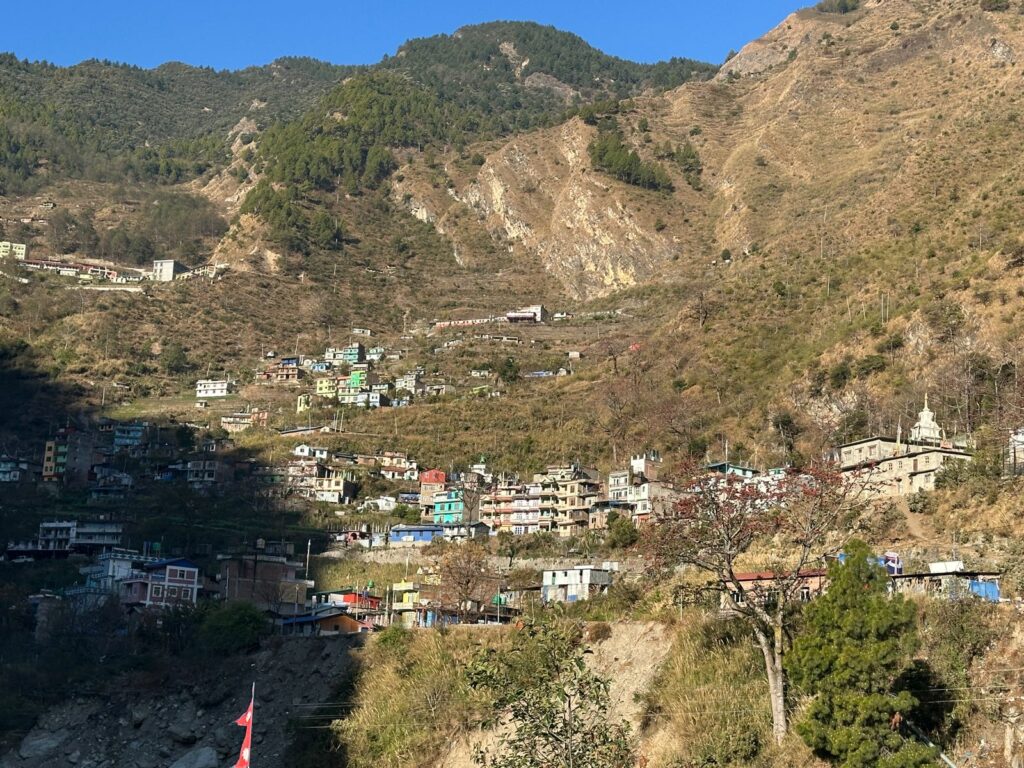
Few places in Nepal carry the quiet electricity of a true beginning. Tucked into a river gorge in Rasuwa District, roughly 120 kilometres north of Kathmandu, Syabrubesi village sits at approximately 1,460 to 1,550 metres above sea level — high enough for the air to taste clean, low enough to remain hospitable year-round.
Its position at the confluence of the Trishuli and Bhote Koshi rivers gives it both drama and calm: white water rushes just beyond the guesthouses, while forested ridges climb steeply in every direction.
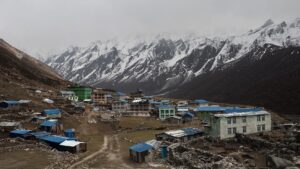
Despite its modest size – a single main lane of teahouses, lodges, small shops, and a sprinkling of traditional stone homes – the village pulses with the energy of perpetual arrival and departure. Porters shoulder enormous loads, mule trains clatter across wooden bridges, and trekkers from across the globe sit shoulder-to-shoulder over steaming bowls of thukpa, studying maps and planning their ascent.
Syabrubesi village is the official Langtang trek starting point, but calling it only that would be like describing Kathmandu as merely an airport stop. This is a destination in its own right.
The Road from Kathmandu: A Drive Worth Savouring
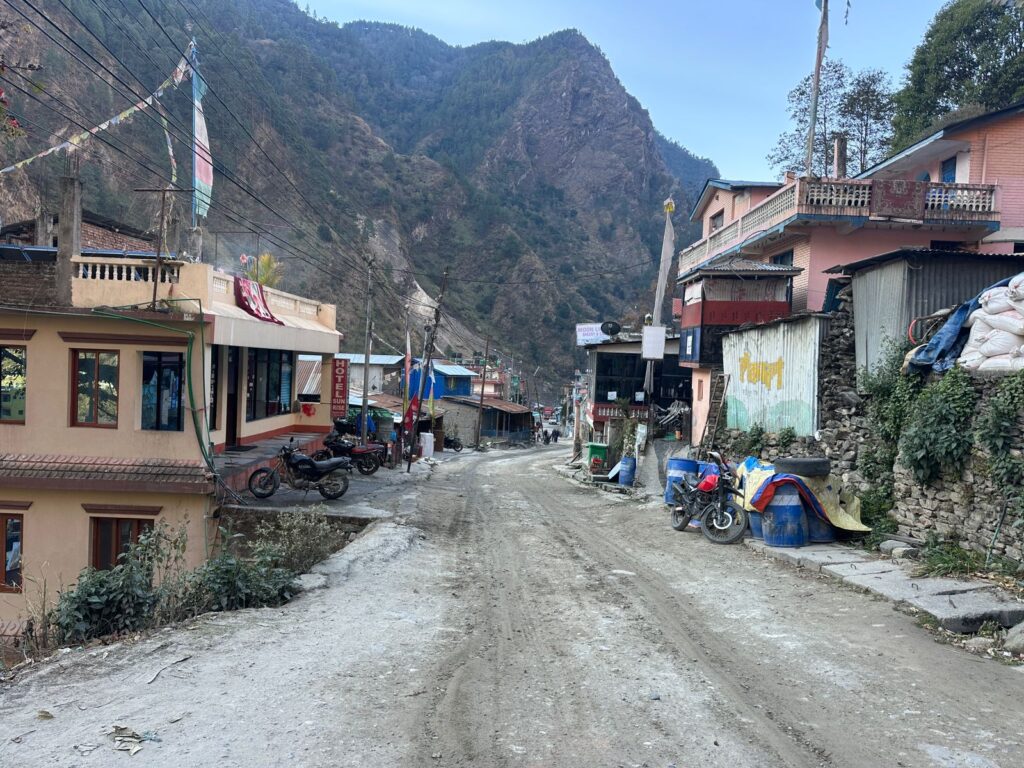
The journey from Kathmandu to Syabrubesi takes between six and seven hours by shared jeep or tourist bus, and it is the kind of drive that travellers tend to underestimate — and then spend the rest of their trip talking about.
From the capital, the road heads north through the Trishuli River valley, winding past terraced farmland, cascading waterfalls, and the Langtang National Park checkpoint at Dhunche. The views grow progressively wilder as elevation increases: subtropical vegetation gives way to pine and rhododendron forest, and the valley walls draw ever closer.
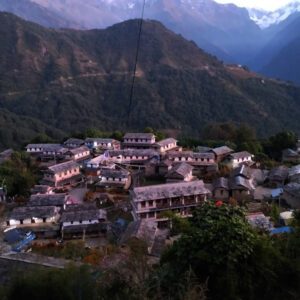
By the time Syabrubesi appears below – a warm cluster of rooftops nestled in a deep green gorge — most passengers have their foreheads pressed against the window.
Shared jeeps depart early morning from Machhapokhari near Kathmandu’s Balaju area and are the fastest, most practical option. Tourist buses are cheaper but slower. Either way, book in advance during peak season and pack motion sickness tablets if winding mountain roads are not your usual habitat.
The drive itself is a kind of orientation – the mountains do not appear all at once, they accumulate, ridge by ridge, until the world you knew has quietly disappeared behind you.
Not Everest – And That Is Precisely the Point
Let us be clear: Syabrubesi village is not on the Everest Base Camp route. It does not belong to that famous circuit running through Namche Bazaar and Tengboche. What it offers instead is something many trekkers are actively seeking – similar grandeur, considerably fewer crowds, and a far more intimate cultural experience.
Syabrubesi is the primary starting point for three of Nepal’s most rewarding trekking itineraries: the Langtang Valley Trek, the Gosainkunda Lake Trek, and the Tamang Heritage Trail. Each begins here, on this narrow lane beside the roaring Bhote Koshi.
The village is consistently the first overnight stop for trekkers arriving from Kathmandu, offering a sensible, acclimatizing first night before the ascent begins in earnest the following morning.
For those craving the high Himalaya without the Everest region’s tourist infrastructure, Syabrubesi offers a compelling and almost uncomfortably beautiful alternative.
Tamang Warmth in a Mountain Village
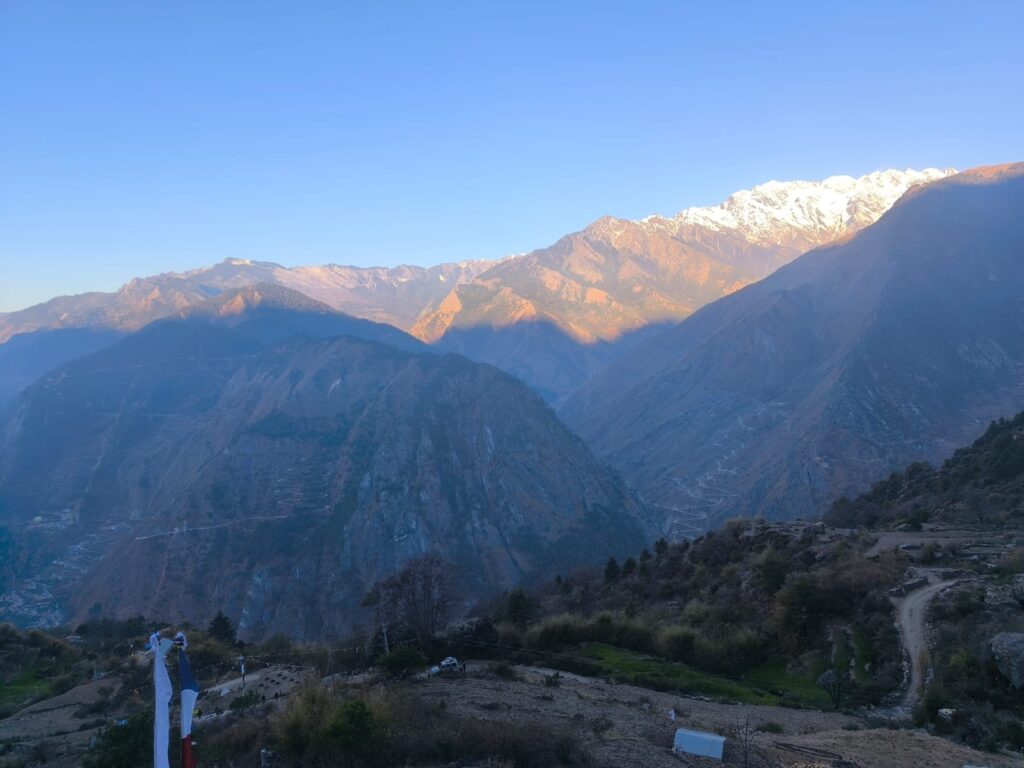
The cultural heartbeat of Syabrubesi belongs to the Tamang people, one of Nepal’s indigenous Himalayan communities with deep roots in Buddhism, pastoral life, and a tradition of hospitality that feels neither performed nor practiced – it simply exists.
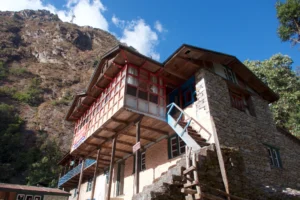
Tamang culture is visible in every detail: the prayer wheels mounted beside guesthouse doors, strings of prayer flags snapping above the river gorge, the low hum of a lodge-keeper doing evening chants. Women weave traditional cloth on hand looms; men lead loaded mules up trails worn smooth by generations of trade between Nepal and Tibet.
A History Written in Stone and Conflict
Historically, Syabrubesi’s position along the Nepal-Tibet border gave it strategic significance far beyond commerce. During the Sino-Nepalese War of the late eighteenth century, this corridor was a theatre of conflict and negotiation – a reminder that these mountains, so serene today, have witnessed centuries of contested geography.
The village’s proximity to the Rasuwa Gadhi fort, a Nepalese defensive stronghold from that era, reflects this layered past. Local guides will walk you through it with the easy authority of people who carry history in their family stories.
Festivals and the Rhythm of Ritual Life
Visit during the right season and you may witness Dumji, a vibrant Tamang celebration of masked dances, communal feasting, and offerings to protective deities. Monasteries fill with incense, drums thunder through valley walls, and the entire community seems to breathe together in celebration.
From late spring through early summer — the Nepali month of Jestha — the village sees a different kind of energy: a steady stream of Hindu and Buddhist pilgrims headed to Gosainkunda Lake, the sacred alpine waters at 4,380 metres revered by both traditions. Watching this pilgrimage flow through town, a river of faith and endurance, is one of those travel moments that resists easy description.
Hot Springs, Monasteries, and Mountain Markets
Syabrubesi’s natural surroundings are not decorative – they are immersive.
The Tatopani hot springs, located a short walk from the village, are a fixture of the post-trek recovery ritual. Stone-edged pools fed by geothermally heated water sit beside the cold rush of the river, creating a sensory contrast that is almost comically perfect after days in the mountains. Arrive at dawn for solitude; arrive at dusk for atmosphere.
Within easy walking distance lie several small villages and active monasteries not museum pieces, but lived-in spaces where monks chant at first light and juniper incense drifts through open doorways. The trail toward the Tamang Heritage circuit passes through communities like Gatlang, Thuman, and Tatopani village, each offering a different facet of mountain Tamang life.
The local market in Syabrubesi is small but revelatory – a handful of stalls selling everything from woollen socks and yak cheese to goods that have crossed the high passes from Tibet. Bargaining is gentle and unhurried.
Nearby, the Chuli Hydropower Project hums quietly in the gorge below — a reminder that even remote Himalayan communities are touched by development, though in Syabrubesi, the mountains still have the final word.
Four Trekking Worlds, One Starting Gate
Syabrubesi sits at the confluence of some of Nepal’s most rewarding high-altitude trails. Whether you have a week or three, a moderate fitness level or a mountaineer’s ambition, the trails that begin here will not disappoint.
Langtang Valley Trek
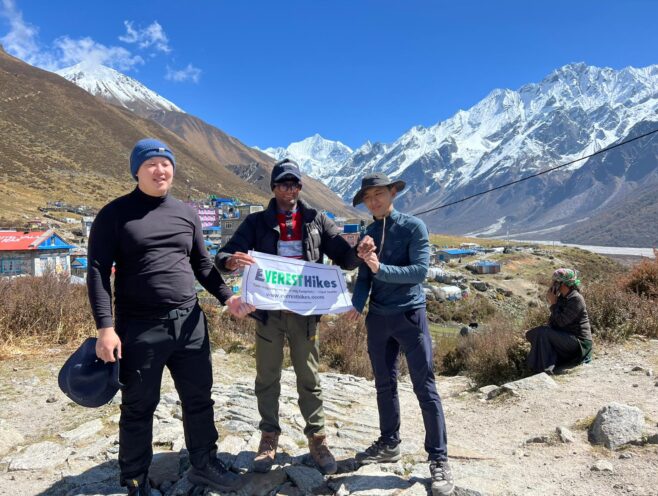
The crown jewel of the region. A 7–10 day journey through yak pastures, glacial moraines, and ancient monasteries leads to Kyanjin Gompa at 3,870 metres, with towering views of Langtang Lirung (7,234 m). One of Nepal’s finest moderate treks — and still refreshingly uncrowded compared to the Everest and Annapurna circuits.
Gosainkunda Lake Trek
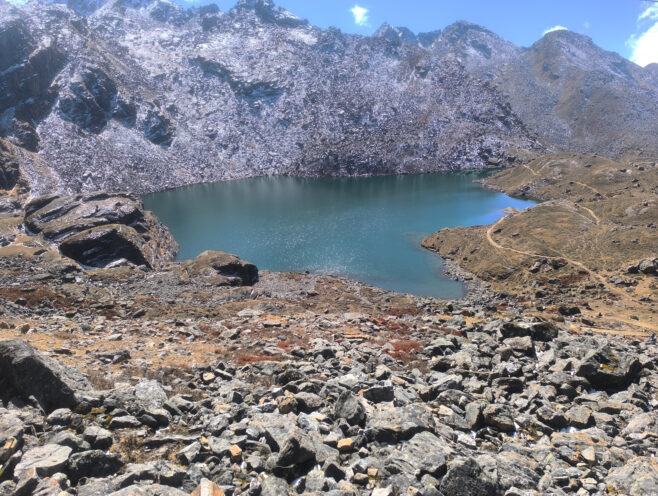
A spiritually charged high-altitude journey to sacred glacial lakes at 4,380 metres, revered in both Hindu and Buddhist traditions. The route climbs steeply through rhododendron forests and open alpine meadows, often connected to the Helambu circuit for a full crossing. Build in acclimatization days.
Tamang Heritage Trail
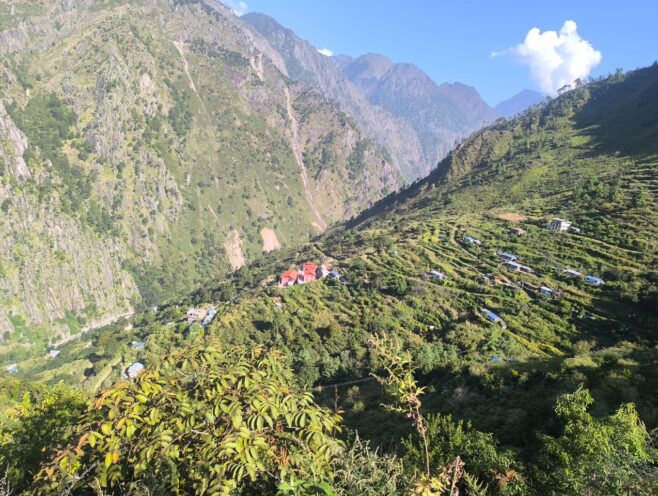
A culturally immersive circuit through traditional Tamang villages — Gatlang, Tatopani, Thuman, Nagthali — with homestay options, local festivals, and sweeping mountain panoramas. At lower elevations than the Langtang Valley route, it is ideal for trekkers who prioritize cultural depth over altitude gain. Often overlooked; deeply rewarding.
Ruby Valley Trek
A hidden gem – literally. This off-the-beaten-path route passes through Tamang villages and high ridgelines toward the Ganesh Himal massif, and the area is named for the rubies and sapphires found in local stream beds. Few crowds, high reward, unforgettable solitude.
Staying, Eating, and Getting By: The Practical Reality
Accommodation
Syabrubesi has developed solid infrastructure for trekkers without losing its village character. Guesthouses range from family-run rooms with shared bathrooms to comfortable lodges offering hot-bucket showers and basic Wi-Fi. Nightly rates fall between NPR 700 and NPR 2,000 depending on room type and season. Budget for the upper end during March–May and September–November peak periods, and book ahead – the better lodges fill quickly.
Food
The food scene is honest and hearty. Local teahouses serve the trekking staples: dal bhat — the Nepali classic of lentil soup, rice, and vegetable curry that comes with unlimited refills alongside Tibetan-influenced dishes like steamed momos, soupy thukpa noodles, tsampa (roasted barley porridge), and butter tea poured from tall wooden churns. For breakfast, thick Tibetan bread with local honey is deeply satisfying before a long day on the trail.
Connectivity
NTC and Ncell both have coverage within the village. Signal weakens considerably beyond Lama Hotel on the Langtang trail, so download offline maps before you leave. Wi-Fi is available at most lodges but expect messaging speeds, not streaming.
Cash and ATMs
There is no ATM in Syabrubesi. The nearest cash machines are in Trishuli or Battar, on the road from Kathmandu. Withdraw sufficient Nepali rupees in small denominations before you leave the capital — teahouses along the trail operate on cash only.
Permits
Two documents are required before entering the Langtang trekking area: a Langtang National Park Entry Permit and a TIMS card (Trekkers’ Information Management System). Both can be obtained in Kathmandu at the Nepal Tourism Board office, or at the checkpoint in Dhunche. Carry physical copies — checkpoint staff will ask for them.
Homestays and Handicrafts
For those who want to move beyond standard lodge culture, several families in and around Syabrubesi offer homestay experiences: a night or two sleeping in a traditional Tamang home, sharing meals cooked over a clay stove, waking to roosters and prayer bells. It is occasionally rustic and entirely memorable.
Small shops along the main lane sell locally produced handicrafts — hand-woven woollen scarves, singing bowls, Thangka paintings, and wooden prayer wheels. These are not factory imports but objects made by the hands you shake in greeting.
Reading the Seasons: When to Come
Timing a visit to Syabrubesi correctly can be the difference between transcendent mountain skies and weeks of cloud. Nepal’s mountain weather is structured, and Langtang follows the same calendar.
Spring (March–May) is the most visually spectacular window. Rhododendron forests blaze red and pink across the hillsides, temperatures are mild, and mountain views are clear before afternoon cloud builds. April is widely considered the pinnacle of the trekking calendar in this region.
Autumn (September–November) delivers crystalline post-monsoon clarity. The air has been scrubbed clean by weeks of rain, and Himalayan panoramas are as sharp as cut glass. October is the single busiest month — book accommodation in advance.
Monsoon (June–August) brings heavy rain, leeches on lower trails, and landslide risk on the road from Kathmandu. Experienced trekkers visit anyway, drawn by empty trails and dramatically lush landscapes – but this is not recommended for first-timers.
Winter (December–February) sees snowfall at higher elevations. Syabrubesi itself remains accessible, but the Langtang Valley trail grows challenging above Lama Hotel. A quieter, colder, beautifully uncrowded experience awaits those who come.
Pack Smart: What You Actually Need
Getting your kit right for Syabrubesi and the trails beyond it is less about brand names and more about layering logic and mountain common sense.
- Layered clothing system: moisture-wicking base layer, insulating mid-layer, waterproof outer shell — temperatures swing dramatically between valley and ridge
- Waterproof trekking boots with ankle support; the trails are rocky and frequently muddy
- Rain cover for your backpack, non-negotiable even in dry season
- Power bank with at least one to two full charges; electricity in the village can be irregular, and trail charging points are scarce
- Sufficient Nepali rupees in small denominations — no ATM exists in Syabrubesi
- Copies of all permits — TIMS card and National Park entry — for checkpoints
- Personal first-aid kit including altitude medication (Diamox) if venturing toward Gosainkunda or Kyanjin Ri
- UV-blocking sunglasses and sunscreen — UV intensity increases sharply above 2,000 metres
- Reusable water bottle with filtration — protect both your health and the environment
- Small gifts for host families if doing homestays; children’s stationery or school supplies are always genuinely appreciated
Syabrubesi Is Not a Starting Point. It Is a Destination.
There is a particular kind of traveller for whom the journey matters as much as the destination — who wants mountains without the crowds, culture without the performance, and the feeling of arriving somewhere genuinely alive. Syabrubesi village was made for that person.
Yes, it is the Langtang trek starting point. Yes, it is the logistical launch pad for some of Nepal’s finest high-altitude routes. But it is also a place where Tamang grandmothers spin wool beside open doorways, where the Bhote Koshi runs cold and fast through a gorge that smells of pine and wet stone, where the mountains do not just surround you — they hold you.
Spend a full day here before you climb. Sit with your tea. Talk to your host. Visit the monastery at dusk. Let the altitude, the history, and the hum of this extraordinary small village settle into your body before the trail demands everything of it.
The Himalayas will still be there in the morning. Syabrubesi is worth the pause.