Holi in Nepal is one of the most exuberant, joyful, and visually stunning celebrations in the Hindu calendar. Known as the “Festival of Colors,” Holi in Nepal bursts to life each spring with clouds of vivid powder, laughter-filled streets, and the deep resonance of age-old traditions. For travelers and locals alike, Nepal Holi Festival offers an unforgettable cultural experience that blends mythology, spirituality, social unity, and pure festive fun.
In Nepal, Holi is officially known as Fagu Purnima specially in Pahad (Hilly Region) – a name derived from the full moon (Purnima) of the Hindu lunar month of Falgun. While the festival shares its roots with Holi celebrations across South Asia, the Nepalese version carries its own unique regional character, calendar, and customs that set it apart from Indian Holi celebrations.
Whether you are planning a trip to experience Holi celebrations in Nepal firsthand, or simply curious about this vibrant tradition, this guide covers everything you need to know; from the mythological origins and religious significance to the best places to celebrate and practical travel tips.
What Is Holi? Origins and Mythological History
Holi is one of the oldest Hindu festivals, with origins rooted deeply in the ancient scriptures, particularly the Vishnu Purana. The story behind Holi centers on the eternal conflict between good and evil – and the ultimate triumph of devotion and righteousness.
The Legend of Prahlad and Holika
According to Hindu mythology, there once lived a demon king named Hiranyakashipu – a tyrannical ruler who despised Lord Vishnu. His hatred stemmed from Vishnu’s slaying of his brother, Hiranyaksha, who had abducted the earth goddess, Devi Prithvi (Mother Earth). Lord Vishnu rescued Devi Prithvi in his Varaha (boar) avatar and slew Hiranyaksha, which filled Hiranyakashipu with a burning desire for vengeance.
Paradoxically, Hiranyakashipu’s own son, Prahlad, was a devout and unwavering devotee of Lord Vishnu. The demon king, threatened and enraged by his son’s piety, repeatedly attempted to kill Prahlad but each time, Vishnu’s divine protection kept the boy unharmed.
In desperation, Hiranyakashipu sought the help of his sister, Holika, who possessed a divine boon: she was believed to be immune to fire. Together, they plotted to eliminate Prahlad by having Holika sit in a blazing bonfire with the child on her lap. However, Holika’s boon could only protect her when used for righteous purposes. Because her intention was evil, the boon offered no protection. Holika was consumed by the flames while Prahlad emerged unscathed, protected by his devotion and Lord Vishnu’s grace.
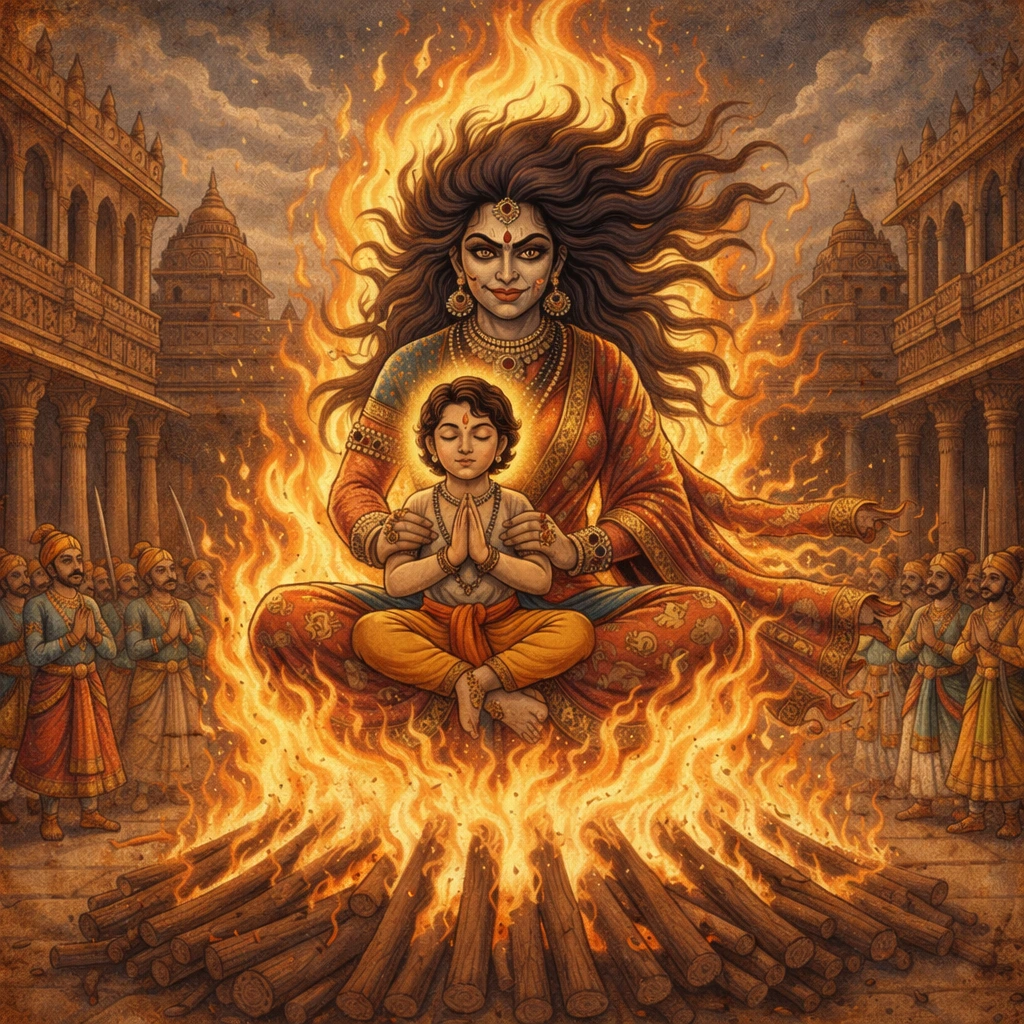
This story is the spiritual cornerstone of Holi. It symbolizes that good ultimately triumphs over evil, that faith and righteousness are stronger than malice and power. The festival’s name itself is derived from “Holika,” commemorating her defeat and the victory of virtue.
When Is Holi Celebrated in Nepal?
The date of Holi in Nepal follows the Hindu lunar calendar and falls on the full moon day (Purnima) of the month of Falgun, which typically corresponds to February or March in the Gregorian calendar. Importantly, Nepal celebrates Holi one day earlier than India, so travelers should always verify the Nepal-specific dates rather than relying on Indian Holi calendars.
Additionally, the celebration spans two days in Nepal, with the Pahad (hilly) region and Terai (plains) region celebrating on different days:
- Pahad (Hill) Region: Celebrates Holi on Fagu Purnima — the actual full moon day. In the hills, it is commonly called Fagu Purnima.
- Terai (Plains) Region: Celebrates Holi one day after the Pahad region. In the Terai, the festival is widely referred to simply as “Holi.”
Despite the difference in name – Fagu Purnima in the hills versus Holi in the Terai, both celebrations carry the same positive spiritual meaning: the victory of positive forces over negative ones.
Upcoming Holi dates in Nepal:
- Holi 2026: March 2 – 3 (2 March in Pahad, 3 March in Terai)
- Holi 2027: March 21–22
Cultural and Religious Significance of Holi in Nepal
Nepal is a predominantly Hindu country, with over 80% of its population following Hinduism. However, Nepal is also home to significant Buddhist communities, and both religions have historically shared cultural threads making festivals like Holi a broadly inclusive celebration that transcends religious boundaries. This spirit of shared joy is a hallmark of Nepalese society and contributes to Holi’s widespread popularity.
Celebration of Spring
Holi marks the end of winter and the arrival of spring. The vivid colors thrown during the festival mirror the blooming flowers and renewed vitality of nature in springtime. Celebrating with color is, in essence, a tribute to life itself – an expression of gratitude for the warmth and abundance that spring brings after the cold, dark months of winter.
Social Harmony and Community Bonding
One of the most beautiful aspects of Nepal Holi Festival is its power to dissolve social barriers. On Holi, distinctions of age, caste, class, and background fade away as people come together to smear each other with color, laugh, dance, and share food. It is a day when hierarchy gives way to equality, and the only rule is to have fun. This social leveling is deeply embedded in the spirit of Holi and makes it one of the most inclusive celebrations in Nepalese culture.
How Holi Is Celebrated in Nepal: Rituals and Traditions
Holika Dahan: The Night Before Holi
Holi celebrations in Nepal begin the evening before the main event with Holika Dahan – the ritual burning of a bonfire. Communities gather around these fires to symbolically enact the burning of Holika, commemorating the triumph of Prahlad’s devotion over evil.
While Holika Dahan is more prominently observed in India where estimates suggest tens of thousands of bonfires light up cities like Mumbai on the eve of Holi – the ritual is also observed in Nepal, particularly in communities and temples. The fires represent the symbolic cleansing of evil and the ushering in of a new, positive beginning.
Playing with Colors: The Heart of Holi
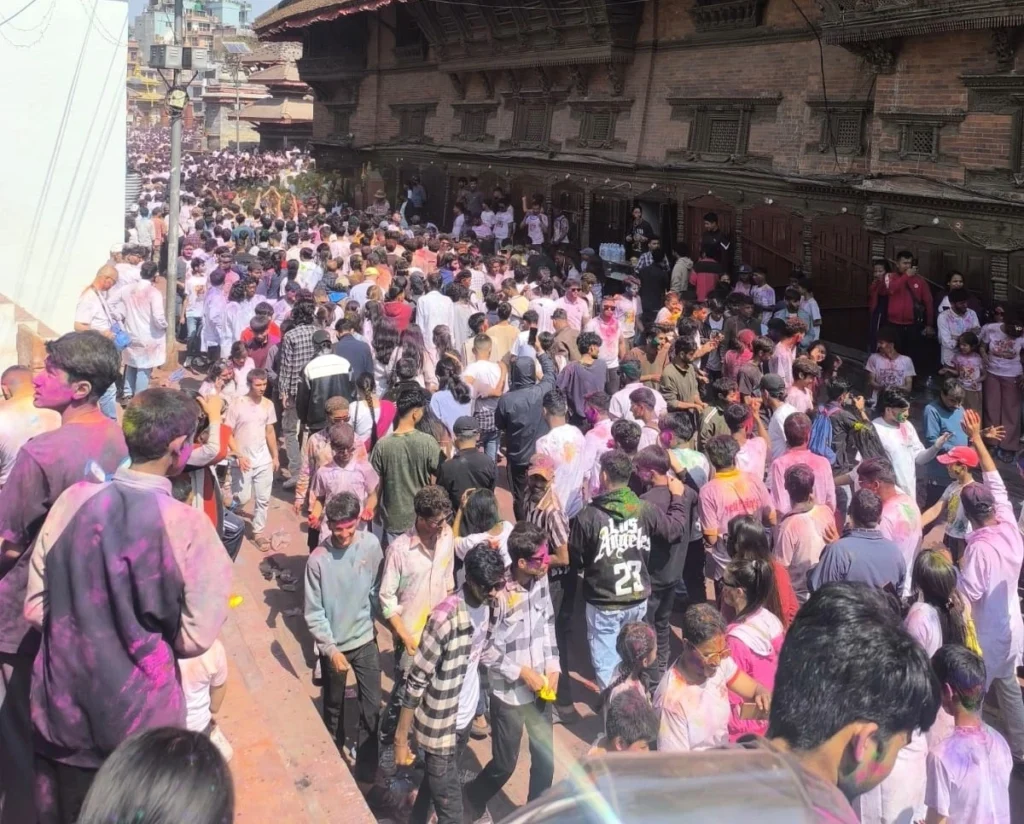
The main event of Nepal Holi Festival takes place the following day, when the streets come alive with color. People venture outside armed with gulal (dry colored powder), water balloons, and pichkaris (water spray guns) to drench friends, family, and even strangers in a rainbow of hues.
The best time to participate in Holi celebrations in Nepal is between 10 AM and 3 PM, when the festivities are at their peak. If you are walking through the narrow streets of Kathmandu’s Thamel neighborhood during this time, be alert: water balloons may rain down from balconies above, and children with water guns lurk around every corner. Anyone outside during Holi is considered a willing participant!
Traditionally, the powders used were derived from natural sources – turmeric, sandalwood paste, and plant extracts of neem, haldi, and bilva provided the vivid colors. Modern Holi celebrations in Nepal increasingly use synthetic dyes, which are more affordable and widely available, though there is a growing movement to return to organic, skin-friendly colors.
Music and Dance
No Holi celebration in Nepal is complete without music and dance. Public spaces, parks, community centers, hotels, and resorts resonate with festive songs as people dance together in joyful abandon. Traditional folk music blends with contemporary Bollywood and Nepali pop, creating an atmosphere of infectious energy that draws in everyone nearby.
Traditional Foods and Drinks of Holi
Feasting is an integral part of Nepal Holi Festival. Families and friends come together to enjoy a variety of festive treats, including:
- Gujiya: Sweet dumplings filled with dried milk powder and crushed nuts, deep-fried to golden perfection. A quintessential Holi treat across Nepal and India.
- Bhang Lassi: A traditional drink made by blending bhang (cannabis) with yogurt, milk, ghee, and aromatic spices. Bhang consumption has deep cultural and religious roots in Holi celebrations, and in Nepal — as in parts of northern India — it is traditionally accepted during the festival. In India, government-supervised shops even sell bhang-infused products during Holi.
- Bhang Laddoos: Round sweets infused with bhang, enjoyed as a festive delicacy.
- Malai Peda: Rich, creamy milk-based sweets that are a beloved part of any Nepali celebration.
- Assorted Sweets: Families exchange homemade and store-bought sweets with neighbors, friends, and relatives, deepening bonds of community and goodwill.
The festival typically winds down in the late afternoon, when people return home to wash off the colors, change into clean clothes, and visit friends and family to exchange sweets and good wishes.
Holi in Nepal vs. India: Key Differences
While Holi in Nepal and India share the same mythological roots and core traditions, there are several notable differences:
- Date: Nepal celebrates Holi one day earlier than India. Travelers looking up “Holi dates” online should specifically search for Nepal Holi dates to avoid confusion.
- Two-Day Regional Celebration: Nepal’s Pahad (hill) and Terai (plains) regions celebrate on consecutive days, reflecting the country’s geographic and cultural diversity.
- Holika Dahan Scale: India’s Holika Dahan is significantly more prominent, with tens of thousands of bonfires lighting up major cities. In Nepal, bonfires are observed but on a smaller, more community-oriented scale.
- Local Name: In Nepal’s hilly regions, the festival is called Fagu Purnima rather than simply Holi, reflecting the significance of the full moon (Purnima) in the Nepali Hindu tradition.
- Atmosphere: Holi celebrations in Nepal’s cities, particularly in Kathmandu’s Thamel and Durbar Square, have a distinctly international flavor, drawing large numbers of foreign tourists and expats who join locals in the celebrations. This gives Nepal’s Holi a uniquely cosmopolitan character.
Best Places to Experience Holi Celebrations in Nepal
Kathmandu Valley
Kathmandu is undoubtedly the most vibrant hub for Holi celebrations in Nepal. The valley’s three historic cities: Kathmandu, Bhaktapur, and Patan – each offer a unique setting for the festival:
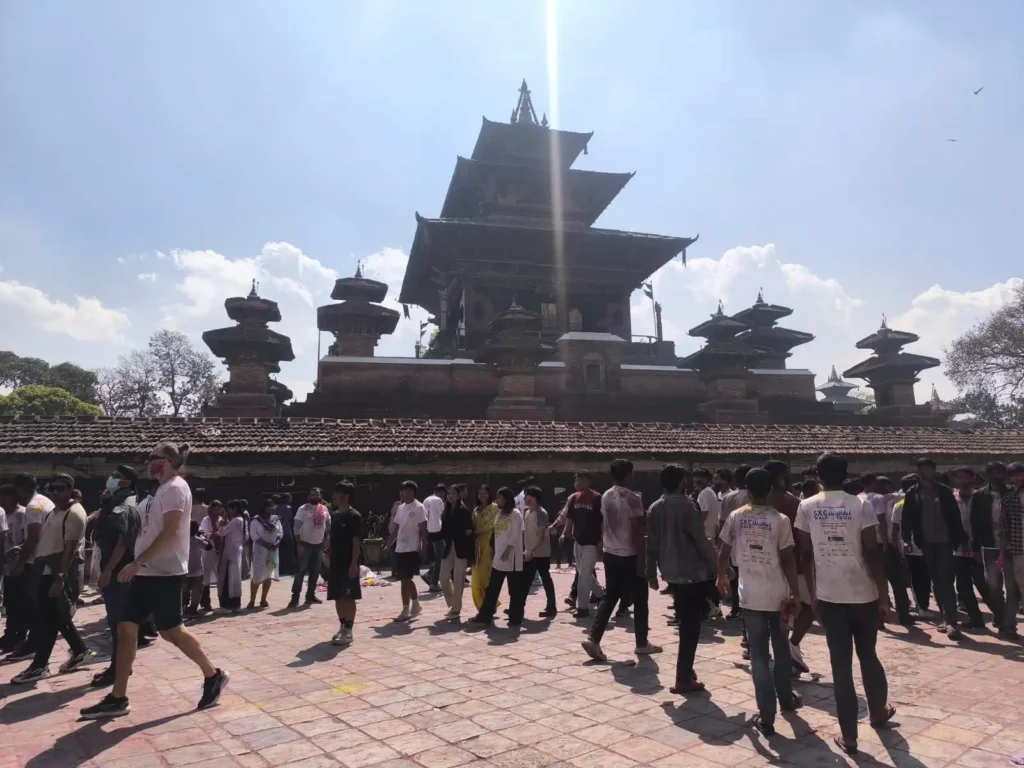
- Basantapur Durbar Square, Kathmandu: The historic Durbar Square fills with thousands of revelers, creating a spectacular backdrop of ancient temples draped in colorful powder. The square becomes an epicenter of Holi activity, packed with locals, tourists, and street vendors.
- Thamel, Kathmandu: The tourist district transforms into a lively battleground of color and water. The narrow, winding streets of Thamel are perfect for impromptu color fights, and the atmosphere is electric. Children perched on rooftops launch water balloons at passersby, so keep your guard up!
- Tundikhel Ground: This large open ground in central Kathmandu hosts grand-scale community Holi events with music, dancing, and large organized color-throwing sessions.
- Bhaktapur Durbar Square: A UNESCO World Heritage Site, Bhaktapur’s ancient architecture provides a stunning and photogenic setting for Holi. The city’s well-preserved medieval temples and courtyards lend the festivities an atmosphere of timeless cultural depth.
- Patan Durbar Square: Patan’s historic square, famous for its exquisite Newari architecture, offers a more intimate but equally colorful Holi experience.
Pokhara
Nepal’s second-largest city and premier tourist destination is another excellent place to experience Holi. The Lakeside area along Phewa Lake, set against the dramatic backdrop of the Annapurna mountain range, transforms into a festive carnival of color. Hotels, resorts, and parks along the lakeside road host Holi parties throughout the day. For a truly breathtaking experience, head up to Sarangkot Hill to celebrate Holi with panoramic views of the Annapurna and Dhaulagiri ranges.
Biratnagar and the Terai Region
In the Terai region – the flat plains bordering India, Holi is celebrated with particular exuberance, reflecting the cultural influence of nearby Indian states. Cities like Biratnagar, Janakpur, and Birgunj see colorful community processions, traditional rituals, and multi-day celebrations that embrace both the religious and festive dimensions of the occasion. The Terai’s Holi has a strong cultural kinship with North Indian Holi traditions, making it a fascinating contrast to the hill region’s celebrations.
Trekking Regions
Even if you are trekking in Nepal’s remote mountain regions during Holi, you are likely to encounter children playing with colors in villages along the trail. While the experience is naturally more understated than in the cities, it offers a charming and authentic glimpse into how Holi is observed in rural Nepalese communities.
What to Wear and How to Prepare for Holi in Nepal
Participating in Holi celebrations in Nepal is an experience like no other but a little preparation goes a long way toward ensuring you have a safe, enjoyable, and comfortable time:
- Wear White: Traditional Holi attire is white clothing, which shows off the colors beautifully. Choose old clothes you do not mind permanently staining, as the dyes are difficult to wash out fully.
- Protect Your Skin: Apply coconut oil or sunscreen generously to your skin and hair before heading out. This creates a barrier that makes it much easier to wash off the colors afterward, and helps protect against any synthetic dyes that may cause skin irritation.
- Shield Your Eyes: Wear sunglasses or protective eyewear to prevent colored powder from getting into your eyes, which can cause significant irritation.
- Protect Your Electronics: Keep your phone, camera, and other electronics in waterproof pouches or ziplock bags. If you want to photograph the festivities, consider using a camera with a weather-sealed body, or invest in a waterproof case.
- Stay Hydrated: Holi is a physically active, outdoor festival. Carry a water bottle and drink regularly to stay hydrated, especially during the warmer midday hours.
- Respect Boundaries: Always ask for permission before applying color to someone, particularly strangers. While Holi is known for its free-spirited atmosphere, personal boundaries should always be respected.
- Be Street-Smart: Stick to well-lit, populated areas and be mindful of your surroundings in crowded spaces. Keep wallets and valuables secure.
- Carry Essentials: Pack tissues, wet wipes, and a small first aid kit for minor cuts or irritations that can occur during the festivities.
Holi as a Tourism Draw: Nepal’s Festival of Colors on the World Stage
In recent years, Holi in Nepal has attracted growing numbers of international visitors who travel specifically to experience the festival. The combination of Nepal’s extraordinary natural beauty, its rich cultural heritage, and the sheer sensory spectacle of Holi celebrations in Nepal makes it a bucket-list event for travelers from around the world.
Festive tourism during Holi contributes meaningfully to Nepal’s economy, supporting local businesses, hotels, restaurants, and artisans who produce traditional color powders and festive foods. For cultural travelers, experiencing Nepal’s Holi Festival is an opportunity not only for extraordinary photographs but for genuine immersion in a living tradition that has endured for centuries.
The unique character of Holi celebrations in Nepal – the historic Durbar Squares, the mountain backdrops, the fusion of local Newari culture with broader Hindu traditions means that Nepal’s version of the Nepal Festival of Colors offers something distinctly different from Holi in India, even as both spring from the same ancient roots.
Final Thoughts: Why Holi in Nepal Is an Unmissable Experience
Holi in Nepal is far more than a day of color and chaos. It is a profound cultural event that weaves together mythology, spirituality, social harmony, and the pure joy of being alive. Whether you are drawn to the ancient temples of Kathmandu, the lake-mirrored mountains of Pokhara, or the lively streets of the Terai, Nepal Holi Festival offers a celebration that is as diverse as the country itself.
For travelers, Holi in Nepal presents a rare opportunity to step fully inside a living cultural tradition; to throw color alongside locals, share a plate of gujiya with new friends, and feel the extraordinary sense of communal joy that makes this Nepal Festival of Colors one of the most beloved celebrations on Earth.
So dust off your whites, stock up on gulal, and get ready to experience the magic of Holi celebrations in Nepal. It is a day you will never forget.