Understanding the world’s most dangerous altitude and how climbers survive above 8,000 meters
Understanding Mount Everest’s Death Zone
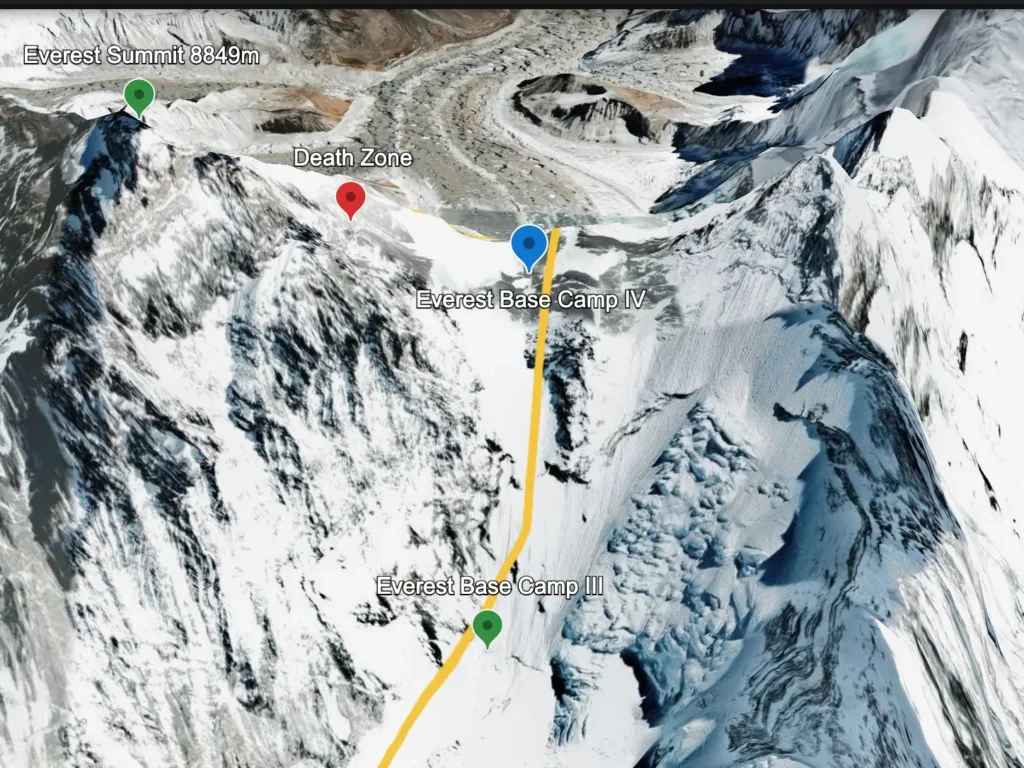
When you talk to experienced mountaineers about climbing Mount Everest, they’ll eventually mention something called the “Death Zone.” It’s not meant to scare you – well, maybe a little – but it’s a term that commands respect. The Mount Everest Death Zone isn’t some mythical place. It’s very real, and it begins at around 8,000 meters (26,247 feet) above sea level.
Whether you’re planning to climb the mountain or just curious about what makes it so deadly, this guide will give you the honest truth about what happens above 8,000 meters.
The reality is this: at extreme altitude, your body isn’t just struggling – it’s literally dying. Every breath becomes a conscious effort. Your mind doesn’t work like it normally does. Your muscles feel like they’re made of lead. And that’s on a good day with supplemental oxygen and perfect weather.
What Exactly Is the Death Zone on Everest?
The Everest Death Zone is the region above 8,000 meters where the amount of oxygen in the air drops to about one-third of what’s available at sea level. This isn’t arbitrary; it’s based on real physiology. Your body can acclimatize to high altitudes, but there’s a hard ceiling. Once you go above 8,000 meters, acclimatization stops working.
Think of it this way: your body is designed to function with certain oxygen levels. Below 8,000 meters, given enough time, you can adapt. Your body produces more red blood cells, your breathing changes, your heart works harder. These are incredible adaptations that humans have developed over thousands of years. But above 8,000 meters, these adaptations aren’t enough anymore.
In the Death Zone, even with supplemental oxygen, you’re operating on borrowed time. Most climbers can safely spend only 24 to 48 hours at this altitude before their bodies begin to shut down. The longer you stay, the more damage you do to your organs particularly your brain, lungs, and heart.
Key Facts About Mount Everest’s Death Zone:
- Located above 8,000 meters (26,247 feet)
- Oxygen levels reduced to just 30-33% of sea level
- Most climbers can survive 24-48 hours maximum
- Temperatures drop below -40°C (-40°F)
- Winds often exceed 100 mph (160 km/h)
A Brief History: When the Death Zone Became Real
The Early Everest Expeditions
The first climbers who attempted Mount Everest in the early 1920s didn’t have a name for the Death Zone yet, but they certainly experienced it. The British expeditions of that era were genuinely pushing into unknown territory. They didn’t have supplemental oxygen at first, and the climbers who went highest like George Mallory in 1924 paid the ultimate price.
Mallory’s famous response to “Why do you want to climb Everest?” was “Because it is there.” But what he experienced above 8,000 meters was something far more profound and terrifying than he could have imagined. The mountain doesn’t care about ambition. It doesn’t care about courage. At extreme altitude, you’re just fighting for the next breath.
When “Death Zone” Became the Standard Term
The term “Death Zone” really came into popular use after the catastrophic 1996 season, when several expeditions encountered severe weather high on the mountain. That season saw multiple climbers die above 8,000 meters, and the term gained widespread recognition. It wasn’t poetic; it was accurate. People were dying up there in significant numbers.
The 1996 disasters brought international attention to the dangers of high-altitude climbing. Before that, the climbing community used the term, but it wasn’t part of mainstream conversation. After 1996, everyone knew about the Death Zone.
Modern Era Everest Climbing
Today, we have better equipment, better weather forecasting, better communication, and more experienced guides than ever before. Yet climbers still die in the Death Zone regularly. In 2023, there were 18 confirmed deaths on Everest. In 2024, that number dropped to 8. The variation comes down to weather conditions, climber experience, and sometimes just luck.
Why Is the Mount Everest Death Zone So Deadly?
The Perfect Storm: Multiple Threats at Once
The Everest Death Zone isn’t dangerous because of one single factor. It’s the combination of everything happening at once. Climbers face:
- Extreme oxygen deprivation: Your brain, heart, and lungs are literally suffocating
- Brutal cold: Temperatures that can freeze exposed skin in minutes
- Violent weather: Winds that can knock you off your feet
- Exhaustion beyond comprehension: Your body is breaking down on a cellular level
- Impaired judgment: Your mind doesn’t work properly, and you might not even realize it
Climbers describe it as being slowly buried alive. You’re awake, but your senses are dulled. You know you’re in danger, but your brain can’t quite process how much danger you’re in.
Lack of Oxygen on Everest: The Main Killer
The primary threat in the altitude above 8,000 meters is hypoxia – a fancy term for not having enough oxygen. Your red blood cells can only carry so much oxygen. Your heart can only pump so fast. At extreme altitude, this isn’t enough.
Even when climbers use supplemental oxygen, they’re only improving their oxygen levels slightly. They’re not getting the oxygen levels you’d have at base camp or sea level. They’re just making survival possible. Without supplemental oxygen above 8,000 meters, climbers deteriorate much faster.
I’ve seen climbers at high altitude who are deeply hypoxic refuse to accept that they need to descend. Their judgment is so impaired that they argue about basic facts. They might insist they’re fine when they’re actually in critical condition. This is what lack of oxygen does to your brain.
The Weather: Everest’s Unpredictable Killer
Temperature isn’t the only weather problem. The winds at extreme altitude are absolutely ferocious. Wind chill can make -30°C feel like -60°C. Your exposed skin frostbites in minutes. Fingers and toes go numb so quickly that climbers often don’t realize they have frostbite until after they’ve descended.
Worse, sudden storms can develop with little warning. A climber might be having a successful summit push when clouds roll in within 30 minutes, visibility drops to zero, and the wind becomes life-threatening. Climbers have gotten lost and disoriented in whiteout conditions only meters from their camp.
Altitude Sickness and HACE/HAPE
Above 8,000 meters, acute mountain sickness (AMS) is just the beginning. More dangerous conditions like High Altitude Cerebral Edema (HACE) and High Altitude Pulmonary Edema (HAPE) can develop.
HACE is brain swelling caused by fluid accumulation. Climbers with HACE become confused, lose coordination, and can slip into coma. HAPE is fluid in the lungs. Climbers basically drown from the inside. Both conditions can kill within hours, and the only treatment is immediate descent which is nearly impossible in the Death Zone.
Physical and Mental Symptoms Above 8,000 Meters
If you’re planning a Mount Everest expedition, you need to know what you might experience in the Death Zone. Understanding the symptoms helps you recognize when things are going wrong.
Physical Symptoms
- Extreme fatigue: Even simple tasks feel overwhelming. Putting on a glove becomes a major project
- Breathlessness: You gasp for air even at rest. Every movement requires conscious breathing
- Weakness: Your muscles don’t respond normally. Climbing feels like moving through thick mud
- Headache: Most climbers have pounding headaches. Some are absolutely debilitating
- Nausea: Your digestive system shuts down. Food becomes repulsive even though you need calories
- Loss of appetite: Some climbers force-feed themselves because they know they need energy
- Dehydration: Despite being surrounded by snow and ice, dehydration is serious. The air is incredibly dry
Mental Symptoms
The mental effects are just as serious as the physical ones:
- Confusion: Climbers might forget basic information or become disoriented
- Poor judgment: Decision-making becomes impaired. Climbers make choices they’d never make at normal altitudes
- Hallucinations: Some climbers report seeing things that aren’t there or people who aren’t present
- Loss of fear: This sounds good, but it’s dangerous. Climbers lose their healthy fear of the mountain
- Personality changes: Some climbers become irritable or unusually aggressive
- Loss of motivation: Others simply become apathetic and stop caring about survival
Real Talk: Many fatal accidents happen because climbers’ judgment is so impaired that they don’t realize they’re in mortal danger. A climber might be minutes away from death and genuinely believe they’re fine. This is why experienced guides are crucial – they can recognize dangerous conditions even when climbers insist they’re okay.
How Climbers Prepare for the Summit Push on Everest
Acclimatization: Building Your Body’s Tolerance
Preparation for a Mount Everest expedition doesn’t start on the mountain. It starts months before. The key is acclimatization, which is your body’s ability to adapt to high altitude.
A proper Everest expedition typically takes 6 to 8 weeks. Climbers don’t just race to the top. They spend weeks at progressively higher altitudes, letting their bodies adapt. Your body responds to altitude by producing more red blood cells, increasing breathing rate, and changing how your metabolism works.
The typical schedule looks like this:
- Week 1-2: Arrive at base camp (5,364 meters). Let your body adjust
- Week 2-3: Acclimatization climbs to Camp 1 and Camp 2. Descend to base camp
- Week 3-4: Higher rotations to Camp 3. More acclimatization
- Week 4-5: Another rotation up to South Col (about 7,900 meters)
- Week 5-6: Rest and prepare for summit push
- Week 6-8: The actual summit attempt from the Death Zone
This schedule allows your body to adapt while minimizing the time spent in the most dangerous zones. Rushing this process dramatically increases your risk.
The Role of Supplemental Oxygen
Most climbers above 8,000 meters use supplemental oxygen. It’s not cheating; it’s necessary. Supplemental oxygen increases the oxygen available to your tissues, allowing your body to function better at extreme altitude.
Climbers typically use three types of oxygen:
- Sleeping oxygen: Low-flow oxygen used at night to help you rest and recover
- Exertion oxygen: Higher-flow oxygen during the climb to Camp 4 and beyond
- Summit oxygen: The most critical supply for the final push to the summit
Equipment can malfunction, and bottles can run empty. This has killed climbers. I know of expeditions where equipment failure at 8,500 meters left climbers without supplemental oxygen. Some survived by descending quickly. Others didn’t make it.
Training and Physical Preparation
Before attempting a Mount Everest expedition, climbers should have experience at high altitude. Climbing other 6,000-meter peaks or even practicing climbs on mountains like Kilimanjaro gives you a sense of how your body responds to altitude.
Physical training is important too. You’re not training to be an Olympic athlete – you’re training for endurance at altitude. Long hikes with a heavy pack, stair climbing with weights, and cardiovascular conditioning are all helpful.
But here’s the honest truth: how well you perform at extreme altitude isn’t entirely predictable. Some people with perfect fitness and no altitude experience do well. Others with extensive experience at high altitude struggle. Your genetics, your acclimatization response, and plain luck all play roles.
The Essential Role of Sherpas
If you’re climbing Everest, Sherpa support isn’t a luxury – it’s essential. Professional Sherpas are the backbone of most Everest expeditions.
Sherpas aren’t just guides. They fix ropes, set up camps, prepare meals, and make critical decisions about safety. Many Sherpas are born at high altitude and have remarkable physiological adaptations that make them suited for extreme altitude work. After generations of living high in the mountains, their bodies produce oxygen more efficiently than climbers from sea level.
But Sherpas are also human beings who face the same dangers as everyone else. Sherpa deaths on Everest are often overlooked in media coverage, but they’re just as tragic. Some expeditions don’t have a good safety culture, and Sherpas bear the cost.
The Summit Push: What Happens in the Death Zone
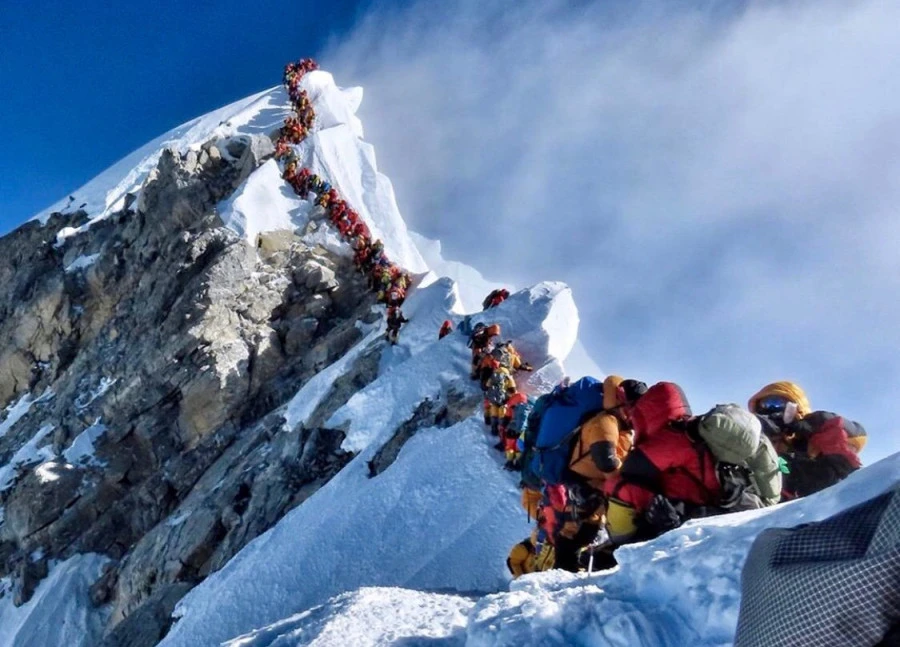
The summit push through the Death Zone is where everything you’ve trained for is tested. Usually, climbers make their summit attempt within a narrow weather window of just a few days.
For the South Col route (the most common), the final push typically starts around midnight from South Col camp. Climbers spend the next 12 to 16 hours climbing through extreme altitude, facing the Balcony, the Hillary Step, and finally reaching the summit.
The experience is surreal. Even with supplemental oxygen, climbers move incredibly slowly. A section of the mountain that might take 30 minutes to climb at lower altitude takes 3 to 4 hours at 8,500 meters. Your lungs are burning. Your muscles feel like they’re on fire. Your head is pounding. The thin air feels like breathing through a straw.
Many climbers describe reaching the summit as anticlimactic. You’re so exhausted and hypoxic that you might not even feel happy about it. Some climbers barely remember summiting. You take photos because you need proof, but you’re already thinking about the descent.
“Reaching the top of Everest is optional. Getting down is mandatory.” – An anonymous but wise Himalayan mountaineer
Why Descent Is More Dangerous Than Ascent
Here’s something that surprises many people: more climbers die on the way down than on the way up. After spending hours in the Death Zone climbing to the summit, climbers are exhausted, hypoxic, dehydrated, and often completely depleted mentally and physically.
Your body is literally failing. Your judgment is severely impaired. You’re moving slowly on dangerous terrain. If weather deteriorates, you might get trapped. Some climbers have simply sat down and decided they couldn’t continue and they didn’t.
The 1996 disaster that brought worldwide attention to Everest deaths happened largely on descent. Climbers who summited couldn’t get down in time. Some were caught by unexpected weather. Others ran out of oxygen. Several stopped moving entirely—their bodies had shut down.
Modern expeditions now place time limits on summits. If you haven’t summited by a certain hour (often 1 or 2 PM), you must turn back. This is hard to enforce; climbers are so close, so determined but it saves lives.
Modern Technology and Safety Improvements
Better Oxygen Systems
Supplemental oxygen equipment has improved dramatically. Modern regulators are more reliable, and oxygen bottles are lighter and more efficient than earlier generations.
Communication Technology
Satellite phones and GPS trackers now allow base camp to track climbers high on the mountain. If something goes wrong, help at base camp can respond faster. It’s not always enough to rescue someone from the Death Zone, but it provides information and coordination.
Fixed Ropes and Safety Equipment
The most dangerous sections of the mountain now have fixed ropes installed. Climbers clip in with safety devices. This might seem basic, but it prevents many falls on steep terrain.
Better Forecasting
Modern weather forecasting is incredibly accurate for 5-7 days out. Expedition leaders use this data to plan summit windows. This has made Everest safer by allowing climbers to attempt summits during the most stable weather patterns.
Improved Training and Risk Management
Modern expedition companies invest heavily in guide training, safety protocols, and risk management. Professional guides now complete formal training programs and must pass certifications.
From Everest Base Camp Trek to the Death Zone: The Complete Journey
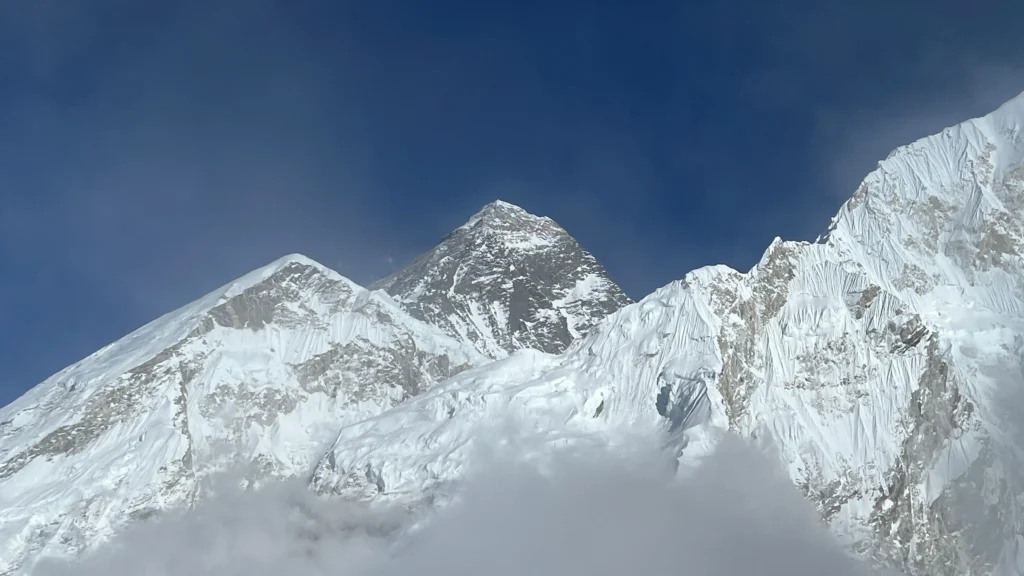
Understanding the Death Zone requires understanding the entire Everest experience. Most climbers begin their journey not with a summit attempt, but with the Everest Base Camp Trek a multi-day trek that introduces trekkers and future climbers to the Khumbu region and the approach to the mountain.
The trek itself is not easy. At 5,364 meters, base camp is higher than most people have ever been. But it’s an excellent way to:
- Experience high-altitude trekking in a lower-risk environment
- Begin acclimatizing your body to altitude
- Understand how your body responds to thin air
- Experience the Khumbu Icefall from a safe distance
- Meet Sherpa guides and learn about their culture
For climbers planning a summit attempt, the Everest Base Camp Trek is often Step 1. It gives you real experience in high altitude before committing to the full climbing expedition.
From base camp, climbers attempting the summit must then navigate the Khumbu Icefall – the treacherous section between base camp and Camp 1. This is where the serious climbing begins. The icefall kills climbers regularly, and many climbers summit Everest without ever ascending above 8,000 meters, but every single summit climber must cross the Khumbu Icefall. It’s the gateway to the higher camps and ultimately to the Death Zone.
The journey from the Everest Base Camp Trek trailhead to summiting and descending from the Death Zone is a progression of challenges. Each altitude brings new physiological demands. Each camp presents new risks. The Death Zone is the final, most extreme stage of this progression but it’s only possible because of all the preparation, acclimatization, and experience gained in the lower sections of the mountain.
Key Facts About the Everest Death Zone You Should Know
- 8,000 meters = Where the Death Zone begins
- 340+ = Deaths on Mount Everest in history
- 24-48 hours = Maximum safe exposure time
- 30-33% = Oxygen percentage of sea level
- -40°C = Typical Death Zone temperature
- 100+ mph = Wind speeds at summit
Rainbow Valley and Green Boots: Sobering Reminders
On the northeast ridge of Everest, there are locations with grimly poetic names. Rainbow Valley refers to the colorful climbing gear scattered across the mountain – memorials to those who didn’t return.
“Green Boots” referred to the body of Tsewang Paljor, an Indian climber who died in 1996. His body, identifiable by green climbing boots, became an involuntary landmark on the climbing route for years. It’s a sobering reminder that even summiting Everest doesn’t mean you’re safe.
Bodies on the Mountain
Some bodies remain in the Death Zone. Retrieval is incredibly difficult, expensive, and dangerous. Families sometimes prefer to leave loved ones on the mountain rather than risk more lives attempting recovery.
This might sound disrespectful, but it’s the reality of extreme altitude mountaineering. Below 8,000 meters, bodies are occasionally recovered. Above that, it’s extraordinarily difficult.
Climate Change Is Changing the Death Zone
Melting ice and permafrost are exposing remains and changing climbing conditions. Traditional routes are becoming less stable. Avalanche and rockfall risks are increasing. The mountain is literally changing because of climate change, making it even more unpredictable.
The Hard Truth About the Mount Everest Death Zon
After decades of guiding in the Himalayas, I can tell you that the Death Zone deserves its grim name. It’s not a place where humans belong. Your body is literally dying above 8,000 meters. Every moment you spend there brings you closer to serious harm.
This isn’t meant to discourage climbers. Some of the most remarkable human achievements involve climbing Everest. But it’s important to approach the mountain with clear eyes and realistic expectations.
The climbers who summit Everest and return safely aren’t superhuman. They’re prepared, they’re fortunate with weather, they make good decisions, and they’re usually supported by experienced teams. Many climbers don’t make it to the summit, and that’s okay. Turning back is not failure – it’s wisdom.
If you’re considering a Mount Everest expedition, invest in proper training, hire experienced guides, acclimatize properly, and be prepared to turn back if conditions are unfavorable. The mountain will still be there next year. Your life is worth more than a summit.
This content has been researched, rewritten, and published by Everest Hikes Pvt Ltd to provide accurate, human-friendly, and informative insights about Mount Everest and Himalayan mountaineering. Our team combines decades of field experience with commitment to factual, respectful storytelling about the world’s highest mountain.