The Khumbu Icefall stands as one of the most treacherous obstacles on the journey to Mount Everest’s summit. This massive maze of shifting ice, towering seracs, and hidden crevasses claims lives almost every climbing season yet it remains an unavoidable gateway for anyone attempting to summit from the South Col route. Understanding this formidable challenge is essential for climbers, trekkers, and anyone curious about extreme mountain environments.
What is the Khumbu Icefall?
The Khumbu Icefall is a constantly moving section of the Khumbu Glacier located on Mount Everest’s southern face. Unlike static mountains, the Icefall is a living, breathing glacier that shifts, cracks, and transforms almost daily. It’s essentially a vertical frozen waterfall – a chaotic landscape where the glacier’s downhill movement has shattered the ice into thousands of fragments.
Imagine standing at the edge of a massive ice maze. Everywhere you look, there are:
- Crevasses – Deep cracks in the ice that can be invisible or partially hidden by snow bridges
- Seracs – Towering ice blocks the size of office buildings that can collapse without warning
- Ice blocks – Chunks of ice shifting position every single day
- Hidden dangers – Weak snow bridges concealing bottomless drops
The Icefall is often compared to a vertical river of broken ice, where gravity pulls everything downward, creating an ever-changing landscape that climbers must navigate with extreme caution.
Location and Altitude
The Khumbu Icefall is located on the southern side of Mount Everest in Nepal, sitting between Everest Base Camp and Camp I. It marks the first major technical challenge for anyone attempting the South Col route to the summit.
Key Location Details:
- Positioned within the Khumbu Glacier, south face of Mount Everest
- Spans approximately 2 kilometers (1.24 miles) in length
- Only 1.5 kilometers from Everest Base Camp
- On the Nepal side of the mountain
Elevation Range
The Khumbu Icefall begins at approximately 5,486 meters (18,000 feet) and extends upward to about 5,900 meters (19,500 feet). This means climbers must ascend roughly 400 meters through unpredictable, unstable ice to reach the relative safety of Camp I.
At this altitude, the air contains only about 50% of the oxygen available at sea level. Combined with the extreme cold, thin air, and physical exertion required to navigate the Icefall, climbers face a severe test of their endurance and acclimatization.
Why is the Khumbu Icefall So Dangerous?
The Khumbu Icefall Everest route is considered the most dangerous section of the climb for several interconnected reasons. Understanding these hazards is critical for appreciating why climbers take such extreme precautions.
1. Constant Movement
The Khumbu Glacier is one of the fastest-moving glaciers in the world, flowing downhill at approximately one meter (three feet) every single day. This relentless movement constantly reshapes the landscape, creating new crevasses while filling others. What was a navigable route yesterday may be impassable today.
2. Unpredictable Seracs
Seracs are massive ice towers formed by the glacier’s movement. Some tower as high as a 12-story building. These formations are inherently unstable held in place only by gravity and the surrounding ice. When they collapse, they create devastating avalanches that can bury climbers in seconds.
3. Deep, Hidden Crevasses
Crevasses in the Icefall range from small fissures to catastrophic drops. Some exceed 100 meters (328 feet) in depth deep enough to swallow a multi-story building. Many are hidden by thin snow bridges that offer no resistance to a climber’s weight.
4. Temperature Fluctuations
Temperatures in the Icefall typically plummet below -20°C (-4°F) in early morning hours. As the sun rises and warms the ice, the Icefall becomes increasingly unstable. The thawing ice weakens structural integrity, making avalanches and collapses more likely during afternoon hours.
The Temperature Danger: The ice that holds seracs in place contains water when warmed. This weakens the bonds between ice blocks, making them more likely to collapse. This is why the Icefall is most stable and “safest” before sunrise though “safe” is a relative term here.
5. Avalanche Risk
Falling seracs, shifting ice blocks, and warming conditions make avalanches a constant threat. The most catastrophic example occurred on April 18, 2014, when a massive serac collapsed, triggering an avalanche that killed 16 Nepalese Sherpas who were preparing routes for the climbing season. This remains the deadliest single incident in the Icefall’s recent history.
6. Low Oxygen Levels
At 5,500+ meters, climbers are in the “death zone” where supplemental oxygen becomes increasingly necessary. Low oxygen reduces cognitive function, reaction time, and physical capability—exactly when climbers need to be at their sharpest.
Importance in Mount Everest Expeditions
Despite its dangers, the Khumbu Icefall is unavoidable for anyone attempting to summit Mount Everest from the south side. Here’s why it’s so critical:
The Gateway to Higher Camps
The Icefall is the only practical route connecting Everest Base Camp to Camp I. There is no alternative on the South Col route. Climbers attempting to summit from Nepal must pass through this section multiple times during an expedition.
Most expeditions require climbers to traverse the Icefall 2-3 times:
- First crossing: Initial push from Base Camp to establish higher camps
- Second crossing: Return to Base Camp for rest and acclimatization
- Third crossing: Final summit push
Acclimatization Route
While dangerous, the Icefall serves an important physiological purpose. The climb through the Icefall helps climbers acclimatize to extreme altitude, training their bodies to function with less oxygen. This acclimatization is essential for surviving even higher altitudes closer to the summit.
Fixed Rope Installation
Professional guide companies and Sherpa teams install fixed ropes, ladders, and safety anchors through the Icefall before climbers begin their ascent. This infrastructure, maintained by experienced mountaineers, provides critical safety measures—though it cannot eliminate the inherent danger.
How Climbers Cross the Khumbu Icefall
Crossing the Icefall requires specialized equipment, careful planning, and nerves of steel. Here’s what the actual process looks like:
Timing is Everything
Climbers depart Everest Base Camp in the pre-dawn darkness, usually between 11 PM and 3 AM. The goal is to navigate the Icefall while the ice is coldest and most stable. Most climbers aim to exit the Icefall before 9-10 AM, before afternoon warmth destabilizes the ice.
Equipment Used
- Fixed ropes: Thick climbing ropes anchored by Sherpas, providing handholds and safety attachment points
- Ladder bridges: Aluminum ladders laid horizontally or diagonally across crevasses, often lashed together in pairs
- Harnesses and carabiners: Personal safety equipment for clipping into fixed ropes
- Crampons: Spiked footwear for gripping ice
- Ice axes: For stability and emergency self-arrest if falling
- Headlamps: Essential for navigating in pre-dawn darkness
The Crossing Process
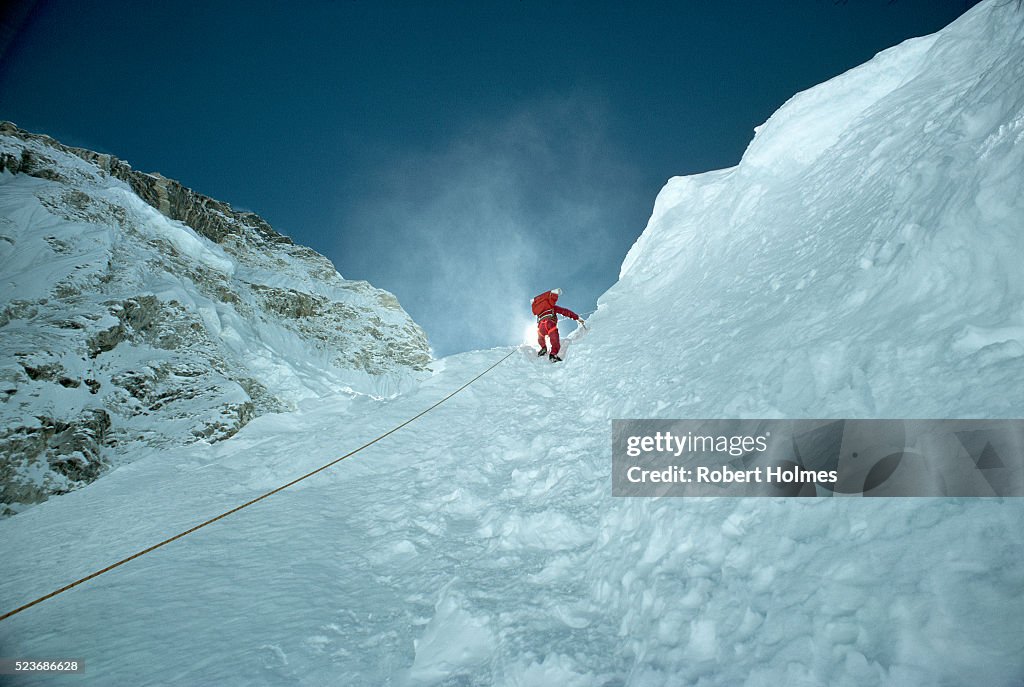
Climbers move in a single-file line, often roped together for safety. The process involves:
- Following the rope: Climbers clip into fixed ropes and follow established routes marked by experienced Sherpas
- Crossing ladders: When encountering crevasses, climbers gingerly walk across ladders, sometimes over 100-meter drops
- Navigating around seracs: Guide teams identify safe paths that avoid unstable ice formations
- Managing fear and fatigue: Climbers must push through exhaustion, altitude sickness, and psychological stress
Time Required
Crossing the Icefall typically takes 3-6 hours, depending on:
- Snow and ice conditions
- Climber experience and fitness level
- Crowding on the route
- Weather conditions
- Individual acclimatization status
The Role of Sherpas
Sherpa mountaineers are the unsung heroes of Everest expeditions. They:
- Scout and establish safe routes through the Icefall
- Install and maintain fixed ropes, ladders, and anchors
- Guide climbers through the most dangerous sections
- Carry supplies and equipment to higher camps
- Conduct rescue operations when climbers get into trouble
Despite their expertise, Sherpas face disproportionate risk. The 2014 avalanche killed 16 Sherpas, highlighting the extreme danger they willingly accept to support climbing expeditions.
Key Facts and Statistics About the Khumbu Icefall
Living Ice Maze
The Icefall shifts approximately 1 meter (3 feet) daily, creating a constantly changing landscape that makes it impossible to memorize a single “safe” route.
Giant Ice Towers
Seracs in the Icefall can reach heights of 12 stories or more. When they collapse, they create devastating avalanches that can travel at tremendous speed.
Ladder Bridges
Climbers cross deep crevasses by walking across ladders—sometimes just two ladders lashed together—suspended over bottomless drops.
Extreme Crevasse Depth
The deepest crevasses exceed 100 meters (328 feet), deep enough to contain a multi-story building with room to spare.
Early Bird Advantage
Climbers who tackle the Icefall before sunrise benefit from colder, more stable ice—though “stable” is relative in this environment.
Fastest-Moving Glacier
The Khumbu Glacier is one of the world’s fastest-moving glaciers, constantly flowing downhill and reshaping the Icefall.
Brutal Temperatures
Temperatures regularly drop below -20°C (-4°F), requiring specialized cold-weather gear and increasing the risk of frostbite.
High Casualty Rate
Since 1953, approximately 47 people have died in the Khumbu Icefall region, making it the deadliest part of an Everest attempt.
Safety Measures and Risk Management
What Expedition Companies Do
- Route establishment: Sherpa teams scout and establish the safest possible route before climbers begin crossing
- Fixed rope installation: Professional-grade ropes are anchored with ice screws and anchors
- Ladder bridges: Multiple ladders are secured across crevasses to provide stable crossing points
- Constant monitoring: Experienced guides assess conditions daily and adjust routes if necessary
- Group management: Climbers move in organized groups with experienced leaders and support staff
- Communication systems: Radio communication between guides at different points along the route
- Weather assessment: Daily weather forecasts inform decisions about when to cross
- Rescue equipment: Emergency supplies and rescue gear are positioned throughout the Icefall
What Individual Climbers Must Do
- Achieve proper acclimatization before attempting the Icefall
- Use appropriate mountaineering equipment in good condition
- Follow guide instructions without deviation
- Avoid traveling alone—always maintain group cohesion
- Remain mentally alert despite exhaustion and altitude effects
- Understand and accept the inherent risks
- Maintain physical fitness and cardiovascular health
- Properly use oxygen supplementation if available
The Hard Truth About Risk
Despite all precautions, the Khumbu Icefall remains inherently dangerous. No amount of preparation can eliminate the threat of avalanches, serac collapse, or hidden crevasses. Climbers who attempt Everest accept a level of risk that would be unacceptable in most human endeavors. This reality has sparked important conversations about climber safety, Sherpa compensation, and the ethics of mountaineering tourism.
Planning an Everest Expedition?
Our experienced guides and Sherpa teams have safely guided hundreds of climbers through the Khumbu Icefall and beyond. We combine world-class expertise with unwavering commitment to safety and environmental responsibility.Start Your Everest Journey
Frequently Asked Questions About the Khumbu Icefall
Can you avoid crossing the Khumbu Icefall on the South Col route?
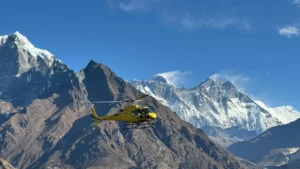
No, it’s practically impossible to avoid the Icefall if attempting Everest from the south side. Every climber on the South Col route must pass through it multiple times. However, alternative routes exist, such as the North Col route from Tibet, though those routes have their own distinct challenges and dangers. Some climbers also opt for helicopter tours to avoid the climb entirely, though this eliminates the mountaineering experience.
What’s the best time of year to cross the Khumbu Icefall?
The optimal seasons are spring (March-May) and autumn (September-November). Spring is more popular for summit attempts because the jet stream’s position favors climbing windows. During these seasons, weather is generally more stable, temperatures are (relatively) less extreme, and the Icefall is more predictable than in other seasons. However, “safer” is always relative – the Icefall remains dangerous year-round.
How many people die in the Khumbu Icefall each year?
Fatality rates vary by year. According to the Himalayan Database, approximately 47 people have died in the Khumbu Icefall region between 1953 and 2023. The 2014 avalanche alone killed 16 Sherpas. Some years see no deaths; others see multiple fatalities. The danger is persistent and unpredictable.
Do you need special permits to cross the Khumbu Icefall?
Yes. To climb Mount Everest and therefore cross the Khumbu Icefall, you must obtain a climbing permit from Nepal’s Ministry of Tourism. Additionally, climbers must be at least 16 years old. You’ll also need proper visas, travel insurance, and high-altitude mountaineering experience. Working with a reputable expedition company simplifies the permit process.
What happens if a serac collapses while you’re in the Icefall?
A serac collapse while climbers are directly underneath is almost always fatal. This is why so much emphasis is placed on timing – climbers attempt to traverse the Icefall when it’s coldest and most stable. Guides continuously assess stability and adjust routes to minimize exposure to unstable seracs. However, the unpredictable nature of ice means no strategy is foolproof. This is the core reality that makes the Icefall so dangerous.
Conclusion: Respect for the Mountain
The Khumbu Icefall represents one of mountaineering’s greatest challenges. It’s a place where human ambition meets natural force, where preparation meets chance, and where courage meets humility. Understanding what makes the Khumbu Icefall dangerous is the first step toward respecting this extraordinary environment.
For those considering an Everest expedition, the Icefall is a sobering reminder that the mountain sets the rules, not climbers. Success requires not just physical strength, but mental resilience, proper preparation, experienced guides, and an honest acknowledgment of the risks involved.
The Sherpas who risk their lives daily to establish and maintain routes through the Icefall deserve our deepest respect and fairest compensation. Modern mountaineering ethics increasingly emphasize fair wages, safety equipment, insurance, and support for Sherpa communities – recognizing that without their expertise and willingness to face danger, Everest expeditions simply wouldn’t be possible.
Whether you’re planning an expedition, researching mountain environments, or simply fascinated by extreme landscapes, the Khumbu Icefall demands respect. It’s beautiful, dangerous, and utterly unforgiving—a true test of human determination against the raw power of nature.