If you have been dreaming about trekking in Nepal and find yourself torn between two incredible journeys, you are not alone. The Langtang Valley Trek and the Annapurna Base Camp Trek are two of the most rewarding experiences the Himalayas have to offer, yet they deliver those rewards in very different ways. One is a hidden gem tucked close to Kathmandu, rich in Tibetan culture and wildlife. The other is a Himalayan classic that draws trekkers from every corner of the world and rewards them with one of the most dramatic mountain amphitheaters on earth.
This guide is designed to help you make the right call for your trip. We have broken down every important factor including permits, costs, best trekking seasons, weather and temperature ranges, trail conditions, acclimatization needs, cultural experiences, accommodation quality, and much more. Read on and by the end, you will know exactly which trail belongs on your bucket list.
Quick Comparison at a Glance
| Factor | Langtang Valley Trek | Annapurna Base Camp Trek |
| Location | North of Kathmandu, Langtang National Park | Kaski District, Annapurna Conservation Area |
| Starting Point | Syabrubesi (1,503 m) | Birethanti (1,039 m) |
| Highest Point | Kyanjin Gompa (3,830 m) / Tserko Ri optional (4,984 m) | Annapurna Base Camp (4,130 m) |
| Total Distance | Around 70 km | Around 110 km |
| Duration | 6 to 8 days | 12 to 15 days |
| Difficulty | Moderate to Challenging | Moderate to Challenging |
| Required Permits | TIMS Card + Langtang National Park Permit | TIMS Card + ACAP Permit |
| Crowd Level | Low to Moderate | High |
| Best Seasons | Spring and Autumn | Spring and Autumn |
| Budget | More affordable | Slightly more expensive |
Trek Overview: What Each Route Is Really Like
Langtang Valley Trek
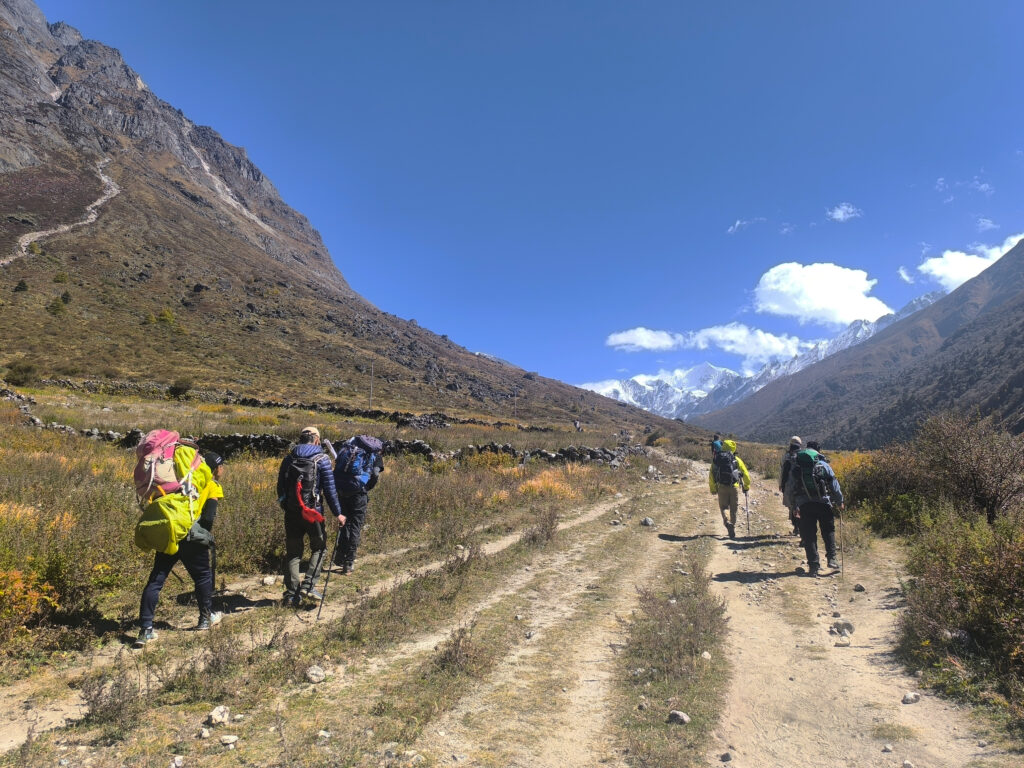
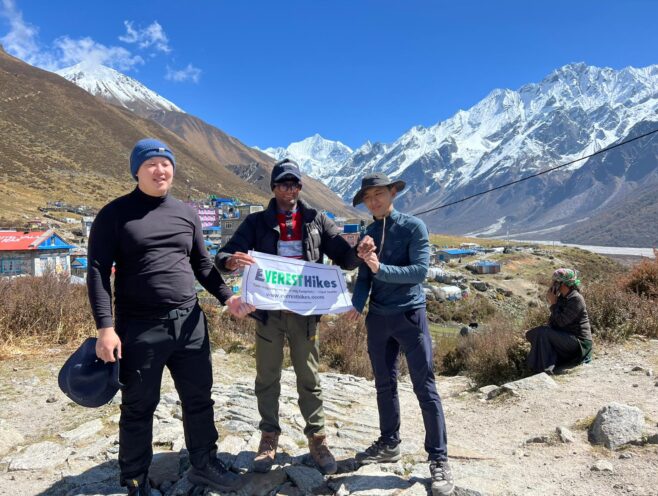
Sitting less than a day’s drive north of Kathmandu, the Langtang Valley Trek is the kind of route that trekkers who have done it once tend to rave about for years. It is still flying well under the radar compared to the big names in Nepali trekking, which is exactly what makes it so special right now.
The trail winds through dense rhododendron and bamboo forests before opening up into sweeping alpine meadows backed by dramatic glaciated peaks. The cultural experience here is unlike anything else in Nepal, shaped by Tamang and Sherpa communities whose way of life carries a deep and visible influence from Tibetan Buddhism. Prayer flags stretch between ridges, mani walls line the trail, and at the end of it all sits Kyanjin Gompa, a centuries-old monastery that anchors the spiritual heart of the valley.
For trekkers who want the full Himalayan experience without spending two weeks on the trail and without battling enormous crowds, Langtang is genuinely hard to beat.
Annapurna Base Camp Trek
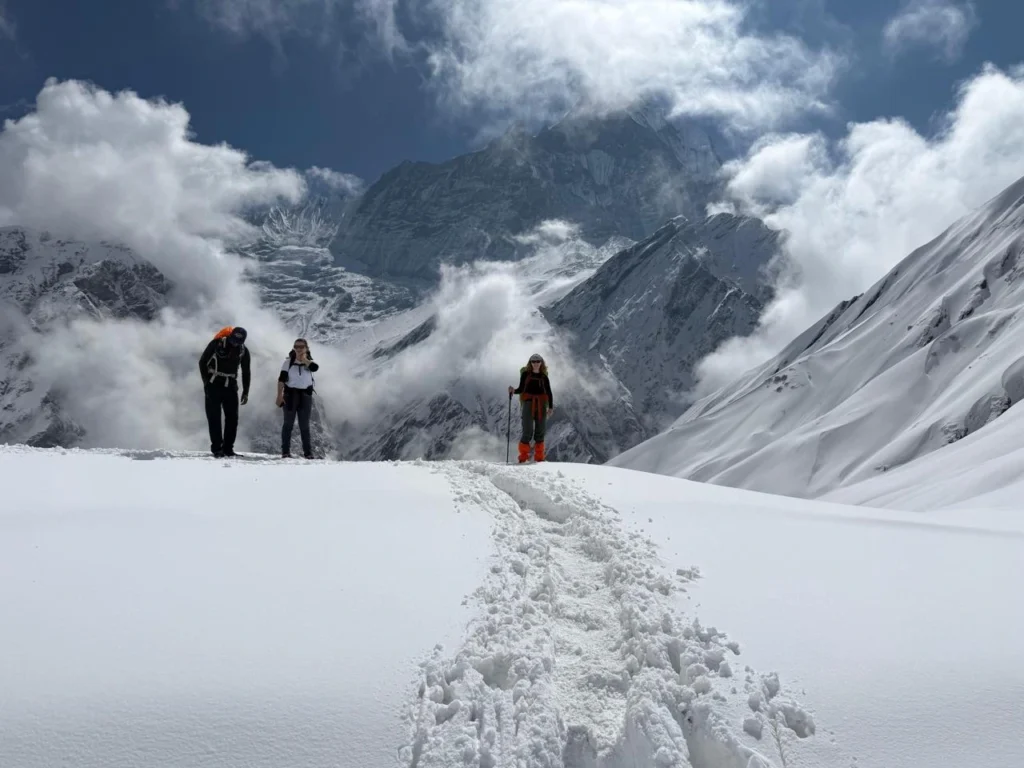
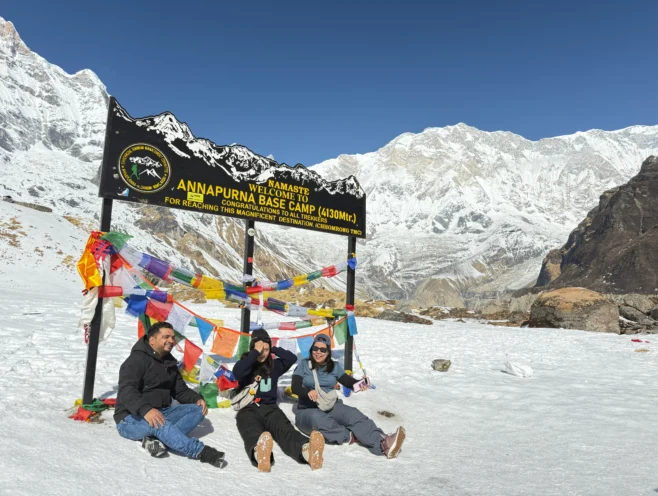
The Annapurna Base Camp Trek is a legend, and it has earned that status. Starting from the lush valleys around Pokhara, this route climbs through terraced fields, rhododendron forests, and stone-paved Gurung villages before arriving at the Annapurna Sanctuary, an awe-inspiring natural amphitheater ringed by some of the world’s highest peaks.
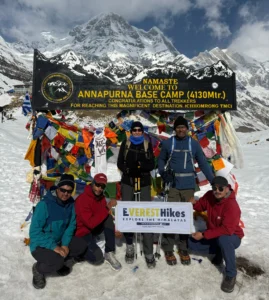
Standing at Annapurna Base Camp at 4,130 meters, surrounded by Annapurna I, Machhapuchhre, Hiuchuli, and a constellation of other giants, is genuinely one of those moments that changes the way you see the world. The trade-off is that you will be sharing this route with a large number of fellow trekkers, especially in peak season, and the trail infrastructure, while excellent, has a well-worn, commercialized feel in many sections.
Permits and Entry Requirements
Langtang Valley Trek Permits
To trek in the Langtang Valley, you need two official permits. The first is the Trekker’s Information Management System card, commonly known as the TIMS card, which is mandatory for all trekking routes across Nepal. The second is the Langtang National Park Entry Permit, which gives you access to this protected wilderness area.
Both permits can be obtained in Kathmandu, usually at the Nepal Tourism Board office or through a registered trekking agency. The National Park permit costs around USD 30 per person at the time of writing, though fees are subject to periodic revision. The TIMS card costs approximately USD 10 for those trekking independently.
It is worth noting that since the Government of Nepal introduced mandatory guide regulations, you are required to trek with a licensed guide. Your trekking company will handle permit logistics on your behalf, which simplifies the process considerably.
Annapurna Base Camp Trek Permits
For the Annapurna Base Camp route, you also need two permits. The TIMS card remains mandatory, and additionally you need the Annapurna Conservation Area Permit, or ACAP. The ACAP permit currently costs around USD 30 per person and contributes to conservation efforts within one of the world’s most biodiverse protected areas.
Both permits can be arranged in Kathmandu or Pokhara. If you are starting your trek from Pokhara, which is the most common gateway for this route, the Nepal Tourism Board office there can sort out your paperwork before you head to the trailhead.
Cost Comparison for Permits
From a pure permit cost standpoint, both treks sit at a similar price point. The real cost differences emerge in duration, accommodation, food, and guide and porter fees, which are discussed in detail below.
How Much Does Each Trek Cost?
Langtang Valley Trek Cost
The Langtang Valley Trek has a well-deserved reputation as one of Nepal’s best value trekking experiences. Because the route is shorter, covering around 70 kilometers over six to eight days, your total expenditure on food, accommodation, and guide fees is naturally lower than on a longer trek.
Budget trekkers can expect to spend somewhere in the range of USD 40 to 60 per day on a teahouse trek, covering basic accommodation, three meals a day, and permit costs spread across the trip. Mid-range trekkers who prefer a bit more comfort might spend USD 70 to 100 per day. A complete Langtang Valley Trek package booked through a local agency, including guide, porter, permits, and accommodation, typically runs between USD 600 and 900 per person for a standard itinerary.
Teahouse prices along the Langtang route tend to be lower than on the Annapurna circuit, partly because the route sees fewer visitors and partly because the local economy has not yet developed the kind of premium pricing that comes with heavy tourist traffic.
Annapurna Base Camp Trek Cost
The Annapurna Base Camp Trek, being longer and more commercially developed, comes with slightly higher overall costs. Expect to spend USD 50 to 80 per day on a budget to mid-range teahouse trek. A fully organized package tour covering guide, porter, permits, meals, and accommodation generally ranges from USD 1,000 to 1,400 per person depending on group size, agency, and the level of comfort you choose.
Accommodation and food prices on the ABC route, particularly in popular stops like Chhomrong, Deurali, and Machhapuchhre Base Camp, can be notably higher than equivalent stops on the Langtang trail. This is the natural result of higher tourist demand and the expectation of more amenities.
Which Trek Offers Better Value?
If budget is a key factor in your planning, Langtang offers a genuinely more affordable experience without any meaningful compromise on the quality of the trekking itself. For trekkers with more time and a slightly larger budget who want the full grandeur of the Annapurna Sanctuary, the ABC trek delivers something truly extraordinary that justifies the extra investment.
Best Time to Trek: Seasons, Weather, and Temperature
Choosing the right time to visit is arguably the most important decision you will make when planning either of these treks. Both the Langtang Valley and Annapurna Base Camp share broadly similar seasonal patterns, though there are subtle differences worth understanding.
Spring (March to May): The Most Popular Season for Both Treks
Spring is widely considered the best time for the Annapurna Base Camp Trek and the Langtang Valley Trek alike. The weather during this period is consistently warm, stable, and beautiful. Daytime temperatures on the trail typically range from 10 to 18 degrees Celsius at lower elevations, dropping to around 0 to 5 degrees Celsius at higher camps like Kyanjin Gompa and Annapurna Base Camp.
One of the defining features of spring trekking in Nepal is the rhododendron bloom. By late March, the forests on both routes are ablaze with pink, red, and white blossoms that drape the hillsides in color. The visual impact on trails like the Langtang Valley and the lower sections of the Ghorepani route toward ABC is genuinely breathtaking.
Visibility in spring is generally excellent in March and early April before pre-monsoon haze begins to build by late April and into May. The skies are clear in the mornings, which is when mountain views on both routes are at their sharpest. By afternoon, clouds tend to build, often obscuring the peaks.
Trail conditions in spring are dry and well-maintained on both routes. There is no significant snow on the main trails below 4,000 meters by mid-March, though higher points like Tserko Ri on the Langtang extension may still carry some snow early in the season.
Pros of Spring Trekking: Excellent mountain views, lush forests in bloom, stable weather, comfortable temperatures, and the fullest range of teahouse accommodation and services.
Cons of Spring Trekking: Peak season crowds on the Annapurna route can be significant, particularly at Poon Hill and around Chhomrong. Langtang remains relatively quieter even in spring.
Summer and Monsoon (June to August): A Hidden Option for Experienced Trekkers
The monsoon season is typically associated with heavy rainfall, leeches, and poor visibility, and for many trekkers it is understandably the least appealing time to plan a trip. However, the Langtang Valley and ABC treks during the monsoon season present a different kind of beauty, one that rewards those willing to embrace the challenge.
On the Langtang Valley trek during summer, expect daily rainfall of varying intensity, temperatures ranging from 15 to 22 degrees Celsius at lower elevations, and dramatically lush, green landscapes. The waterfalls that thread through the valley are at their most powerful, the forests are intensely green, and the trail has a raw, untouched quality that disappears the moment tourist season returns. However, the trails can be slippery, leeches are an unwelcome reality at lower altitudes, and mountain views are frequently obscured by clouds and rain.
The Annapurna Base Camp trek in the monsoon season presents similar conditions. The southern aspects of the Annapurna range catch significantly more monsoon moisture than the Langtang region, which means the ABC route can experience very heavy rainfall and some sections become genuinely difficult to navigate safely. Landslides are a real hazard on certain portions of the trail, particularly between Chhomrong and Deurali.
Pros of Monsoon Trekking: Very few crowds, lower teahouse prices, dramatically lush scenery, and a genuine sense of solitude.
Cons of Monsoon Trekking: Frequent rain, poor visibility for mountain views, leech-infested lower sections, slippery trails, and a higher risk of landslides on the ABC route.
Monsoon trekking is best suited to experienced trekkers who are comfortable in challenging conditions and are not primarily motivated by mountain views.
Autumn (September to November): The Other Peak Season
Autumn rivals spring as the best time for Langtang Valley and ABC trekking, and many experienced trekkers argue it edges ahead. After the monsoon rains wash the atmosphere clean, the visibility in September and October is extraordinary. Mountains appear in needle-sharp detail, the skies take on a deep cobalt blue, and the air has a crisp freshness that makes every step on the trail feel energizing.
Temperatures in autumn are similar to spring, ranging from 10 to 18 degrees Celsius at mid-trail elevations and dropping to 0 degrees Celsius or below at higher camps and overnight. By November, temperatures begin to fall noticeably, and early morning starts at high camps can be genuinely cold, dropping to minus 5 or minus 10 degrees Celsius at elevations above 3,500 meters.
October is statistically the most popular month for trekking in Nepal, which means the Annapurna Base Camp route in particular can feel very busy. If you are planning the ABC trek in October, book your teahouse accommodation well in advance, especially at popular stops like Chhomrong and Machhapuchhre Base Camp where beds fill up quickly. Langtang in autumn is considerably less crowded and offers a more serene experience.
Trail conditions in autumn are excellent. The post-monsoon vegetation is lush and green without the accompanying rain, making it arguably the most photogenic time of year on both routes.
Pros of Autumn Trekking: Outstanding visibility, crisp and stable weather, lush post-monsoon landscapes, excellent trail conditions.
Cons of Autumn Trekking: Peak season crowds on the ABC route, accommodation booking essential, temperatures drop sharply in November, especially at higher elevations.
Winter (December to February): Quiet Trails and Cold Temperatures
Winter is the quietest season on both the Langtang Valley and Annapurna Base Camp routes, and while it is the most demanding in terms of conditions, it holds its own kind of appeal for trekkers who seek solitude and the dramatic beauty of snow-covered landscapes.
On the Langtang Valley trek in winter, daytime temperatures at mid-trail elevations typically range from 0 to 8 degrees Celsius, dropping to well below freezing at Kyanjin Gompa and above. Snow is common above 3,000 meters from December onward, and the trail can become icy and difficult in some sections. That said, the Langtang Valley is technically open year-round, and with the right gear and an experienced guide, a winter trek here is entirely feasible for physically fit trekkers.
The Annapurna Base Camp trek in winter presents more significant challenges. The upper sections of the trail, particularly between Deurali and ABC itself, can accumulate heavy snow that makes navigation difficult and occasionally dangerous. The teahouses at the highest points sometimes close during peak winter months, reducing your options for accommodation and food. Temperatures at Annapurna Base Camp in January can fall to minus 15 degrees Celsius or lower overnight.
On the positive side, winter brings extraordinary mountain clarity, a dramatic dusting of fresh snow on the peaks, and a profound quietness on both trails that simply cannot be experienced in the busy tourist seasons.
Pros of Winter Trekking: Very few crowds, stunning snowy mountain scenery, lower teahouse prices, and a sense of genuine solitude.
Cons of Winter Trekking: Very cold temperatures, trail ice and snow above 3,000 meters, some teahouses may be closed on the ABC route, shorter daylight hours, and greater physical demand.
Altitude and Acclimatization
Langtang Valley Trek Acclimatization
The main trail of the Langtang Valley Trek reaches its highest point at Kyanjin Gompa, sitting at 3,830 meters above sea level. For most reasonably fit trekkers, this altitude is achievable without serious acclimatization concerns, provided you ascend at a sensible pace. The standard itinerary naturally builds in a rest and acclimatization day at Kyanjin Gompa, which is well worth taking to explore the area and allow your body to adjust.
If you choose to extend your trek and climb Tserko Ri at 4,984 meters, acclimatization becomes significantly more important. The jump in elevation from Kyanjin Gompa to the Tserko Ri summit is considerable, and altitude sickness is a real risk for anyone who ascends too quickly. Symptoms including headache, nausea, fatigue, and dizziness should never be ignored. The golden rule of high-altitude trekking remains constant: if symptoms worsen, descend immediately.
Practical tips for acclimatization on the Langtang route include staying well-hydrated, avoiding alcohol at altitude, maintaining a slow and steady pace, and eating light, nutritious meals. Carrying Diamox (acetazolamide) is worth discussing with your doctor before departure, particularly if you plan to include the Tserko Ri extension.
Annapurna Base Camp Trek Acclimatization
The Annapurna Base Camp Trek tops out at 4,130 meters, placing it in a similar altitude bracket to the main Langtang Valley route. The nature of the ascent on this trek, however, means that you spend more consecutive days at progressively higher elevations, and the body’s acclimatization response is generally well-handled by the itinerary’s natural rhythm.
The itinerary typically allows for gradual daily elevation gains, and the trek includes natural rest points where the body can adjust. Trekkers who have come directly from sea level or low elevations are still advised to spend a day or two in Pokhara at 827 meters before beginning the trail, as this gives the body a head start on adjustment.
Altitude sickness can affect anyone regardless of fitness level or prior trekking experience. Recognizing symptoms early and taking them seriously is the most important safety habit you can develop before arriving in Nepal.
Cultural Experience and Local Communities
Langtang: Where Tibetan Buddhism Shapes Daily Life
The cultural texture of the Langtang Valley trek is one of its most distinctive and under-appreciated qualities. The Tamang and Sherpa communities who have called this valley home for generations have preserved a way of life deeply interwoven with the practices and aesthetics of Tibetan Buddhism. As you walk the trail, the cultural expressions of this heritage are everywhere: prayer flags streaming from high ridges, intricately carved mani stones lining the path, small chortens marking sacred spots, and the distant sound of monastery bells carried on the mountain air.
Kyanjin Gompa, the spiritual centerpiece of the valley, is an ancient monastery that has served as a place of worship and meditation for centuries. Visiting the gompa and spending time with the resident monks, if they are present, offers a rare and authentic glimpse into a religious tradition that remains very much alive. The local cheese factory at Kyanjin is another charming cultural attraction, producing yak cheese using methods passed down through generations.
Because the Langtang route sees relatively few visitors, the cultural interactions you have along the way tend to feel genuinely warm and unhurried. Village life continues at its own pace, and there is a hospitality here that feels rooted in tradition rather than commercial transaction.
Annapurna Base Camp: Gurungs, Thakalis, and the Flavors of the South
The Annapurna region is home to a rich patchwork of ethnic groups including the Gurungs, Magars, Thakalis, and Lobas, each with their own traditions, architectural styles, and culinary heritage. Trekking through the lower sections of the ABC route gives you an opportunity to walk through authentically maintained villages where people are still engaged in traditional farming and daily community life.
The Thakali cuisine encountered along the route is a highlight that deserves special mention. Thakali dal bhat, featuring rich lentil soup, rice, seasonal vegetables, and often accompanied by locally made condiments, has a depth of flavor that is quite different from the more generic trekking food found on busier trails. If you are a food lover, the Annapurna region will not disappoint.
The cultural experience on the ABC trek, it should be acknowledged, has been diluted somewhat by the sheer volume of trekking traffic in recent decades. In the busiest villages along the route, the economy has shifted heavily toward tourism, and the line between authentic cultural encounter and hospitality service can blur. That said, the more remote and higher sections of the trek retain a quieter, more genuine character.
Accommodation and Amenities
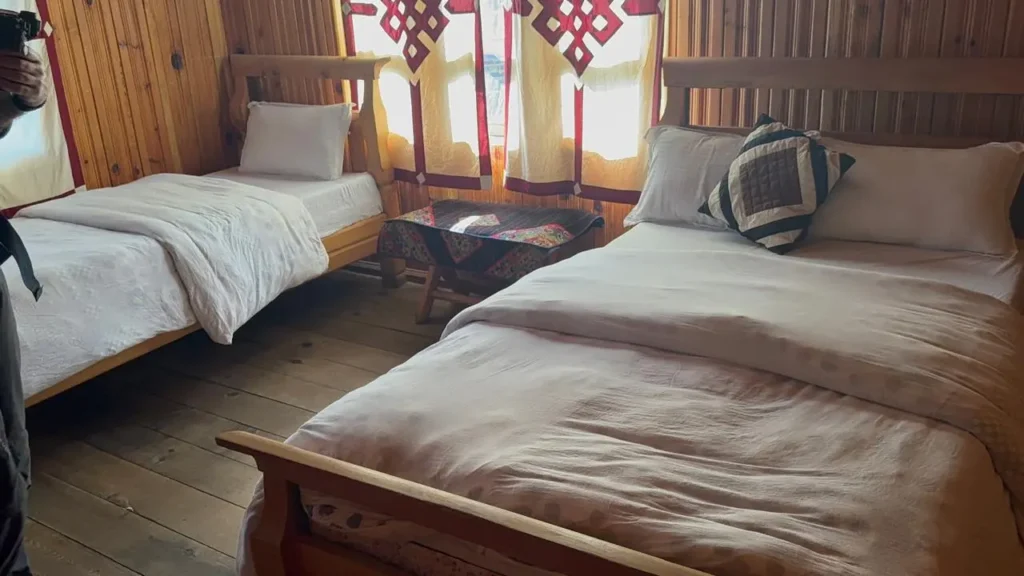
What to Expect on the Langtang Valley Trek
Accommodation along the Langtang Valley Trail consists primarily of teahouses and guesthouses run by local families. The standard of comfort is honest and functional rather than luxurious. You can expect a clean private or shared room with basic bedding, squat or Western toilets depending on the location, and shared dining areas where meals are prepared fresh.
Hot showers are available at some teahouses, often at an additional charge, and WiFi is increasingly available in villages like Lama Hotel and Langtang Village, though the connection is often slow and unreliable. Charging points for phones and cameras are generally available for a small fee. The food menu at Langtang teahouses leans toward simple but satisfying Nepali and Tibetan staples: dal bhat, noodle soup, fried rice, tsampa porridge, butter tea, and momos. Prices are reasonable and the portions are generous.
For trekkers accustomed to more comfortable trekking infrastructure, the teahouses in Langtang may feel basic. But for those who value authenticity and the warmth of home-cooked meals served by local families, they are exactly right.
What to Expect on the Annapurna Base Camp Trek
The teahouse infrastructure on the Annapurna Base Camp route is among the most developed of any trekking trail in Nepal. At popular stops like Chhomrong, Tadapani, and Machhapuchhre Base Camp, you will find a range of options from simple budget rooms to more comfortable private rooms with attached bathrooms and proper beds. Hot showers, WiFi, and an extensive menu featuring everything from dal bhat to pizza, pasta, and apple pie are standard offerings on most of the route.
This level of comfort and convenience is a genuine draw for trekkers who prefer a more comfortable base to return to each evening after a hard day on the trail. It is also worth noting that the food quality and variety on the ABC route is generally higher than on the Langtang trail, which matters when you are trekking for 12 to 15 days and eating three meals a day.
The flip side is cost. The abundance of services on the Annapurna route naturally comes with higher price tags. Accommodation and meals in peak season at popular stops can be noticeably more expensive than their Langtang equivalents.
Wildlife and Natural Environment
Both trekking routes pass through protected natural areas that harbor remarkable biodiversity, though the Langtang Valley has a genuine edge when it comes to wildlife encounters. With lower tourist traffic and less trail noise, animals in the Langtang National Park can move more freely and are more likely to be spotted near the trail. Red pandas, Himalayan tahrs, snow leopards, and a dazzling variety of bird species including the Himalayan Griffon and Blood Pheasant all call this valley home.
The Annapurna Conservation Area is equally rich in biodiversity from a scientific standpoint, supporting langur monkeys, Himalayan monal pheasants, and snow leopards at higher elevations. But the sheer volume of trekking traffic on the ABC route means that wildlife sightings are less frequent, as animals tend to keep their distance from busy paths.
Birdwatchers in particular will find the Langtang Valley a more rewarding destination. The combination of diverse forest habitats, lower human disturbance, and the region’s position on important bird migration corridors makes it excellent territory for spotting Himalayan bird species.
Scenery and Mountain Views
Langtang Valley: Intimate Glacial Beauty
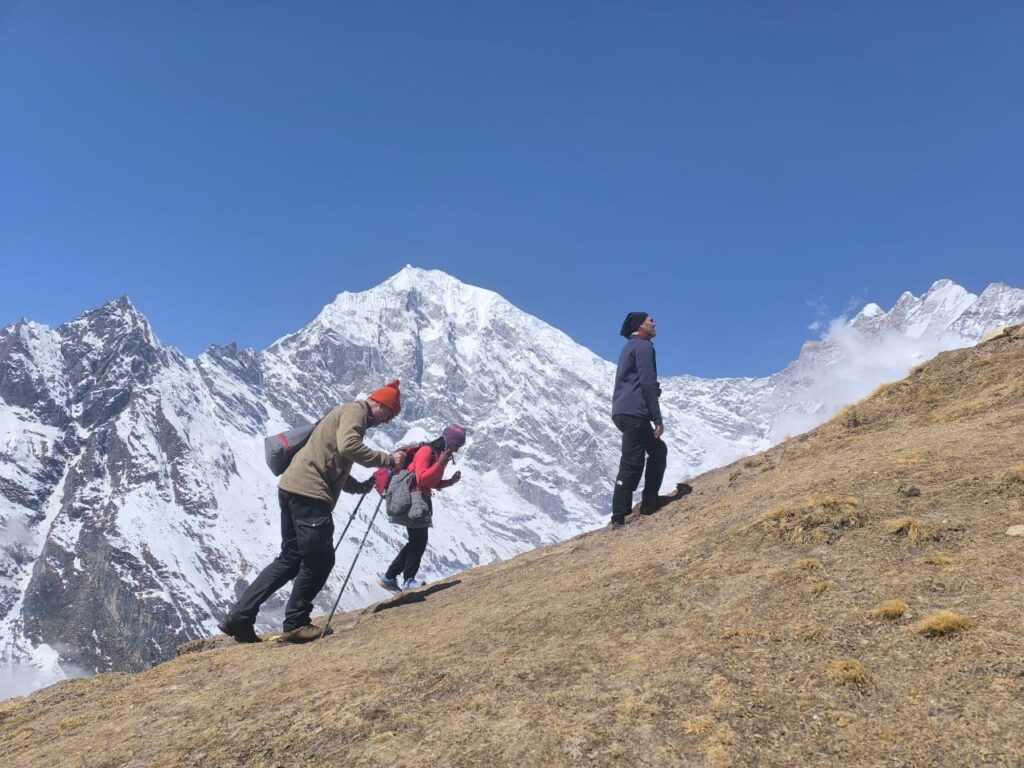
The scenery along the Langtang Valley Trek is best described as intimately dramatic. You are never far from the mountains here, and the sense of being enclosed within a great glacial valley, with the peaks pressing close on either side, creates a feeling of immersion that more open landscapes cannot replicate. The panoramas from Kyanjin Ri and Tserko Ri are genuinely world-class, offering unobstructed views of Langtang Lirung, Langtang II, Yala Peak, Dorje Lakpa, and the Langtang Glacier.
In spring, the valley floor is carpeted with wildflowers and the forests are illuminated by rhododendron blossoms. In autumn, the air is crystal clear and every ridge and snowfield stands in perfect relief against a deep blue sky.
Annapurna Base Camp: The Grand Amphitheater
The defining moment of the Annapurna Base Camp Trek is standing within the Annapurna Sanctuary itself. At 4,130 meters, surrounded by a ring of eleven massive peaks, the sense of scale is almost overwhelming. It is one of those landscapes that simply cannot be fully conveyed in photographs, no matter how many are taken. Annapurna I, Machhapuchhre, Hiuchuli, Singu Chuli, and Glacier Dome form a circle of ice and rock that feels both ancient and utterly alive.
The approach to ABC also offers spectacular scenery. The sunrise from Poon Hill is one of the most celebrated viewpoints in all of Nepal, and the view of Machhapuchhre’s distinctive twin-tipped summit as you approach Machhapuchhre Base Camp is unforgettable.
Difficulty and Physical Preparation
Neither the Langtang Valley Trek nor the Annapurna Base Camp Trek is technically demanding in the climbing sense, but both require a good standard of physical fitness and mental resilience.
The Langtang route features some steep and rocky sections, particularly in the middle portion of the trail where the valley narrows and the ascent becomes more sustained. The trail surface is less managed than the ABC route in many sections, meaning you will encounter rough ground, tree roots, and stream crossings that demand attention and sure footing.
The Annapurna Base Camp trek is famous for its stone staircases. Thousands of steps carved into the mountainside await you on both the ascent and descent, and while the trail itself is well-maintained and clearly defined, the cumulative effect of climbing and descending endless stairs over 12 to 15 days is genuinely taxing on the knees and legs. Trekking poles are highly recommended on both routes but are particularly valuable on the ABC trail.
For both treks, a regular cardio fitness routine in the months before departure, including hiking, running, or cycling, will significantly improve your experience on the trail.
Practical Tips for Planning Your Trek
Whether you choose the Langtang Valley or Annapurna Base Camp, a few universal principles apply. Book your trek during the spring or autumn window for the most reliable weather and the best mountain views. Always carry comprehensive travel insurance that specifically covers high-altitude trekking and emergency evacuation. Hire a licensed local guide, as it is now legally required in Nepal and genuinely adds value to your trek in terms of safety, cultural insight, and route knowledge.
Pack layers. Both treks involve significant temperature swings between valley floors and high camps, and the ability to add or remove clothing as conditions change is essential. Carry a good quality sleeping bag rated to minus 10 degrees Celsius at minimum, as teahouse blankets are rarely adequate at higher elevations in colder months.
Finally, approach both treks with patience and a willingness to slow down. The Himalayas reward those who stop to look, listen, and absorb rather than those who treat the trail as a race to the endpoint.
Final Verdict: Which Trek Is Right for You?
The Langtang Valley Trek is the better choice if you have limited time, prefer a quieter and more culturally intimate experience, are working with a tighter budget, or want excellent wildlife and birdwatching opportunities. It is also ideal if you are a first-time Nepal trekker who wants a thorough Himalayan experience without committing to two weeks on the trail.
The Annapurna Base Camp Trek is the better choice if you have more time available, want the ultimate Himalayan summit amphitheater experience, enjoy a well-developed trail infrastructure with more comfort options, and are ready to invest a bit more in the journey. The views from within the Annapurna Sanctuary are among the most spectacular on earth, and for many trekkers, that singular experience justifies everything.
Both treks will change you. Both will leave you with memories that outlast the sore legs and tired feet. The only wrong choice is staying home.