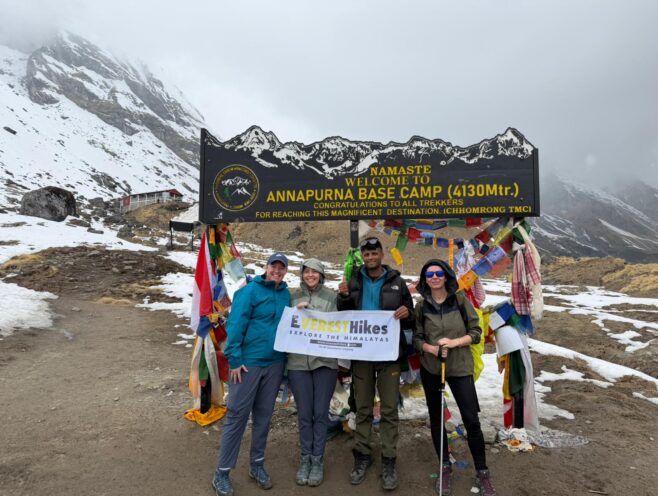
Having guided hundreds of trekkers through the Annapurna region, we at Everest Hikes know that one of the first questions people ask is: “Where will I sleep?” The honest answer is far more comfortable than you’d expect, especially in the lower sections of the trail. Here’s everything you need to know, straight from our team on the ground.
Types of Accommodation on the Annapurna Base Camp Trek
The Annapurna Base Camp trek is not a camping trek. You will sleep in teahouses almost every night and once you experience them, you’ll understand why trekkers love this route as much for the journey as for the destination.
Teahouses are small family-run lodges scattered across every village along the trail. They’re the heart of trekking culture in Nepal. Each teahouse offers a room, a meal, and more often than not, a genuinely warm welcome from the family running it. They range from simple wooden structures at higher elevations to surprisingly well-equipped lodges in larger villages like Ghorepani and Chhomrong.
Guesthouses and lodges in the bigger stops tend to offer more structured facilities — think proper beds, attached bathrooms, and a wider food menu. As you climb higher toward Machhapuchhre Base Camp and Annapurna Base Camp itself, the teahouses become more basic, but they remain clean, functional, and welcoming.
What makes teahouses in the ABC trek special is not the luxury; it’s the experience. Sitting by a wood stove after a long day of hiking, sharing a meal with fellow trekkers from across the world, and waking up to mountain views outside your window that’s something no five-star hotel can replicate.
What to Expect in Rooms and Facilities
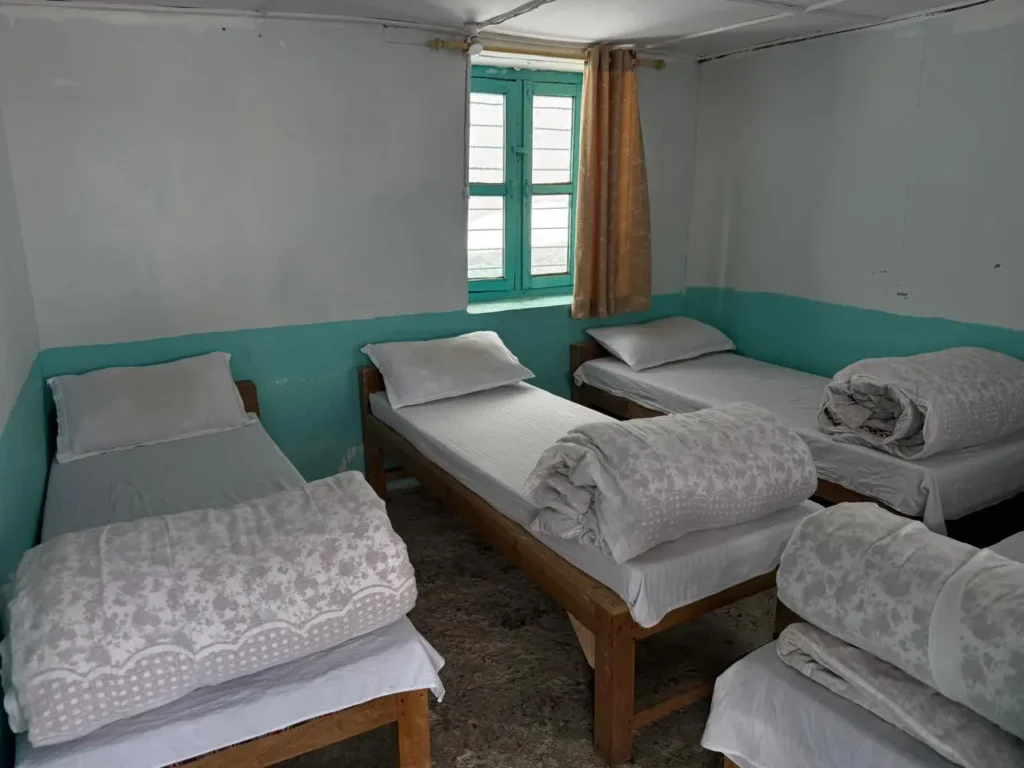
Understanding what you’ll actually get in your room helps you pack right and set your expectations correctly. Here’s a realistic breakdown:
Rooms:
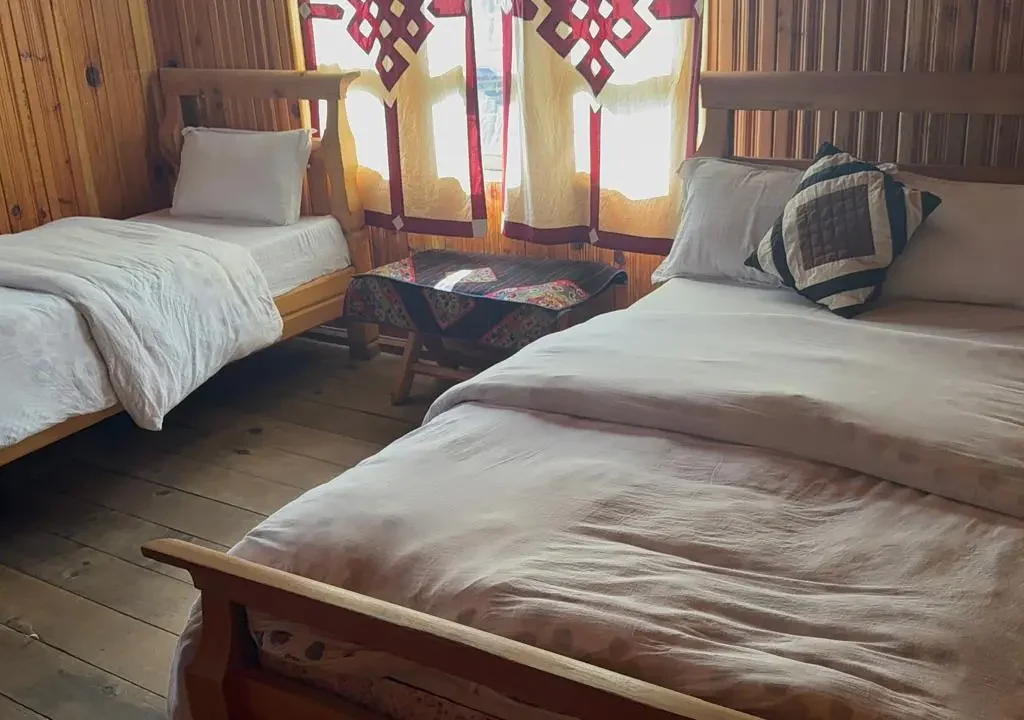
- Most rooms are twin-sharing with two single beds, a pillow, and thick woolen blankets
- Private single rooms are available but limited especially during peak season (October–November and March–April)
- Rooms are simple and clean; don’t expect décor, but do expect warmth and tidiness in most teahouses
Bathrooms:
- In lower villages like Ulleri, Ghorepani, and Chhomrong, attached private bathrooms are fairly common
- The deeper you go — Sinuwa, Bamboo, Dovan — the more likely you are to share a bathroom with other guests
- Western-style toilets are available at most stops below 3,000 meters; squat toilets become more common at higher elevations
Hot Showers:
- Available at most teahouses up to Chhomrong, usually for an additional fee of $2–$4
- At higher altitudes (above 3,000 meters), hot showers become scarce and often unreliable
- Our honest advice: skip the shower above MBC. Cold showers at high altitude increase your risk of catching a chill and can contribute to altitude sickness
WiFi and Charging:
- WiFi is available along most of the route, including at higher stops, but you pay extra (usually $1–$3 per session)
- Connection becomes increasingly slow and unreliable above 3,000 meters
- Charging points are available in dining areas at most teahouses, but not always in rooms
- We recommend carrying a power bank — it’s one of the most useful items in your pack
Heating:
- Lower villages rely on natural warmth and blankets
- At higher altitudes, wood stoves or kerosene heaters in the common dining area are the primary source of warmth
- Private rooms are rarely heated — this is where a good sleeping bag makes all the difference
Accommodation at Higher Altitudes
This is where expectations need to be reset and where our guides always spend a few minutes preparing trekkers before they ascend.
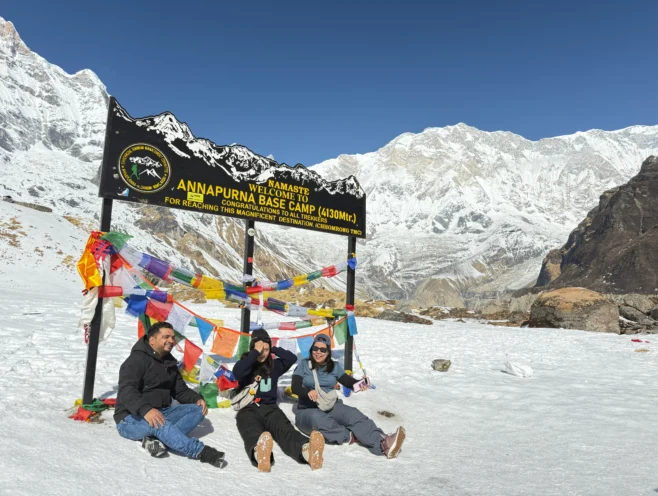
At Machhapuchhre Base Camp (3,700m) and Annapurna Base Camp (4,130m), the teahouses are functional rather than comfortable. You’re at a serious altitude, the air is thin, and everything — from construction materials to supplies has to be carried up on foot or by mule. The rooms are basic: a mattress, blankets, shared bathrooms, and limited electricity (mostly solar-powered).
What you won’t find here:
- Hot showers
- Reliable WiFi
- Heated rooms
- Extensive food menus
What you absolutely will find:
- Shelter from the cold
- Hot meals and tea
- Fellow trekkers sharing the same excitement
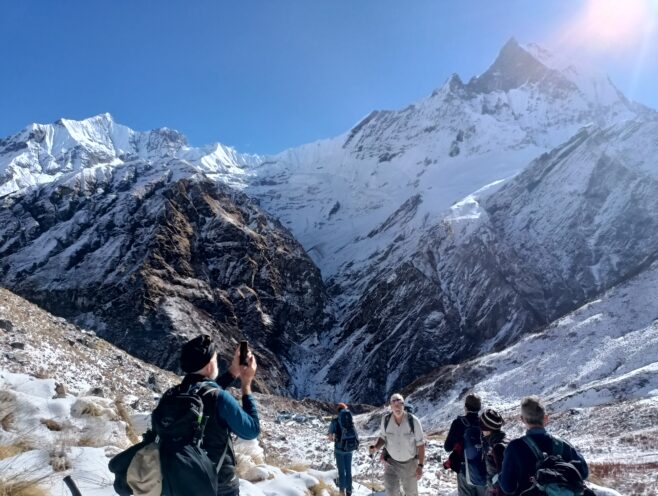
- Views of the Annapurna massif that will make you forget every discomfort
Dovan, which some trekkers use as an acclimatization stop, is even more minimalist — closer to a homestay than a lodge. It’s rustic, quiet, and genuinely remote. Our guides consider it one of the most authentic stops on the entire route.
One consistent piece of advice from our team: always carry your own sleeping bag, even if the teahouse provides blankets. At higher elevations, temperatures drop well below freezing at night, and having your own clean, warm sleeping bag adds both comfort and hygiene.
Food and Dining Experience in Teahouses
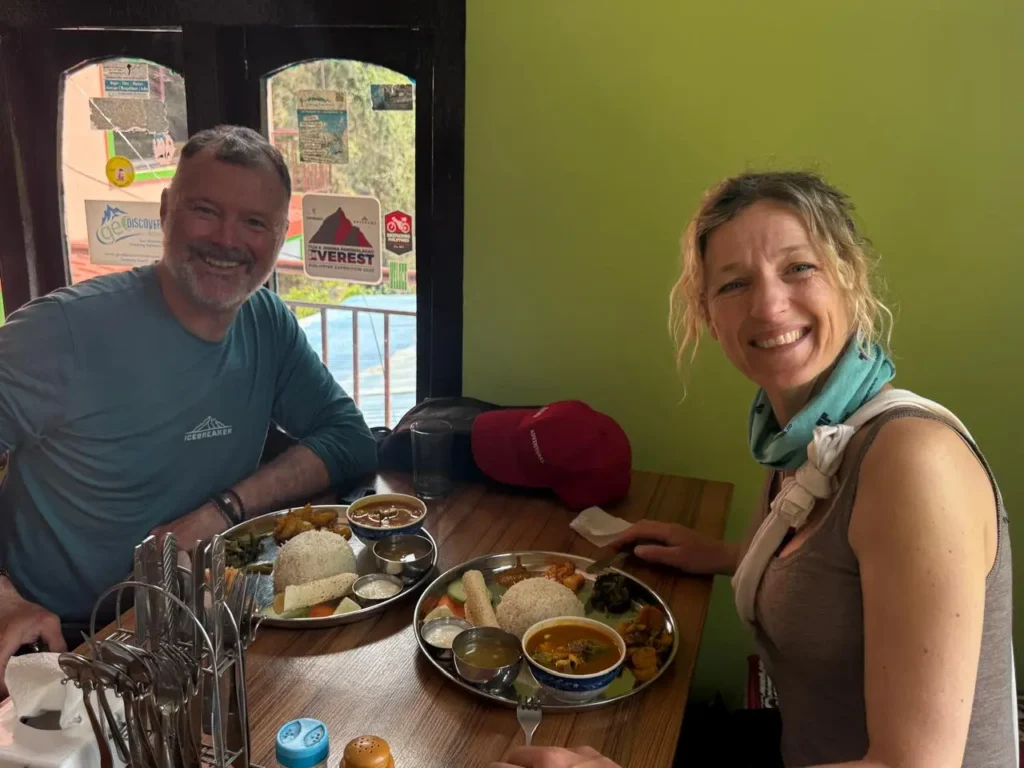
The dining room is the social hub of every teahouse and the food is a big part of why trekkers remember this trail so fondly.
In lower villages like Ghorepani and Chhomrong, teahouse menus are surprisingly broad. You’ll find everything from Dal Bhat (the classic Nepali staple of lentil soup, rice, and vegetables) to pasta, pizza, noodle soups, omelettes, pancakes, and fresh-baked goods.
As you climb higher, menus simplify. By the time you reach Bamboo and beyond, you’re looking at:
- Dal Bhat Tarkari
- Thukpa (Tibetan noodle soup)
- Momos (steamed dumplings)
- Porridge, eggs, and toast for breakfast
- Ginger tea, lemon honey tea, and hot chocolate
Our sincere recommendation: eat Dal Bhat as often as you can. It’s nutritious, filling, warming, and comes with free refills at most teahouses. It’s what the locals eat for a reason, and it’s perfectly designed to fuel a day of trekking at altitude.
Prices naturally increase with altitude — expect to pay $5–$8 for a main meal in lower villages and up to $12–$15 at Annapurna Base Camp itself. This is completely normal and simply reflects the logistical reality of getting supplies to 4,130 meters.
Practical Tips from the Everest Hikes Team
After years of guiding treks in the Annapurna region, here’s what our team consistently tells every trekker before they set off:
- Book accommodation in advance during peak season. October, November, March, and April see the highest footfall on the ABC trail. Teahouses fill up especially in popular stops like Ghorepani and Chhomrong. Last-minute arrivals in peak season can sometimes struggle to find a room.
- Carry a good quality sleeping bag. Even if you’re trekking in spring, nights above 3,000 meters can be brutally cold. A sleeping bag rated to at least -10°C is a worthy investment.
- Bring a microfiber towel. Not all teahouses provide towels, and the ones that do are not always clean or dry.
- Download offline maps and entertainment. WiFi above 3,000 meters is not dependable. Don’t count on streaming or browsing in the evenings at higher stops.
- Carry small change. Additional fees for WiFi, hot showers, and charging are common, and teahouses in remote areas don’t always have change for large notes.
- Respect the teahouse culture. These are family homes and businesses. Keep noise levels down in the evenings, be courteous to the staff, and order food from the teahouse where you’re staying — it’s part of the unspoken code of the trail.
Why Accommodation Is Better Managed With Everest Hikes Pvt Ltd
Independent trekkers often discover the hard way that not all teahouses on the ABC trail are equal. Some are well-maintained and welcoming; others are poorly kept, overpriced in peak season, or simply full by the time you arrive.
When you trek with Everest Hikes, our team handles all of this for you:
Pre-booked accommodation along the entire route. We have established relationships with the best teahouses at every stop places we’ve personally vetted over years of guiding. You arrive knowing exactly where you’re sleeping, without the stress of searching for a room at the end of a long hiking day.
Quality checks at every level. We don’t just book the nearest available teahouse. We select accommodations based on cleanliness, food quality, hospitality, and value. Our trekkers consistently tell us that the teahouses we use stand out from what solo trekkers experience.
Flexible planning for comfort. Need an extra night in Chhomrong to acclimatize? Want to stop at Jhinu hot springs on the way back? Our team builds that flexibility into your itinerary from the start, so your accommodation matches your pace not the other way around.
Guide support every step of the way. Our experienced local guides know the teahouse owners personally. Any issue, a cold room, a meal concern, a bathroom problem gets sorted immediately. You’re never navigating it alone.
The Annapurna Base Camp trek is one of the most rewarding experiences Nepal has to offer. The accommodation – simple, warm, and deeply human — is a genuine part of that experience. Let us make sure it’s the best version of that experience for you.
Ready to plan your trek? Get in touch with the Everest Hikes team and let us take care of every detail, from your first teahouse to your last hot spring.