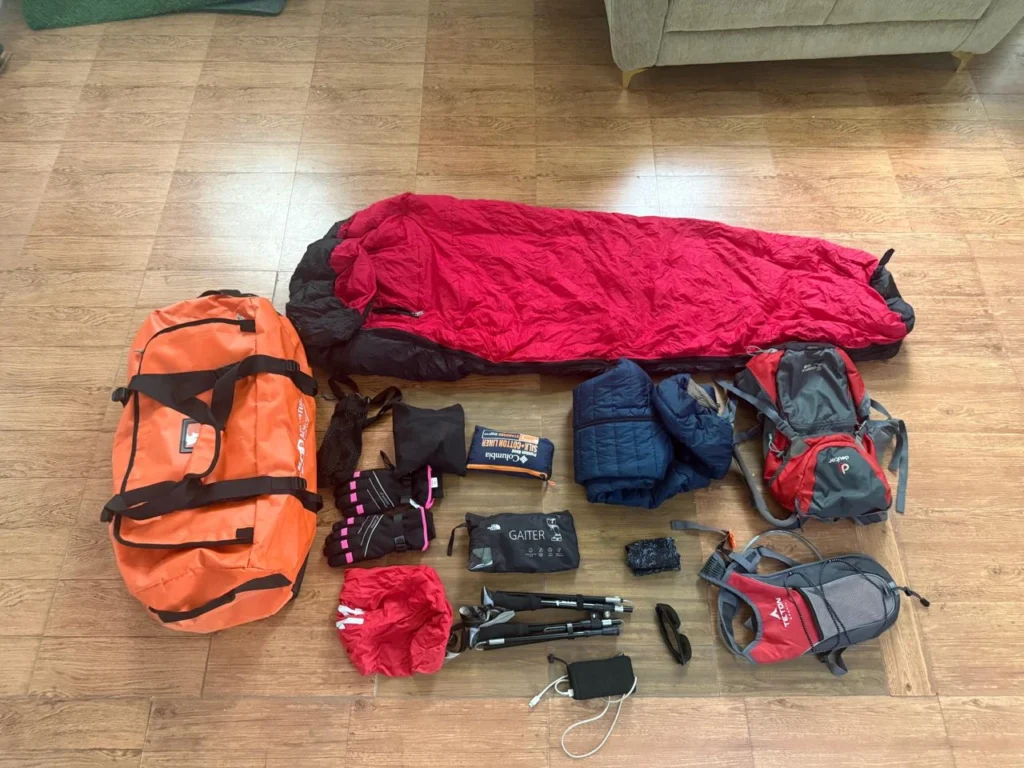
We have been running Annapurna Base Camp treks for well over a decade at Everest Hikes Pvt Ltd. Every season, we watch trekkers arrive in Pokhara with bags that are either dangerously underpacked or so heavy that they regret every uphill step past Chhomrong. This guide is not a generic gear checklist copied from a travel blog. It is what our trek leaders actually brief clients on before departure, refined over hundreds of trips to ABC.
The trail to Annapurna Base Camp sits at 4,130 metres. The weather shifts fast. The tea houses at higher camps are comfortable but basic. There are no gear shops once you leave Chhomrong behind. Getting your packing right before you start from Nayapul or Ghandruk is not optional; it is the difference between an enjoyable trek and an exhausting ordeal.
Use this guide alongside your Annapurna Base Camp Trek itinerary. We have organised it so you can work through it section by section, and we have added notes from our guides where the standard advice tends to get it wrong.
Understanding Weight Limits Before You Start Packing
Before you decide what goes in the bag, understand the constraint. Our porters carry a maximum of 15 kilograms of your personal gear, and that same 15 kg limit applies to luggage on the flight between Kathmandu and Pokhara if you choose to fly rather than take the bus. This is not a guideline; it is a firm limit rooted in both aviation safety and basic fairness to the people carrying your belongings across mountain terrain.
Your daypack, which you carry yourself on the trail each day, should sit somewhere between 5 and 8 kilograms. Everything else goes into a duffel that rides with the porter. We provide the duffel bag as part of your trek package. You do not need to bring one.
The practical takeaway: lay everything out before you leave home, weigh it, and cut ruthlessly. You will not regret packing light. You will regret every extra kilogram somewhere around the steep climb between Bamboo and Dovan.
Tea House Realities: What the Trail Actually Provides
Modern tea houses on the Annapurna Base Camp trail are significantly better than they were ten years ago, but understanding what you will and will not have access to shapes every packing decision you make.
Charging points exist at most lodges, but expect to pay a small fee per charge, and expect competition for sockets in the evenings. Bring a power bank capable of two full phone charges as your main insurance policy. Solar power runs many of the higher lodges, which means cloudy days or heavy snowfall can interrupt electricity entirely.
Hot showers are available at most lodges below Deurali. At Machhapuchhre Base Camp and ABC itself, bathing options are limited to bucket washes with heated water for a small additional fee. Plan for this rather than being surprised by it.
Laundry facilities are practically non-existent above the lower section of the trail. You will hand-wash small items in cold water and hope they dry overnight in the lodge. Merino wool and quick-dry synthetic fabrics are not a luxury on this trek; they are a genuinely practical choice. Three or four changes of base layers will serve you far better than seven.
Meals are provided by us three times daily. You do not need to carry cooking equipment, and you do not need trail food for survival. Snacks for energy and personal taste are worth packing, but the lodges serve sufficient, nourishing food throughout the route.
Travel Documents and Permits
Nepal issues tourist visas on arrival at Tribhuvan International Airport in Kathmandu for citizens of most countries. Ensure your passport has at least six months of validity remaining from your departure date. Carry physical photocopies of your passport, visa, and travel insurance documents, and photograph the key pages on your phone as a backup.
The Annapurna Base Camp trek requires two permits: the Annapurna Conservation Area Permit (ACAP) and the Trekkers Information Management System card (TIMS). We handle both of these on your behalf as part of your package. You will need four passport-sized photographs for permit processing, so bring those from home rather than hunting for a photo shop in Pokhara.
Travel insurance is non-negotiable on this trek. Your policy must explicitly cover high-altitude trekking above 4,000 metres and helicopter evacuation in the event of a medical emergency. A policy that covers general travel but excludes high-altitude activity is effectively worthless on this route. We will ask to see evidence of appropriate coverage before the trek begins.
Clothing for Annapurna Base Camp: The Layering System That Works
Mountain weather on the Annapurna circuit is genuinely unpredictable. You can walk through warm sunshine in the Modi Khola valley in the morning and arrive at Deurali in driving snow by afternoon. The only reliable answer to this variability is a proper layering system.
Base Layers
Bring three to four lightweight thermal or merino wool tops and two pairs of thermal leggings. Merino is worth the investment on a multi-week trek because it resists odour far better than synthetic alternatives, which matters a great deal when laundry options are limited. Avoid pure cotton at any layer; it holds moisture against your skin and becomes dangerously cold when wet.
Mid Layers
A fleece jacket or pullover serves as your primary insulation during rest stops and in camp. A softshell jacket over the fleece handles light wind and drizzle without the bulk of a full waterproof layer. Two to three long-sleeve trekking shirts for the lower trail sections complete the mid-layer picture.
Outer Shell and Insulation
A quality waterproof and windproof jacket is essential. The rhododendron forests between Ghorepani and Tadapani funnel wind in unexpected ways, and the open approach to ABC offers no shelter whatsoever from rain or snow. We provide a down jacket (puffer jacket) to all our trekkers as part of the package. This covers your primary insulation needs at altitude.
Lower Body
Two pairs of trekking trousers are sufficient for most trekkers. Add a pair of thermal leggings for layering at altitude. Fleece-lined or softshell trousers are a worthwhile upgrade for winter treks. Pack one pair of lightweight hiking shorts if travelling in the spring or autumn warm season.
Footwear
Your boots are the single most important piece of gear on this list. They must be waterproof, ankle-supporting, and thoroughly broken in before you arrive in Nepal. New boots on the Annapurna trail will produce blisters within two days. The trail surface varies from paved stone staircases to loose scree, muddy forest paths, and potentially icy rock above Machhapuchhre Base Camp. Bring your boots; do not plan to buy or hire them here.
Pack three to four pairs of moisture-wicking trekking socks, one pair of camp sandals or flip-flops for the evenings, and a pair of lightweight trainers if you want an alternative for the lower trail days.
Head and Hand Protection
A warm knit or fleece hat is non-negotiable. Bring a brimmed sun hat for the lower trail and a sun-blocking buff or neck gaiter for both sun and cold. At altitude, the UV exposure is severe even on overcast days; sun protection is not optional. A balaclava is worth packing for winter treks or if you plan to sit at the base camp viewpoint for any length of time at dawn.
Lightweight liner gloves and a pair of heavier insulated gloves or mittens cover all conditions you will encounter between Nayapul and ABC.
Trekking Equipment and Gear
Daypack
A 25 to 35 litre daypack carries your daily essentials on the trail while your duffel travels with the porter. Look for a pack with a rain cover or pack one separately. Hip-belt pockets for quick-access items like snacks, lip balm, and a camera save time and effort on the trail.
Sleeping Bag
We provide sleeping bags rated to minus 15 degrees Celsius for all trekkers. The lodges supply blankets and duvets, but bringing a sleeping bag liner is a sensible personal hygiene decision and adds insulation during cold nights at higher elevations.
Trekking Poles
Trekking poles are genuinely useful on this trail and underestimated by many first-time trekkers. The descent from ABC back to Sinuwa involves thousands of stone steps. Poles reduce the cumulative stress on your knees by a significant margin. They are available for hire in Pokhara if you do not own a pair.
Headtorch and Batteries
Essential. Pre-dawn starts at ABC to reach the viewpoint before cloud cover rolls in are standard practice. Lodges turn off main lighting early. Bring spare batteries or a USB-rechargeable torch and the appropriate cable.
Water Bottles and Purification
Bring at least one sturdy one-litre water bottle and consider a second. Hydration at altitude requires conscious effort. Many trekkers underdrink and wonder why they feel sluggish. Water purification tablets or a filter are practical additions since you can refill from streams or lodge taps and treat the water yourself rather than paying for bottled water at every stop.
First Aid and Altitude Medications
Our guides carry a comprehensive first aid kit on every trek. We also recommend that you carry your own basic personal kit for minor issues your guide would not reasonably be expected to manage on your behalf.
Personal first aid essentials to pack:
- Prescription medications (carry more than you think you need)
- Painkillers such as ibuprofen or paracetamol
- Antibiotics if your doctor recommends them for travel
- Antidiarrheals
- Moleskin and blister treatment (critical for boot-related injuries)
- Zinc oxide tape and bandages
- Oral rehydration salts
- Antihistamines
- Eye drops
- Sunscreen, SPF 50 minimum
- Lip balm with sun protection
- Insect repellent
On altitude sickness: Acetazolamide (Diamox) is used by some trekkers as a prophylactic against acute mountain sickness. We carry altitude medications for emergency use. If you intend to use Diamox, discuss this with your doctor before the trek and begin it before ascent. Do not start it on the trail without medical guidance. Under no circumstances should you bring sleeping pills; they suppress the respiratory drive and increase altitude sickness risk significantly.
Our guides are trained in wilderness first aid and altitude recognition. Trust their judgement if they flag concerns about your condition at higher elevations.
Toiletries and Personal Hygiene
Pack small and pack multipurpose. Biodegradable soap serves for body washing, hair washing, and laundry. The fragile ecology of the Annapurna Conservation Area is damaged by conventional soap and shampoo when they reach water sources, so making this switch matters.
Key toiletry items:
- Toothbrush and toothpaste
- Quick-dry microfibre towel (compact, essential)
- Biodegradable soap or multipurpose wash
- Dry shampoo
- Deodorant
- Hand sanitiser (use frequently; gastrointestinal illness is the most common medical issue on the trail)
- Wet wipes or baby wipes for quick cleans when hot water is not available
- Toilet paper (tea houses provide limited supply; carry your own)
- Nail clippers
- Face moisturiser with SPF
- Feminine hygiene products if applicable (menstrual cups are especially practical)
Resist the urge to bring full-sized bottles of anything. Decant into travel-sized containers. Every gram saved in toiletries is a gram available for warmth layers, which genuinely matter.
Electronics and Power
Keep your electronics list short and purposeful. Most people need a phone, a power bank, a torch, and a camera if photography matters to them. Anything beyond that should be questioned honestly.
- Smartphone (downloaded offline maps of the Annapurna region before you leave Pokhara)
- Power bank, minimum 20,000 mAh capacity
- Universal travel adapter
- Camera and memory cards
- Charging cables for all devices, stored in a waterproof pouch
A note on Nepal’s power supply: lodges in the lower sections of the trail are connected to the national grid, which supplies 230V power using Type C and Type D sockets. Higher lodges run on solar or micro-hydro. Assume that charging above Deurali is unreliable and plan accordingly. Your power bank is your safety net.
Miscellaneous Items Worth Packing
- Small padlocks for your duffel and daypack zippers
- Ziplock or dry bags to keep documents, electronics, and clothing dry inside your pack
- A lightweight umbrella (unexpectedly useful in rain rather than wearing a hot waterproof jacket)
- High-calorie snacks: nut bars, dried fruit, chocolate for energy and morale
- Electrolyte tablets or powder
- A small journal or paperback book for rest days or evenings
- Sunglasses with UV protection and wraparound coverage
Season-by-Season Packing Guidance for Annapurna Base Camp
Spring (March to May)
Spring is the most popular season for a reason. The rhododendrons are in full bloom from Ghorepani onwards, temperatures are moderate, and the mountain views are typically clear. The core packing list applies without heavy modification. Bring your waterproof layer as afternoon showers become more common through April. Midday temperatures in the lower valleys can reach 20 degrees Celsius, so have your lighter layers accessible in your daypack.
Autumn (September to November)
Autumn offers the clearest skies and the most stable weather on the trail. Post-monsoon, the air is clean and visibility is exceptional. This is the season for the sharpest mountain photographs. Pack as per the core list. October nights above 3,000 metres are cold; do not underestimate the temperature drop after sunset even if the days feel comfortable. November treks need heavier insulation, particularly for hands and head.
Monsoon (June to August)
Trekking in monsoon is possible and has a genuine charm to it. The trail is quieter, the flora is vivid green, and the waterfalls are spectacular. The challenges are real though: leeches are present from the forest sections, trails are slippery, cloud cover obscures mountain views for days at a time, and river crossings can become hazardous. Pack robust waterproof gear, leech socks or gaiters, excellent wet-condition trekking boots, and accept that you may see Annapurna’s snowfields but not its summit.
Winter (December to February)
Winter treks to ABC are genuinely cold and genuinely rewarding. Snowfall transforms the landscape and the tea houses are almost empty. You must, however, take the cold seriously. Pack a heavier down jacket in addition to the one we provide if you feel the cold acutely. Heavyweight gloves rather than liner gloves are the right choice. Gaiters become useful as snow covers sections of the trail above Bamboo. Winter sunrise at Annapurna Base Camp is one of the most remarkable sights in the Himalayas; it is worth the preparation required to experience it safely.
Frequently Asked Questions About Packing for Annapurna Base Camp
Can I buy or hire trekking gear in Kathmandu or Pokhara?
Yes, and for most items the quality available in Thamel (Kathmandu) and Lakeside (Pokhara) is sufficient for this trek. North Face, Columbia, and other major brands operate genuine retail stores in both cities. There is also a substantial second-hand and replica market. Replica gear is serviceable for a single trek, but we would strongly advise against hiring replica boots or a replica waterproof jacket; these are the items that fail when you need them most.
What is the porter weight limit and what does it affect?
Our porters carry a maximum of 15 kilograms of personal gear per trekker. This is a welfare and safety standard, not an arbitrary restriction. It also aligns with the luggage allowance on Kathmandu-Pokhara flights. If you are driving to Pokhara rather than flying, you have more flexibility in transit, but you still need to hand your porter a bag within the weight limit at the trailhead.
Are there laundry services on the trail?
Some lodges in Ghandruk and Chhomrong offer hand-washing services for a fee. Above that, you are managing your own laundry. Pack quick-dry clothing and accept that a small amount of hand-washing in cold water and overnight drying is part of the experience. Plan your clothing around this reality.
Do I need crampons for Annapurna Base Camp?
In spring and autumn, no. In winter and particularly after heavy snowfall, micro-spikes or light crampons are useful from Machhapuchhre Base Camp upwards. Your guide will advise you based on current conditions. Do not purchase crampons specifically for this trek unless your guide recommends them for a winter departure.
How much cash should I carry on the trek?
ATMs are available in Pokhara. There are none on the trail. Carry sufficient Nepali rupees before you leave Pokhara; a rough budget of NPR 3,000 to 5,000 per day covers hot showers, battery charging, snacks, additional beverages, and tips. We suggest carrying more than you think you will need; unused cash is easy to exchange on return.
What vaccinations do I need for trekking in Nepal?
Consult your physician or a travel health clinic at least six weeks before departure. Standard recommendations for Nepal typically include typhoid, hepatitis A and B, tetanus, and rabies. Up-to-date COVID-19 vaccination is advisable. A yellow fever certificate is required if you are arriving from or have transited through a country with yellow fever transmission risk. Do not rely on our advice here; your personal medical history shapes what is appropriate for you.
Recommended Gear Brands for Annapurna Base Camp Trekking
This table reflects brands that our guides and frequent clients have found reliable on the trail:
| Item | Reliable Brands |
|---|---|
| Waterproof Jacket | Arc’teryx, The North Face, Berghaus, Mountain Hardwear |
| Down Jacket | The North Face, Arc’teryx, Rab, Mountain Hardwear |
| Fleece Jacket | Patagonia, The North Face, Berghaus, Helly Hansen |
| Trekking Boots | Salomon, Merrell, La Sportiva, Mammut, Berghaus |
| Trekking Socks | Smartwool, Bridgedale, Darn Tough, Icebreaker |
| Trekking Poles | Black Diamond, Leki, REI Co-op |
| Daypack | Osprey, Gregory, Deuter, Patagonia |
| Trekking Trousers | Patagonia, The North Face, Arc’teryx, Columbia |
| Sleeping Bag Liner | Sea to Summit, Lifeventure, Cocoon |
A Final Word from Our Trek Leaders
The best packing list is the one you actually follow. We have seen trekkers complete Annapurna Base Camp in basic gear with good spirits and careful altitude management. We have also seen well-equipped trekkers turn back because they underestimated the cold or overestimated their fitness. Gear helps, but it does not replace acclimatisation, pacing, and the judgement of an experienced guide.
If you have specific questions about what to bring for your departure date and season, reach out to us directly. Our operations team in Pokhara knows current trail conditions and can give you current, specific advice rather than generalised guidance.
When you are ready to take the next step, explore our Annapurna Base Camp Trek packages. We handle your permits, accommodation, meals, and guiding so that your only job on the trail is to walk, rest, and take in one of the most extraordinary landscapes on earth.